Putting several filament spools and desiccant packets in one container sounds simple until the box becomes crowded. A packet gets buried under a spool. A humidity indicator faces the wall. A feed path crosses the top of a pouch. One corner stays easy to check while another corner never gets airflow.
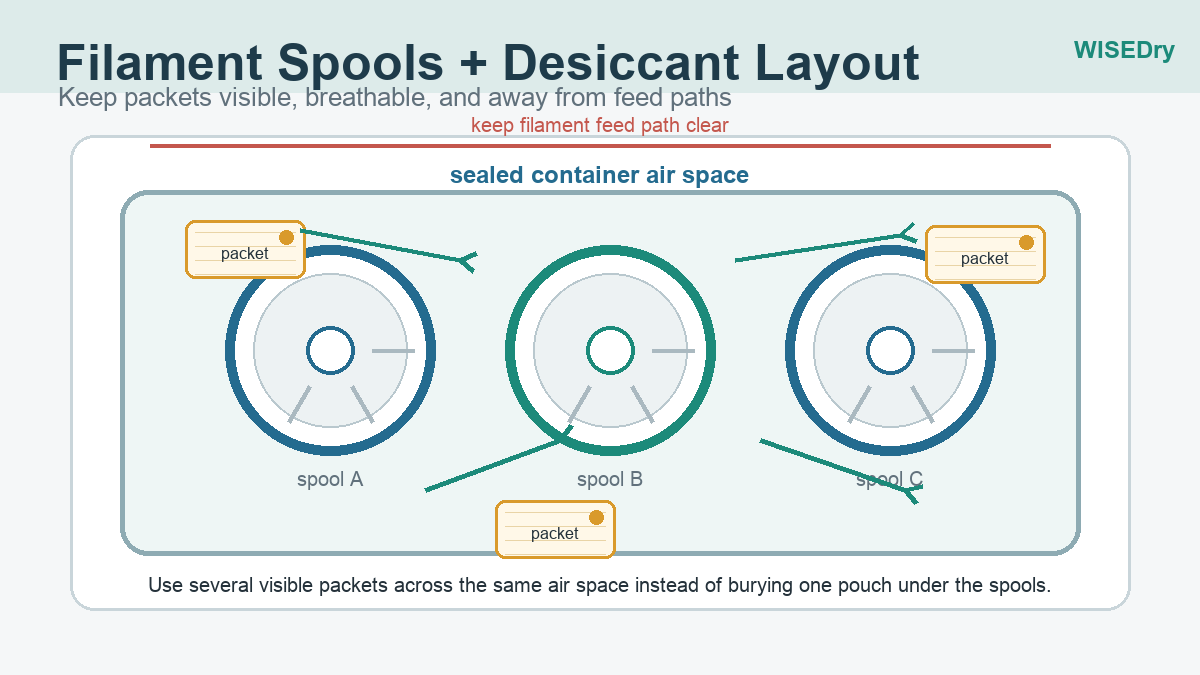
The goal is not to make the container look perfect. The goal is to keep active desiccant in the same air space as the spools, visible enough to inspect, protected from crushing, and clear of any filament path or moving hardware.
Quick Answer
Arrange filament spools first, then place desiccant packets in open air spaces around them. Keep packets visible, breathable, and away from filament feed paths, spool rotation points, tube fittings, fans, bearings, electronics, and any area where loose beads could spill into the printer setup. In a larger or divided container, several smaller packets are often easier to distribute than one large pouch.
Use silica gel to help maintain dry storage air after filament is already dry. If a spool is already wet, follow the filament maker’s drying guidance first, then return it to sealed storage with active desiccant. For packet sizing, use the Wisedry filament dry box silica gel guide. If you are building a shared spool container, shop Wisedry reusable desiccants.
Start With The Spool Layout
Set the spools in the container before placing any packets. This keeps the desiccant from becoming an afterthought that gets crushed by the final spool.
Check four things:
- Which spools need to be removed most often.
- Which side of the box opens first.
- Where the filament exits, if the container feeds a printer directly.
- Where the humidity indicator can be seen without unpacking everything.
For a storage-only box, place frequently used spools near the top or front so the lid stays open for less time. For a feed-through box, keep the spool path clean before adding packets. Desiccant should support the setup, not become another obstacle in it.
Put Packets In The Same Air Space As The Spools
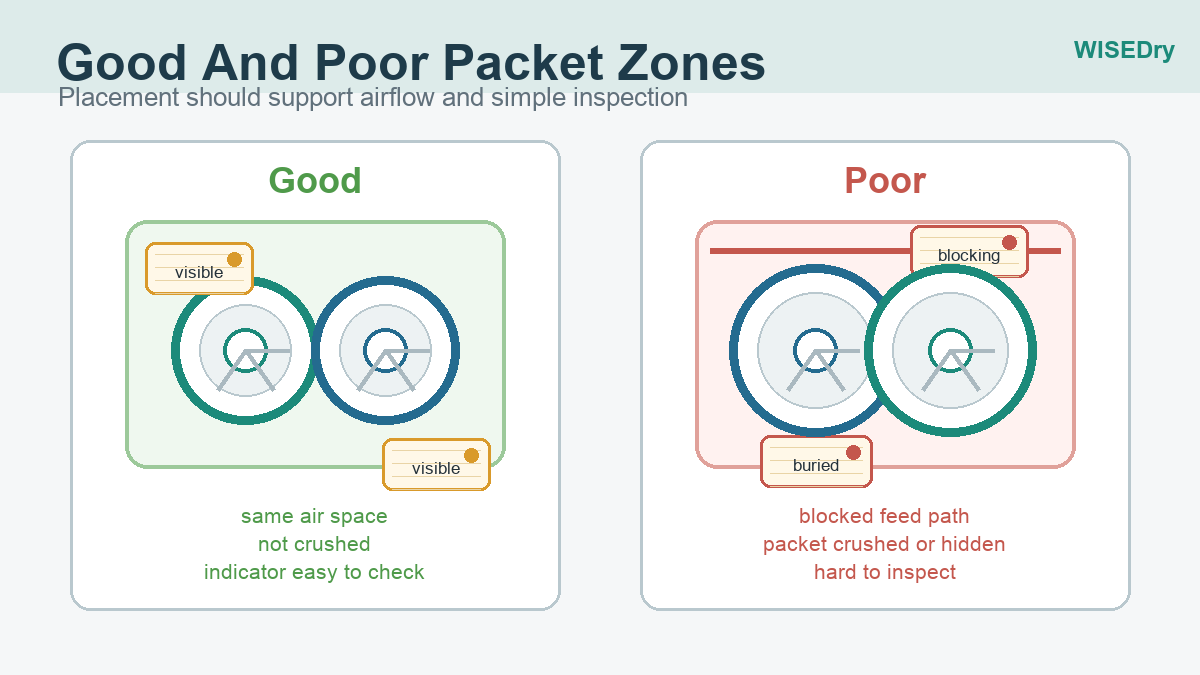
Silica gel works through contact with the air around it. A packet sealed inside another bag, covered by cardboard, wedged under a spool, or hidden below dense objects may not respond as evenly as a packet in open air.
Better placement options include:
- One packet near the lid side of the container.
- One packet near the bottom or a clear side wall.
- One packet near the far end of a deep tote.
- Smaller packets spread around a multi-spool box.
- A visible indicator packet near the easiest inspection point.
Avoid treating one corner as the only desiccant zone if the container is large or divided. Air movement inside a sealed box is limited. Spread packets so each part of the container has nearby active silica gel.
Keep Feed Paths Clear
If the container feeds filament to a printer, the filament path has priority. Do not put packets where filament can rub across fabric, drag over seams, knock a packet loose, or pull loose beads into a tube or mechanism.
Keep desiccant away from:
- Bowden tube entries.
- Spool rollers or axle points.
- Filament guide holes.
- AMS-style moving parts.
- Fans, bearings, gears, or electronics.
- Any place where a packet could shift into the feed path when the box moves.
This is especially important if the box sits near the printer and vibrates during printing. A packet that looks safe when the lid is open may move after the container is carried, tilted, or opened several times.
Do Not Crush Packets Under Spools
A heavy spool can flatten a packet, block airflow, hide the indicator, and make inspection difficult. Crushing can also stress fabric seams over time.
Use side spaces, shallow trays, breathable holders, or clipped mesh pockets instead of putting packets directly under spools. If the container is shallow and every packet ends up under a spool, the box may need a different layout or a smaller packet size.
For many shared containers, several smaller packets work better than one oversized pouch. The one large vs several small desiccant packs guide explains how distribution changes the decision.
Make One Indicator Easy To Inspect
If every packet is hidden, you are more likely to miss the point when the silica gel needs attention. Keep at least one indicating packet or visible check point near the easiest inspection area.
That does not mean every packet needs to sit at the front. It means the routine should be practical:
- Open the lid.
- Check the visible packet or humidity trend.
- Confirm the packet is not crushed or blocked.
- Close the lid again promptly.
If the visible packet reaches its recharge condition sooner than expected, check the rest of the container before assuming the whole layout has failed. The issue may be frequent opening, a weak seal, humid room air, or a packet that was not fully recharged.
Use The Amount Guide For Sizing, Not Guesswork
This layout guide does not replace sizing. The amount of active silica gel still depends on container volume, seal quality, opening frequency, room humidity, starting filament condition, and how many spools share the box.
Use the Wisedry Amount Guide and the filament dry box amount guide as starting points. Then adjust based on the indicator, container behavior, and how often the box opens.
Do not use more desiccant as a substitute for a poor seal. If the humidity rises after every opening and never settles, read the guide on why a filament box gains humidity after opening before adding more packets.
A Simple One-Container Arrangement Routine
Use this routine when setting up or resetting a shared filament container:
- Choose the spools before opening the box.
- Put the spools in their normal storage or feed positions.
- Identify the feed path, lid seal, latch side, and inspection point.
- Place packets in open air spaces around the spools.
- Keep packets away from moving parts and tube paths.
- Leave one indicator or packet face easy to inspect.
- Close the box and let the humidity reading settle before judging the setup.
- Record the date if you recharged, rearranged, or added packets.
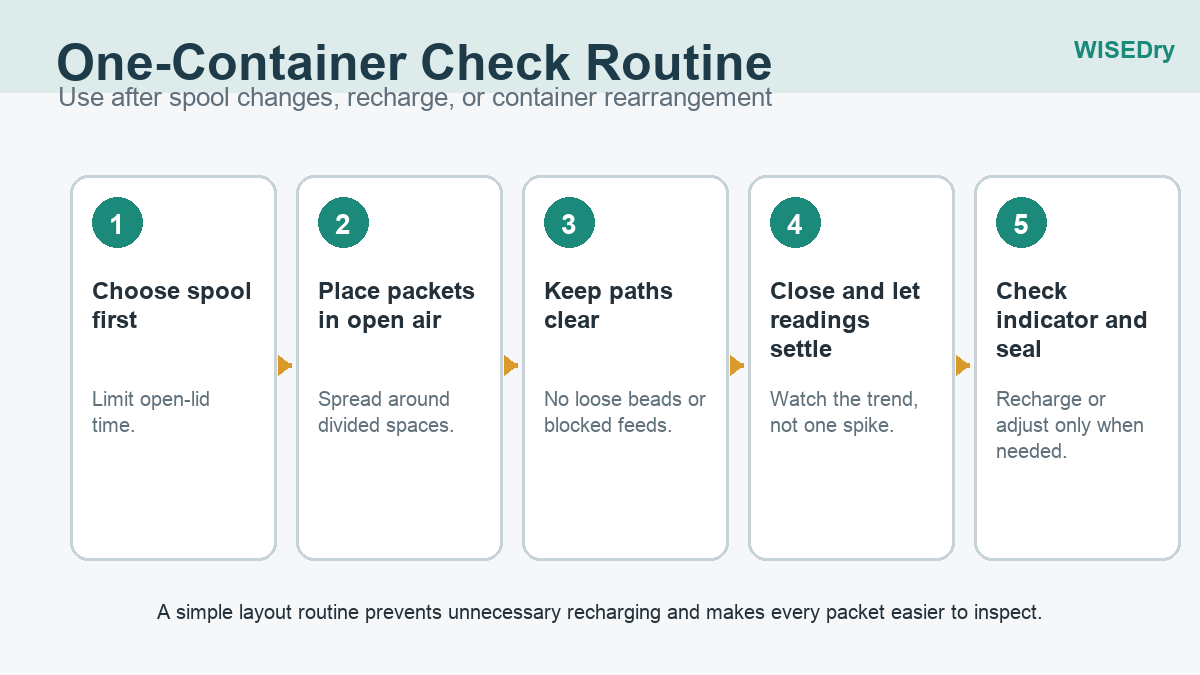
This routine is intentionally simple. A layout that is easy to repeat is more useful than a complex setup that only works on the day you build it.
Common Layout Mistakes
Burying The Only Packet
A packet under three spools may still absorb moisture, but it is hard to inspect and may not get balanced airflow. Move it into a visible side space when possible.
Blocking The Filament Path
Packets should not touch the path where filament leaves the spool, enters a tube, or crosses a guide. Keep this area clean before closing the lid.
Using Loose Beads In A Feed-Through Box
Loose beads can spill when a container moves or tips. If loose silica gel is used, keep it inside a secure breathable holder that cannot open accidentally.
Forgetting The Seal
A well-arranged set of packets cannot fully compensate for a lid, gasket, cable port, or drilled fitting that leaks. If packets saturate unusually quickly, inspect the seal and opening habits.
Recharging Without Checking The Product Guide
Follow the recharge instructions for the exact Wisedry product you are using. Start with the Wisedry recharge hub, and use the saturation checklist if you are unsure whether a packet is ready to recharge.
FAQ
Should Desiccant Go Above Or Below Filament Spools?
Use the position where air can reach the packet and the packet will not be crushed. In many boxes, one packet near the lid side and one near the lower side works better than hiding every packet below the spools.
Can One Large Desiccant Pouch Work In A Multi-Spool Container?
It can work in some open containers, but several smaller packets are often easier to spread around divided spaces. Distribution matters when spools, cardboard edges, holders, or partitions block air movement.
Should I Put Packets Inside Each Filament Bag?
If each spool is individually bagged, the packet needs to be inside that same sealed bag to affect that small air space. A packet outside the bag works on the container air, not the sealed bag interior.
Can Silica Gel Dry Wet Filament In The Container?
Silica gel is best used for storage after filament is already dry. If the spool is wet, follow the filament maker’s drying guidance first, then store it in a sealed container with active desiccant.
How Often Should I Check The Packets?
Check more often when the box is opened frequently, the room is humid, the container stores several spools, or the indicator changes faster than usual. Use product instructions and visible indicators instead of a fixed calendar rule.
Recommended Next Step
Open one shared filament container and look for three things: a buried packet, a blocked feed path, and an indicator you cannot see without unpacking the box. Fix those first. Then confirm sizing with the Wisedry filament dry box guide and recharge saturated packets only according to the correct product instructions.
For a cleaner shared setup, shop Wisedry reusable desiccants. For product-specific questions, use Wisedry Support.