Quick Answer
For most 3D printing filament storage, rechargeable silica gel is the most practical desiccant because it is reusable, easy to monitor and compatible with sealed storage boxes. See more filament storage advice in the 3D printing filament storage hub.
Choose Your Next Wisedry Step
Turn this guide into the right product action, support path, or related tutorial.
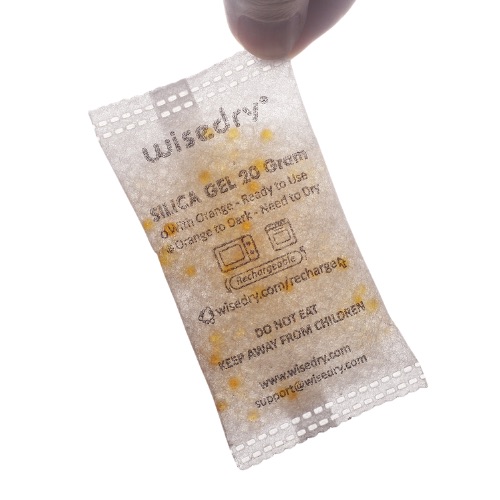 Recharge instructionsFind the right recharge method for Wisedry packets and beads.Recharge hub
 Calculate packet sizeEstimate how much silica gel to use for dry boxes, storage bins, and filament containers.Open guide
 Shop filament desiccantsChoose reusable silica gel for dry boxes, filament bins, and moisture control.Shop now
Best Desiccant for Filament: Quick Decision Guide
For most 3D printer filament storage, color-indicating rechargeable silica gel is the best everyday desiccant. It is clean, reusable, easy to monitor, and works well inside sealed filament boxes, dry boxes, vacuum bags, and spool storage bins. Use enough desiccant capacity for the container volume and recharge it when the indicator shows saturation.
| Filament storage setup | Best desiccant setup | What to check |
|---|---|---|
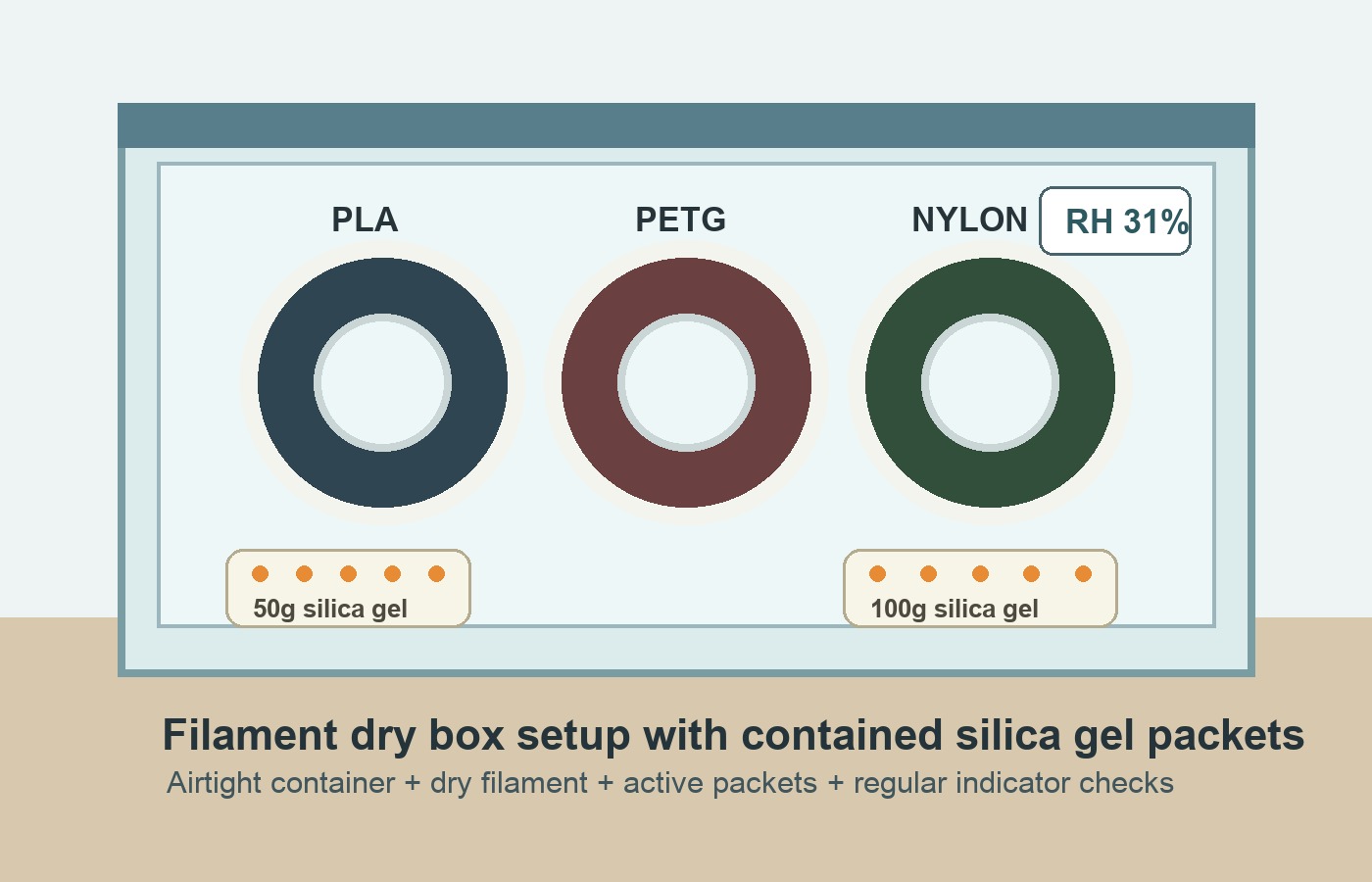
| PLA, PETG, ABS, or TPU in a sealed box | Rechargeable silica gel packets or beads with a visible indicator. | Keep the box sealed and recharge when the color changes. |
| Nylon, PA-CF, PVA, or very moisture-sensitive filament | More silica gel capacity plus a tighter dry box or vacuum storage. | Desiccant helps maintain dryness, but wet filament may still need active drying first. |
| Print farm or multiple spool storage | Larger rechargeable packs distributed across bins or shelves. | Use labels or a recharge schedule so saturated packs are not left in rotation. |
| Loose packets from packaging | Useful as backup, but usually too small for long-term spool storage. | Replace or supplement them with known-capacity reusable silica gel. |
Filament Desiccant FAQ
What is the best desiccant for 3D printer filament?
For most storage boxes and spool bins, rechargeable color-indicating silica gel is the best practical choice because it is reusable, easy to monitor, and safe to keep inside sealed storage.
Is silica gel good for filament storage?
Yes. Silica gel helps keep the storage environment dry after filament has been dried or when new filament is stored in a sealed container. It works best with an airtight box, bag, or dry cabinet.
How much desiccant do I need for filament?
It depends on the container size, seal quality, humidity, and number of spools. Use more capacity for large bins, humid rooms, or moisture-sensitive filaments, and monitor the indicator color so you know when to recharge.
Can desiccant dry wet filament?
Desiccant helps maintain dryness, but it is usually not enough to quickly restore filament that has already absorbed a lot of moisture. Use a filament dryer or controlled heat process first, then store with silica gel.
How often should I recharge filament desiccant?
Recharge whenever the color indicator shows saturation, when the packet gains noticeable moisture weight, or after a long storage cycle in humid conditions. Let packs cool fully before putting them back with filament.
If you own a 3D printer, keeping your filament dry is not optional — it’s essential. Moisture is one of the most common causes of poor print quality, failed prints, and wasted material.
So when it comes to filament storage, many users ask:
What is the best desiccant for filament?
The answer is simple and widely accepted across the 3D printing community:
Silica Gel
Silica gel is the most reliable, safe, and effective desiccant for protecting 3D printer filament from moisture.
🌧 Why Filament Needs a Desiccant
Most filaments are hygroscopic, meaning they absorb moisture directly from the air. This includes common materials such as:
- PLA
- PETG
- ABS
- TPU
- Nylon
Once filament absorbs moisture, you may notice:
- Stringing and oozing
- Popping or hissing sounds during printing
- Bubbles or rough surfaces
- Weak layer adhesion
- Brittle filament that snaps easily
Even small amounts of humidity can significantly reduce print quality.
💧 Why Silica Gel Is the Best Desiccant for Filament
Silica gel is specifically well-suited for filament storage because of how it absorbs moisture and how safely it performs in sealed environments.
Key Benefits of Silica Gel
- High moisture absorption capacity
- Absorbs humidity without turning into liquid
- Keeps storage environments dry and stable
- Safe for enclosed spaces like dry boxes and sealed containers
- Reusable — can be reactivated multiple times
- Available in color-indicating versions for easy monitoring
- Non-toxic and safe for home use
Silica gel works by trapping moisture inside millions of microscopic pores, keeping humidity low without damaging your filament.
🔥 Best Types of Silica Gel for Filament Storage
Color-Indicating Silica Gel (Recommended)
Color-indicating silica gel allows you to visually check when it needs reactivation.
- Orange → Green = moisture saturated
- Free of cobalt chloride
- Safe for long-term use
⚠ Avoid blue indicating silica gel, as it contains cobalt chloride, a toxic chemical not recommended for home or hobby use.
🧰 How to Use Silica Gel for Filament Storage
To get the best results:
- Place silica gel packets directly inside filament dry boxes
- Add extra packets for highly hygroscopic filaments (Nylon, TPU)
- Store filament in airtight containers whenever possible
- Keep unused silica gel sealed until needed
- Monitor color-indicating beads regularly
For reactivation, heat silica gel at 250–300°F (120–150°C) until fully dry, then allow it to cool before reuse.
How to Check Silica Gel Saturation in a Filament Dry Box
Since 3D printer filament rarely shows moisture damage immediately, checking the desiccant matters more than counting days. A simple color check tells you when the silica gel in your filament dry box is losing capacity:
- Look at the indicator — most rechargeable packs use orange-to-green beads: orange means active, green means saturated.
- Check after every few container openings — each opening lets humid air in and consumes capacity.
- Confirm the seal — if beads turn green quickly again after recharge, the gasket or lid may be leaking (see common filament container leaks).
- Recharge, cool, then return — follow the recharge guide and let packs cool fully before they touch filament again.
Where to Place Desiccant Around Filament Spools
Capacity only works if air can actually reach it. Inside a sealed filament container:
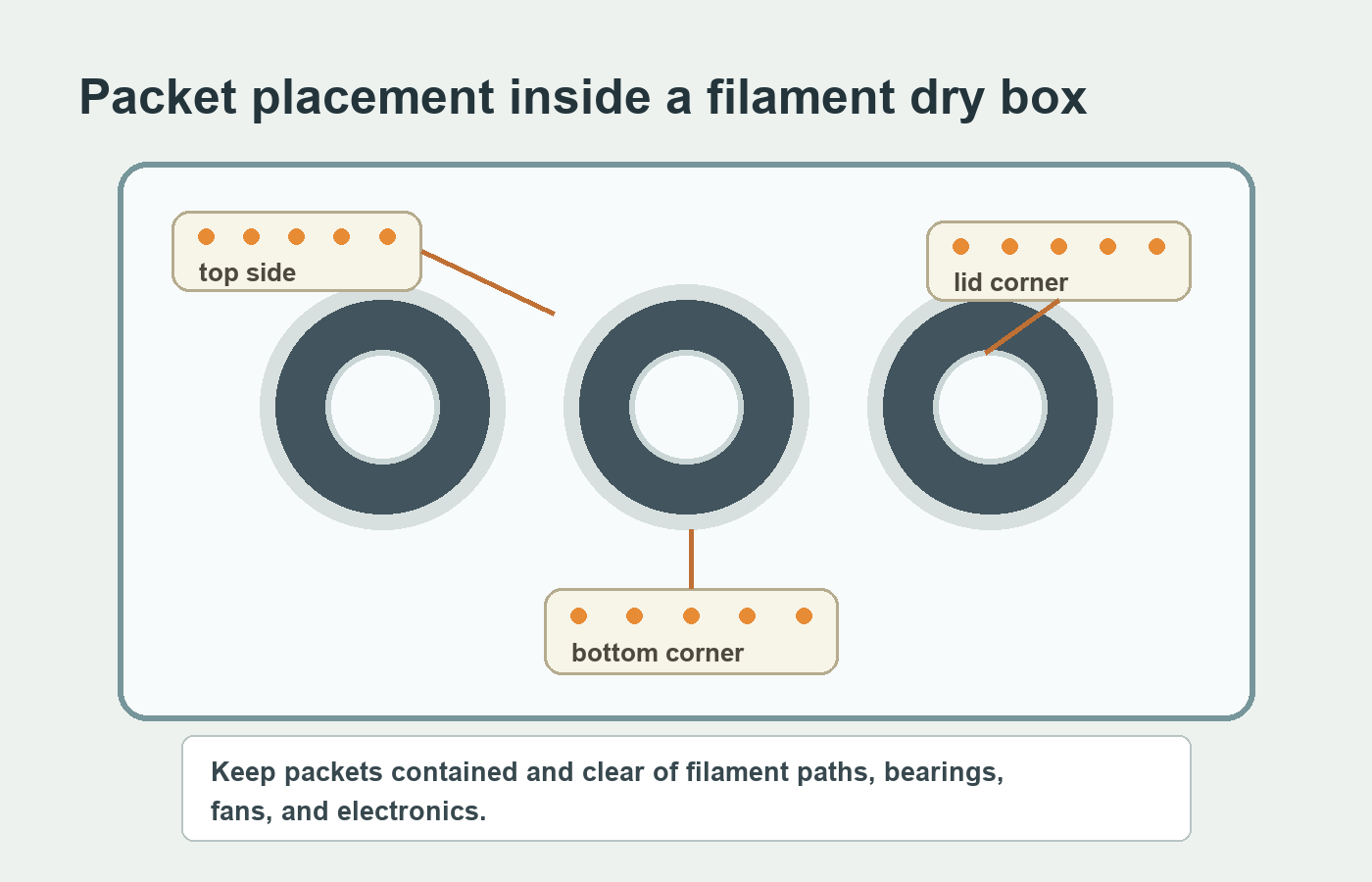
- Do distribute packets around and, where possible, inside spools so dry air reaches the winding.
- Do keep indicator windows or color beads visible so a glance is enough.
- Do label the recharge date so rotation is obvious (see one-container layout tips).
- Don’t press packets hard against the spool face or block the lid gasket — contact without airflow dries very slowly.
- Don’t pour loose beads directly onto filament; use packets or a ventilated holder so grains don’t lodge in the winding.
Moisture damage in filament is gradual: a spool that prints fine today can start stringing weeks later after humid months in a marginal box. That is exactly why the desiccant plan matters more than any single purchase decision — how often you recharge and how you arrange packs decide whether capacity is real when you need it.
If you are starting from scratch, keep it simple: one sealed container, rechargeable color-indicating silica gel sized to the box, indicator beads where you can see them, and a recharge habit. If your filament is already wet, dry it first with heat, then keep it dry with silica gel — desiccant maintains, it does not rescue.
Shop Silica Gel for Filament Storage
Rechargeable, color-indicating silica gel packets and beads make the routine above easy to run: visible saturation checks, predictable recharge cycles, and no refill guesswork. If your spools are already wet, dry them with heat first — then keep them dry in the box.
Related Wisedry Guides and Next Steps
Use these links to move from learning to the right Wisedry solution:
- Recharge instructions hub for reusable silica gel packs and beads.
- Filament dry box silica gel guide for how much desiccant a sealed spool box needs.
- How often to recharge desiccant in a filament dry box for a practical recharge rhythm.
- User Guide center for product instructions and troubleshooting.
- Shop Wisedry products by region or contact us for bulk purchase support.