
Quick answer: For a normally dry car that develops light condensation while parked, a reusable silica gel moisture absorber bag is the simplest no-power option. A powered dehumidifier may suit a vehicle or RV parked where the device has manufacturer-approved power, ventilation and drainage. Neither option fixes rain entry, wet carpet or another active water source.
- Light recurring condensation in a parked, closed car: start with a reusable moisture absorber bag.
- Wet carpet, pooled water or a known leak: remove the water and address the source first; an absorber is not a repair.
- Long stationary storage with suitable external power: compare a powered unit using its vehicle-use, drainage and electrical instructions.
Do Car Dehumidifier Bags Work?
Yes—silica gel bags adsorb water vapor from the air around them, so they can help manage background moisture in a closed cabin. They are not instant windscreen demisters, and their useful run time changes with outside humidity, wet items, how often doors open, the cabin volume and the seal condition.
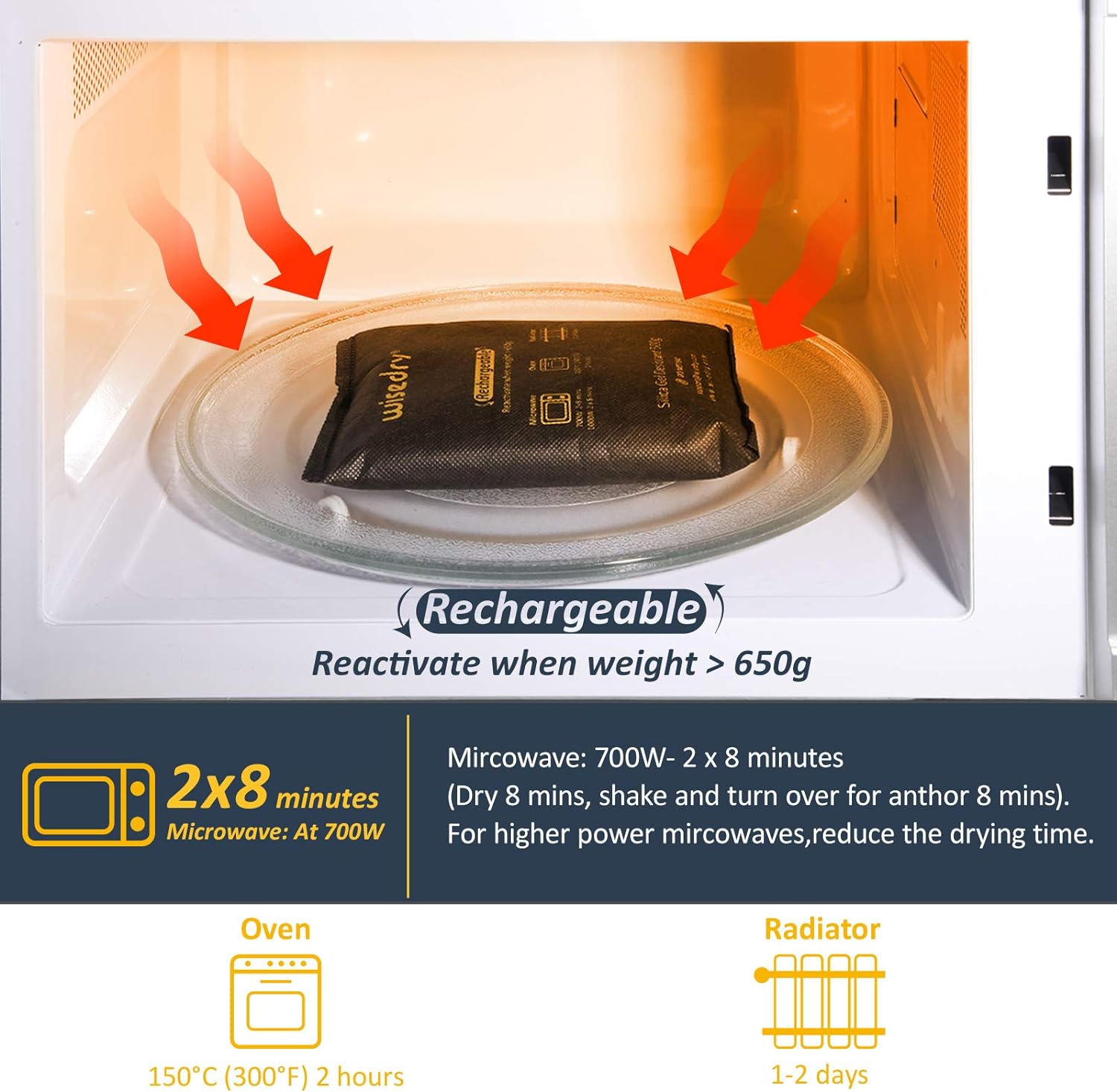
Judge the bag by the instructions for that exact product. If it has an indicator or a weight-based check, use that signal rather than guessing from a fixed number of days. Recharge only by the method printed for the product.
Car Moisture Absorber Bag vs Powered Dehumidifier
| Decision | Reusable silica gel bag | Powered dehumidifier |
|---|---|---|
| Power while parked | Not required | Required; follow device and vehicle instructions |
| Best fit | Background moisture in a closed cabin, trunk or stored vehicle | Stationary setups with suitable power, airflow and drainage |
| Maintenance signal | Product indicator, weight check or label instructions | Tank, drain and filter checks in the device manual |
| Cannot solve | Active leaks, soaked materials or immediate demisting | The underlying path by which water enters the vehicle |
Five Checks Before You Choose a Car Moisture Absorber
- Identify the source. Remove wet coats, mats or cargo. If material stays wet or water returns, deal with that source before adding more absorbent.
- Match the format to the parked car. A stable, reusable bag is easier to move and check than loose material. Do not place anything where it can obstruct pedals, controls, vents or visibility.
- Estimate the starting amount. Cabin size, trunk volume, door opening and wet-weather exposure all matter. Use the Wisedry silica gel amount guide as a starting framework, then adjust from observed results.
- Plan an observable placement. Put the bag on a stable surface where air can reach it and where you can remove it for inspection. See the car placement guide.
- Define the next check. Record the placement date and inspect after wet weather, frequent door opening or a visible indicator change. Do not assume one recharge interval fits every vehicle.
A Simple Test for Your Parked Car
- Start with a dry interior and remove obvious wet items.
- Place the bag securely using the placement checklist above.
- Record the date, weather and whether the windows showed condensation before the test.
- Recheck after a comparable parked period instead of changing several variables at once.
- If moisture returns quickly, use the car bag troubleshooting guide to separate a saturated bag, poor placement and an ongoing water source.
This is a comparison check, not a promise that an absorber will eliminate condensation under every condition.
Car Moisture Absorber FAQ
What is the best moisture absorber for a car?
The best fit depends on the source and parking setup. For ordinary background humidity in a closed parked car without external power, a reusable silica gel bag is usually the practical starting format. Active water entry or soaked materials require source control first.
Where should I put a moisture absorber bag in the car?
Choose a stable, breathable location where the bag cannot interfere with driving controls, visibility or moving parts. Keep it accessible for inspection, and follow the product label.
How often should a car dehumidifier bag be recharged?
There is no universal interval. Check the exact product indicator, weight guidance or instructions, and inspect sooner after wet weather or frequent door opening. Use the car recharge-frequency guide for a condition-based routine.
Can a moisture absorber clear a fogged windscreen before driving?
Do not treat a passive bag as an instant demisting method. Make sure visibility is clear using the vehicle manufacturer’s controls and instructions before driving.
Should I use one bag or two?
Start from the vehicle volume, moisture load and the product amount guidance, then verify from the product signal and observed conditions. More bags do not fix a wet interior or a leak.
Choose the Next Step
If you need a reusable no-power option for a parked vehicle, compare current formats in the Wisedry car dehumidifier collection. If your product identity, indicator or recharge method is unclear, contact Wisedry Support before heating it.


