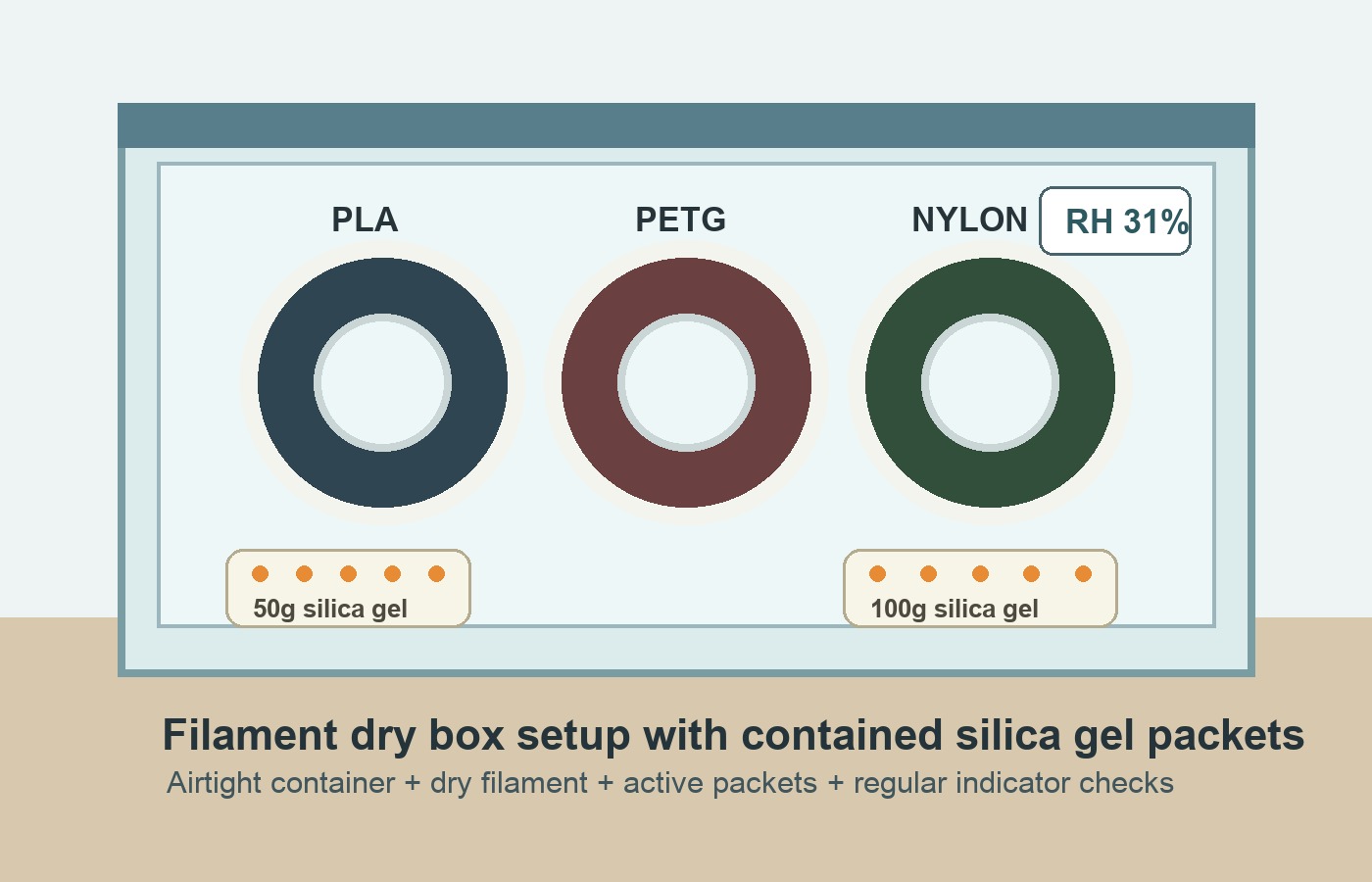
If you store opened 3D printer filament for more than a few days, a dry box is one of the simplest ways to keep storage conditions more controlled. The dry box does not have to be complicated: a sealed container, dry filament, active silica gel, and a simple checking habit are enough for many home and workshop setups.
The key is using silica gel as a storage tool. If a spool is already wet, follow the filament maker’s drying guidance first. After the spool is dry, silica gel helps keep the air inside a sealed box drier between prints.
Quick Answer
For a small single-spool dry box, start around 50g of active silica gel. For a two-spool box, larger tote, or container opened often, start around 100-250g and monitor the color indicator or a small humidity meter.
Use more active silica gel when the box is larger, the lid seal is average, the room is humid, the box is opened frequently, or the filament is more moisture-sensitive. Use less only when the box is small, well sealed, and checked regularly.
Shop Wisedry reusable silica gel packets
What A Filament Dry Box Actually Does
A filament dry box is mainly a storage environment. It helps reduce moisture exposure after a spool has been opened, dried, or moved out of its original packaging.
Silica gel does not work like a heated dryer. It absorbs moisture from the air around the spool over time. That makes it useful for storage, but it is not a fast fix for a spool that is already printing poorly from absorbed moisture.
Common signs that storage conditions may need attention include:
- Popping or crackling at the nozzle.
- More stringing than usual.
- Rougher surface texture.
- Bubbles in extrusion.
- Brittle behavior on older opened spools.
- A dry box humidity reading that rises and stays high.
Those signs can also have other causes, including slicer settings, material age, nozzle temperature, and filament quality. Treat silica gel as one part of a practical storage routine, not as a universal print-fix tool.
How Much Silica Gel To Start With
Use these ranges as practical starting points:
- Small single-spool sealed box: start around 50g.
- Two-spool dry box: start around 50-100g.
- Medium filament storage tote: start around 100-250g.
- Multi-spool storage bin: start around 250g or more, then check more often.
- Very humid room or frequent openings: start higher and monitor the indicator.
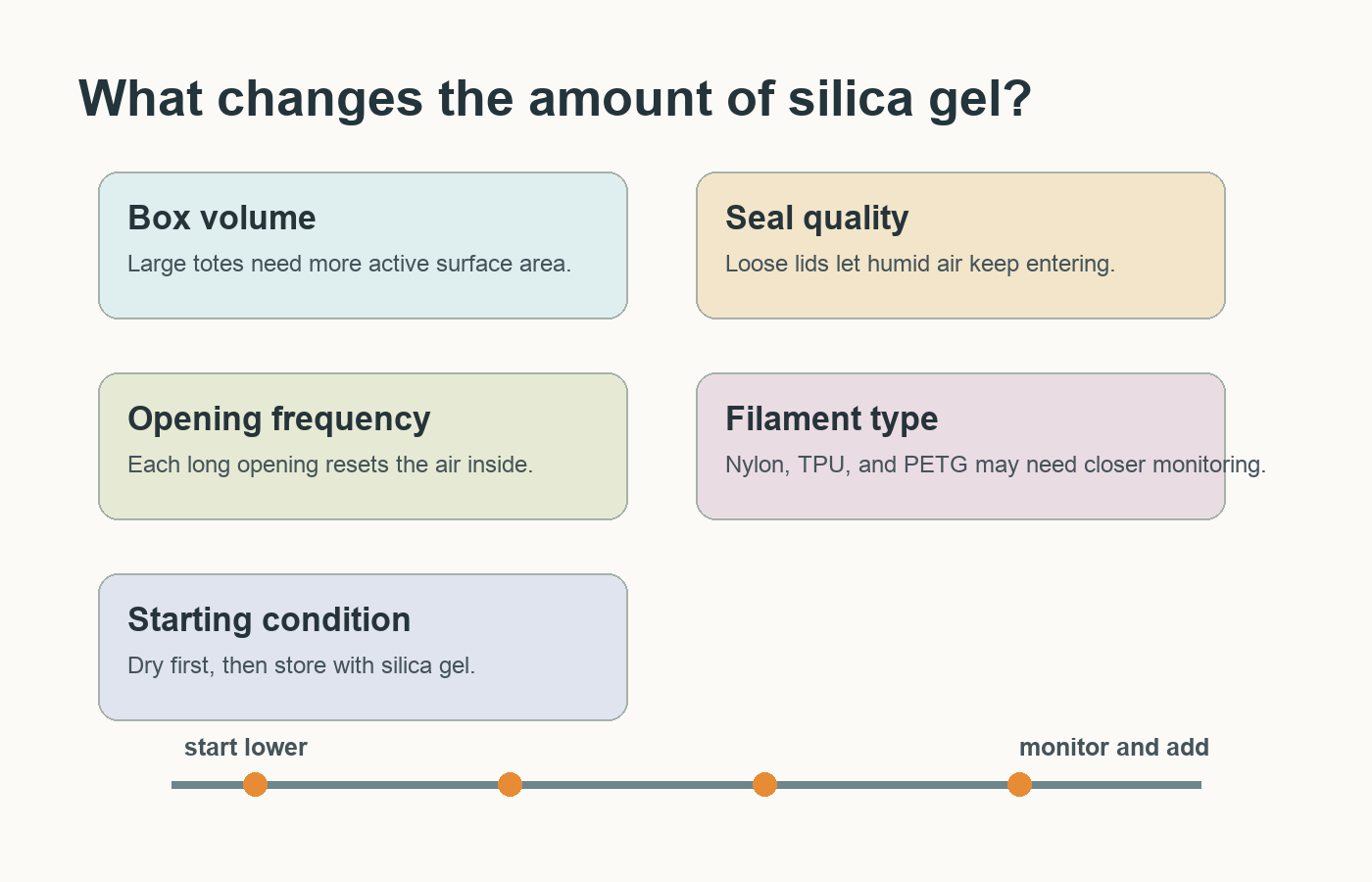
These are not lab specifications. The right amount depends on container volume, seal quality, room humidity, opening frequency, filament type, and whether the filament was dry when it went into storage.
For a broader sizing framework, use the Wisedry silica gel amount guide.
The Five Factors That Change The Amount
Box Volume
A larger container holds more air and often has more open space around spools. If you move from a single-spool box to a tote that holds several spools, do not rely on the same tiny packet count.
Seal Quality
A tight seal matters more than many people expect. A loose lid keeps letting humid air enter the box, which can make silica gel saturate faster. If you are unsure about the lid, run a simple seal check before adding more packets. The container seal checklist is a useful starting point.
Opening Frequency
Every long opening replaces some of the drier air inside the box with room air. If you change spools often, store the box in a humid room, or leave the lid open while working, check the indicator more frequently.
Filament Type
PLA, PETG, TPU, nylon, and specialty filaments do not behave exactly the same. Follow the filament maker’s storage and drying guidance for sensitive materials, then use silica gel to help maintain the storage environment after drying.
Starting Condition
Silica gel works best when the filament goes into storage dry. If the spool is already wet, silica gel in a room-temperature storage box may not solve the problem quickly. Dry the spool first using a suitable method, then store it with active silica gel.
Where To Place Silica Gel Packets
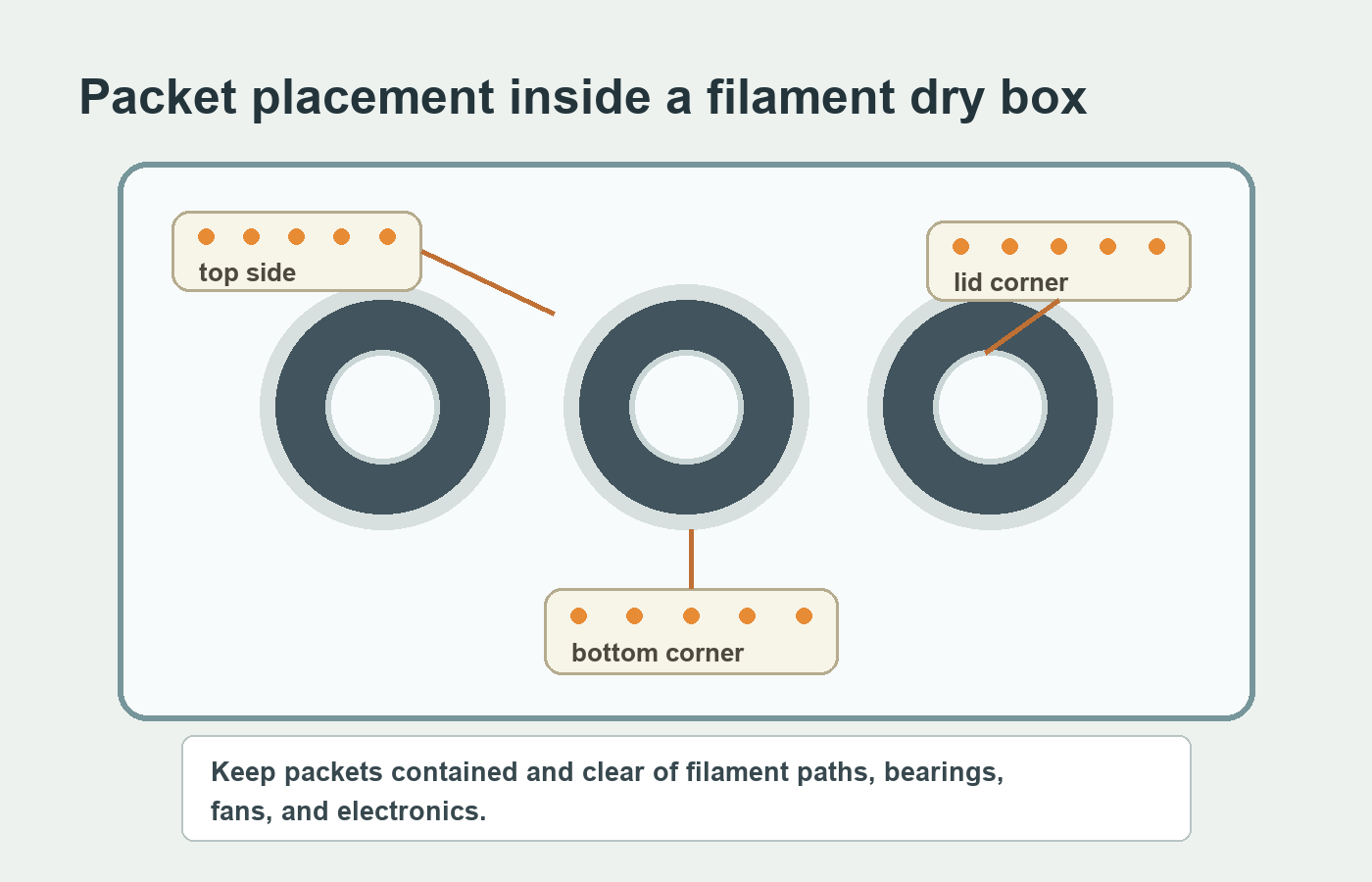
Place packets where air can reach them, and keep them away from moving parts or feed paths.
Good placement options include:
- One packet near the lid side of the container.
- One packet near the bottom or a corner.
- Larger packets beside spools rather than under them.
- Several smaller packets spread around a large tote.
- A packet near the area farthest from the opening if the box is deep.
Avoid these placement mistakes:
- Loose beads where they can spill into filament paths.
- Packets pressed under heavy spools.
- Desiccant near fans, bearings, gears, printer electronics, or moving components.
- A single packet buried where air cannot circulate around it.
Packets, Pouches, Or Loose Beads?
For most 3D printing storage setups, packets or breathable pouches are easier to manage than loose beads.
Packets work well when you want clean handling, simple recharging, and less spill risk. They are especially practical when the box moves often or sits near printer hardware.
Loose beads can still work if they are inside a sealed, breathable holder that cannot open accidentally. Do not leave loose beads free in a dry box that connects to a spool feeder, AMS-style system, fan, bearing, or electronics area.
When To Recharge The Silica Gel
Recharge or replace silica gel when the indicator shows saturation, the dry box humidity reading rises and stays high, the box was left open, or the container was moved into a more humid space.
If you use Wisedry products, follow the current product instructions rather than guessing. Start with the Wisedry recharge guide, and use the saturation checklist when you are not sure whether the packet is still active.
Do not overheat packets. Do not microwave a product unless its specific Wisedry instructions say that method is allowed.
A Simple Setup Routine
- Dry the filament first if it has already absorbed moisture.
- Choose a container with a tight lid.
- Add active silica gel packets or a contained breathable pouch.
- Place packets where air can circulate.
- Keep packets away from feed paths and moving parts.
- Close the lid promptly after loading or removing spools.
- Check the indicator or humidity meter on a regular schedule.
- Recharge or replace saturated silica gel before storage conditions drift too far.
This routine is intentionally simple. A dry box works best when it is easy enough that you keep using it.
Common Mistakes
Using Tiny Packaging Packets For A Large Tote
Small packets from product packaging may help a little, but they can saturate quickly in a multi-spool container. Use a more realistic amount for the box size and check it instead of assuming it will last.
Treating Silica Gel As A Filament Dryer
Silica gel in a storage box is slower than a heated drying method. If a spool is already wet, dry it first using a suitable process, then store it with active silica gel.
Ignoring The Seal
Adding more silica gel cannot fully compensate for a container that is left open or poorly sealed. Fix the lid habit and seal quality before adding more packets.
Letting Beads Spill
Spilled beads are inconvenient in a plain storage box and more serious near printer-adjacent mechanisms. Keep desiccant contained.
Forgetting To Recharge
Color-indicating silica gel only helps if you check it. Once the packet is saturated, recharge or replace it according to product instructions.
FAQ
Can silica gel dry wet 3D printer filament?
Silica gel can help keep a sealed storage space drier, but it is not the fastest method for drying an already wet spool. Follow the filament manufacturer’s drying guidance first, then store the spool with active silica gel.
How much silica gel do I need for one spool?
For a small airtight single-spool box, start around 50g of active silica gel and monitor the indicator. Use more if the box is larger, opened often, or stored in a humid room.
Is loose silica gel okay in a filament dry box?
Only if the beads are inside a breathable holder that stays closed. Do not leave loose beads where they can spill into filament paths, spool holders, fans, bearings, or printer electronics.
How often should I recharge silica gel in a filament box?
Recharge it when the indicator changes, the humidity reading rises and stays high, or the box has been opened frequently. Timing depends on room humidity, seal quality, box size, and use habits.
Do I still need a heated filament dryer?
If the filament is already wet, a heated dryer or the filament maker’s recommended drying method may still be needed. A silica gel dry box is mainly for storage after the spool is dry.
Next Steps
If you are building a filament storage box, start with a sealed container, contained silica gel packets, and a simple checking routine. Then adjust the amount based on what the indicator or humidity reading shows.
Related Wisedry resources: