Quick Answer: Choose by Space, Not Popularity
Use a portable room dehumidifier for open rooms with a continuing moisture load; use rechargeable desiccant for a small enclosed container, cabinet, case, or parked vehicle where air exchange and power are limited. A product can be popular and still be wrong for your space.
Before choosing, record five things: the space type and size, the source of moisture, starting humidity, temperature, and how water or saturated desiccant will be handled. Those facts are more useful than a “best,” “most bought,” or star-rating label.
What This Guide Does—and Does Not—Rank
This is a selection framework, not a Consumer Reports page, affiliate roundup, laboratory ranking, or claim that one model wins every use case. Wisedry has not independently tested every room dehumidifier, and this page does not reproduce or imply access to any third party’s subscriber-only ratings.
Model availability, specifications, certifications, and instructions change. Confirm them on the current manufacturer label and official product page before buying. If you want a third-party model ranking, consult that publisher directly; use the checks below to decide which category and features belong on your shortlist first.
Step 1: Identify the Space You Are Actually Treating
Open room, basement, laundry area, or workshop
A powered room dehumidifier moves air across a moisture-removal system and collects or drains water. It is the category to evaluate when room air is the target, the space has safe access to power, and you can manage a tank or continuous drain. Size it from the manufacturer’s rated moisture-removal capacity and the actual dampness of the room—not from floor area alone.
Closed box, cabinet, case, dry box, or parked vehicle
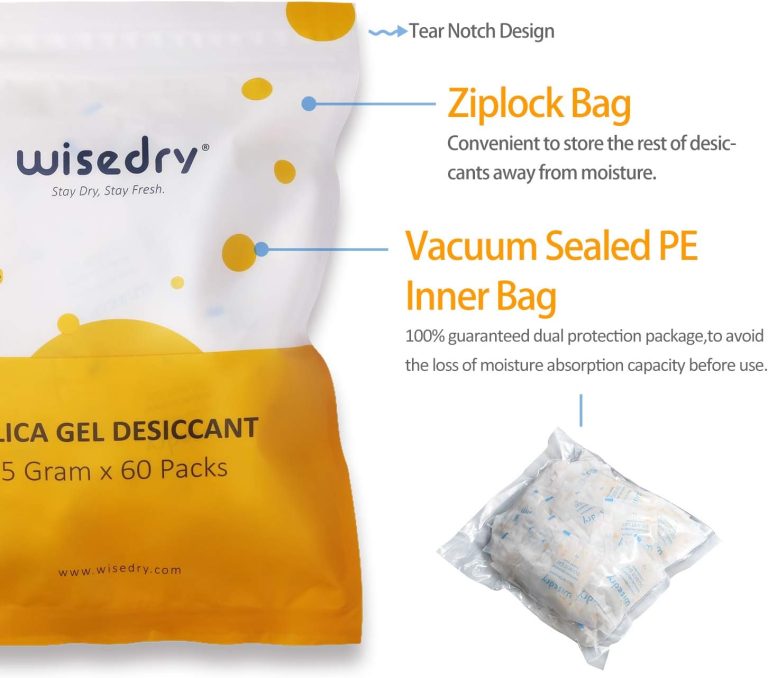
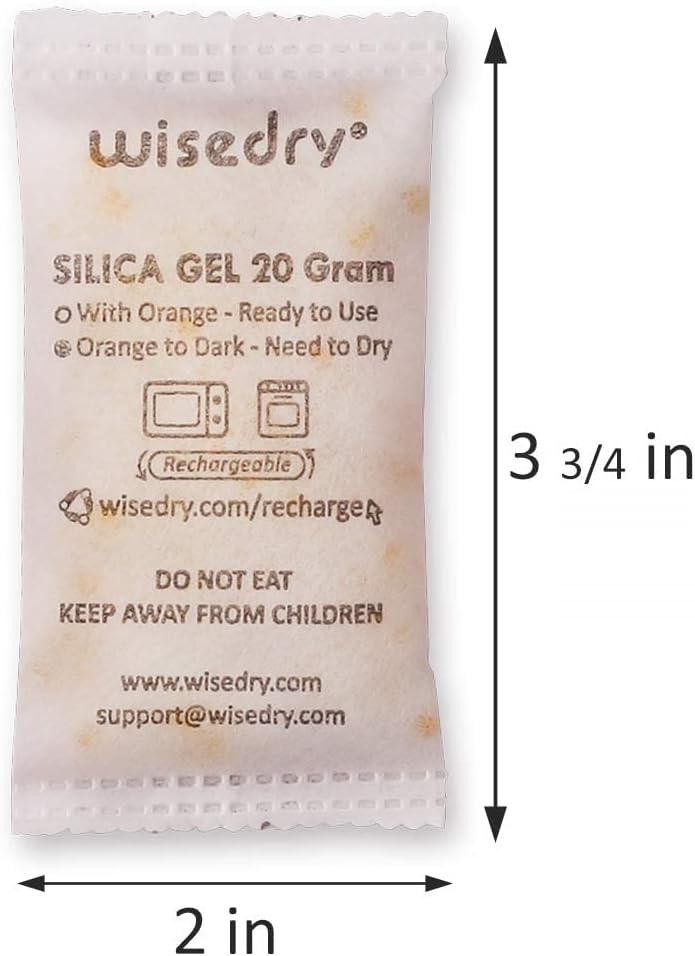
Rechargeable silica-gel packs are designed for smaller enclosed spaces where passive moisture adsorption, silent operation, and no power during use are useful. Their performance depends heavily on the enclosure seal, free airflow around the pack, how often the space is opened, and how quickly the indicator or check schedule shows saturation.
Start with the Wisedry Amount Guide for container volume and operating-condition inputs. For vehicles, compare the two approaches in Car Moisture Absorber Bags vs Dehumidifiers.
A room with enclosed compartments
One room can contain two separate moisture-control jobs. A powered unit may treat the room air while a sealed cabinet or storage case still needs its own check routine. Do not assume that a room reading automatically describes every closed compartment; measure the target space itself when the stored contents matter.
Step 2: Find the Moisture Source Before Sizing Equipment
- Normal humid air: compare capacity, airflow, temperature range, and drainage.
- Frequent door or lid opening: expect the device or desiccant to work harder because humid air is repeatedly introduced.
- Wet material or standing water: remove the water and dry the material first; a dehumidifier or packet should not be used to hide an active source.
- Leak, plumbing fault, or building-water entry: correct the source or contact the appropriate professional before treating the symptom.
- Uncertain source: log humidity in the target space at the same times each day before adding more capacity.
Step 3: Compare the Features That Change Daily Use
For a powered room dehumidifier
- Rated capacity: use the current rating method and compare products on the same basis.
- Operating-temperature range: confirm the manufacturer permits use at the lowest expected room temperature.
- Drainage: decide whether you will empty a tank, use gravity drainage, or use a pump-equipped setup.
- Control range and restart behavior: check the manual instead of assuming all models resume the same way after an interruption.
- Noise and placement clearance: verify the published data and required airflow clearance for where the unit will actually sit.
- Current certification: verify any ENERGY STAR claim in the official product listing rather than relying on an old roundup.
For rechargeable desiccant
- Amount and shape: match the pack to the enclosure volume and available placement area.
- Seal quality: a leaky enclosure shortens the useful interval between checks.
- Indicator or check method: use the exact product’s instructions; colors and thresholds are not universal.
- Recharge method: confirm appliance, time, temperature, cooling, and reuse instructions for the finished pack.
- Containment: keep the packet intact, uncrushed, and positioned where air can reach it.
Use the Wisedry recharge guide for product-specific maintenance paths. If the label is damaged, unclear, or does not match the guide, stop and ask Wisedry Support.
Step 4: Use a Seven-Day Verification Log
- Place a suitable hygrometer in the target space, away from direct airflow or a wet surface.
- Record humidity and temperature before starting.
- Record the same measurements at consistent times for seven days.
- Note door or lid openings, wet-weather changes, tank emptying, drainage interruptions, and desiccant checks.
- For a room unit, confirm the fan has clearance and the drain or tank routine is sustainable.
- For desiccant, note when the product-specific recharge signal or check point occurs.
- Adjust only one variable at a time—capacity, placement, seal, or check interval—so you can tell what changed.
This log does not certify that a device is suitable for every item or solve an active leak. It turns a vague popularity decision into an observable maintenance decision for your own space.
Common Buying Mistakes
- Choosing a model because a headline says “best” without checking the testing date or conditions.
- Comparing two capacity numbers measured under different standards.
- Sizing from square footage while ignoring dampness, temperature, and air exchange.
- Buying a pump feature without confirming where the discharge line can safely go.
- Using a room unit as a substitute for repairing a leak or drying soaked materials.
- Putting passive desiccant in a large open room and expecting powered-unit airflow and capacity.
- Recharging a finished packet with instructions written for a different product or loose media.
Frequently Asked Questions
Does Consumer Reports recommend the dehumidifiers on this page?
This page is not produced by, affiliated with, or endorsed by Consumer Reports, and it does not present their rankings. Check Consumer Reports directly for its current testing and ratings.
Is the most popular dehumidifier automatically the best choice?
No. Popularity does not tell you whether the product fits your room size, temperature, drain access, noise tolerance, enclosure, or maintenance routine.
Can rechargeable desiccant replace a basement dehumidifier?
Not for general room-air treatment. Rechargeable desiccant is better suited to smaller enclosed spaces. A powered room dehumidifier has active airflow and a much larger removal-and-drainage system.
Can one room unit also control a sealed cabinet?
Do not assume it will. A closed cabinet has limited air exchange with the room. Measure inside the cabinet and choose a separate enclosed-space routine if needed.
Where should I start if I cannot choose?
Write down the target space, dimensions, temperature range, current humidity, moisture source, opening frequency, power access, and drainage options. For an enclosed-space silica-gel setup, send those details to Wisedry Support.
Sources and Scope
- ENERGY STAR: Dehumidifiers — current product-category guidance, certified-product lookup, and efficiency context.
- Current manufacturer product labels and manuals — capacity, temperature range, drainage, clearance, controls, and maintenance for the exact model.
- Wisedry product instructions — recharge and handling requirements for the exact finished desiccant pack.
Choose the Next Step
For an enclosed-space setup, calculate the desiccant amount, review the recharge routine, browse Wisedry reusable desiccants, or ask Support about an unclear label or setup.