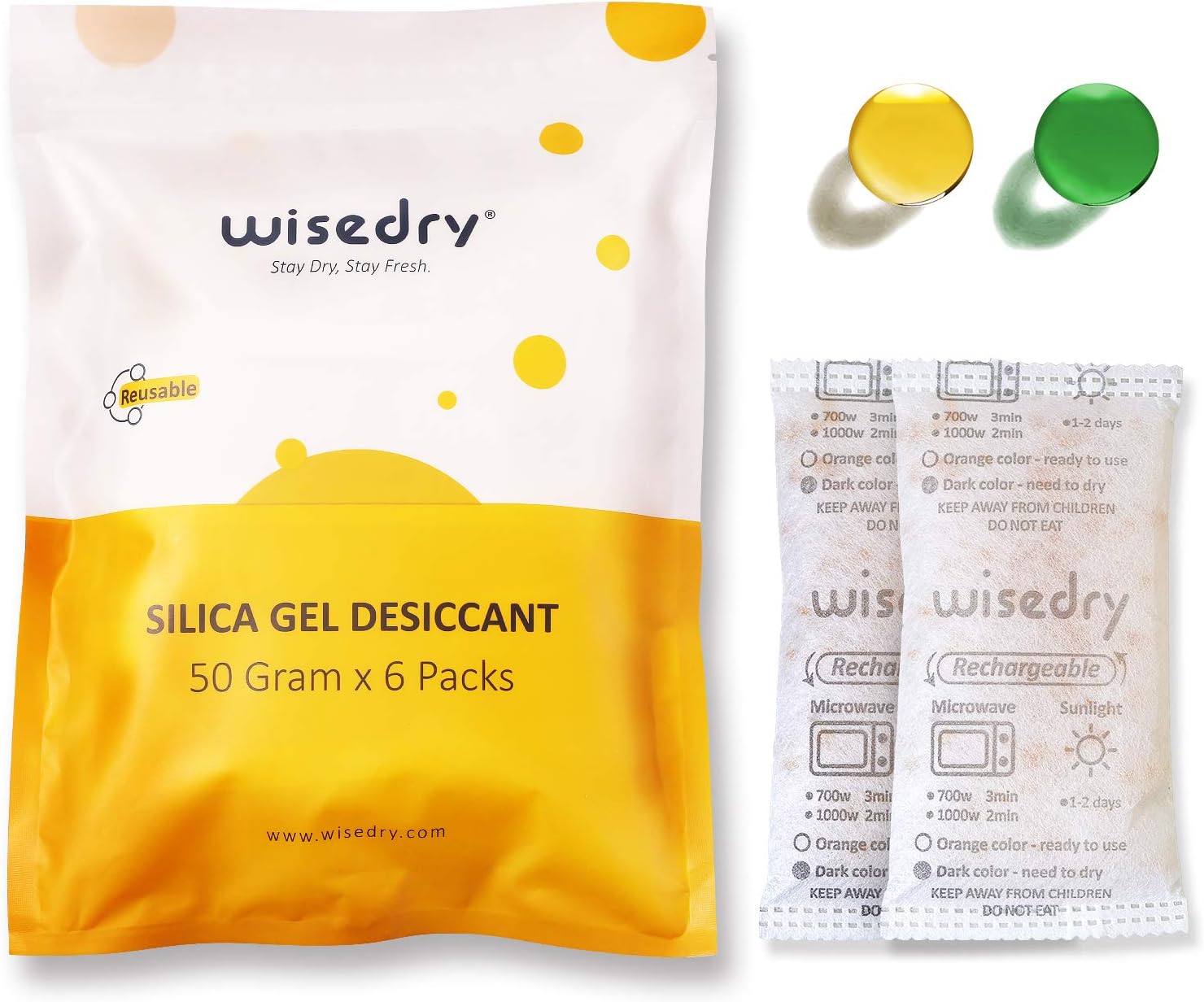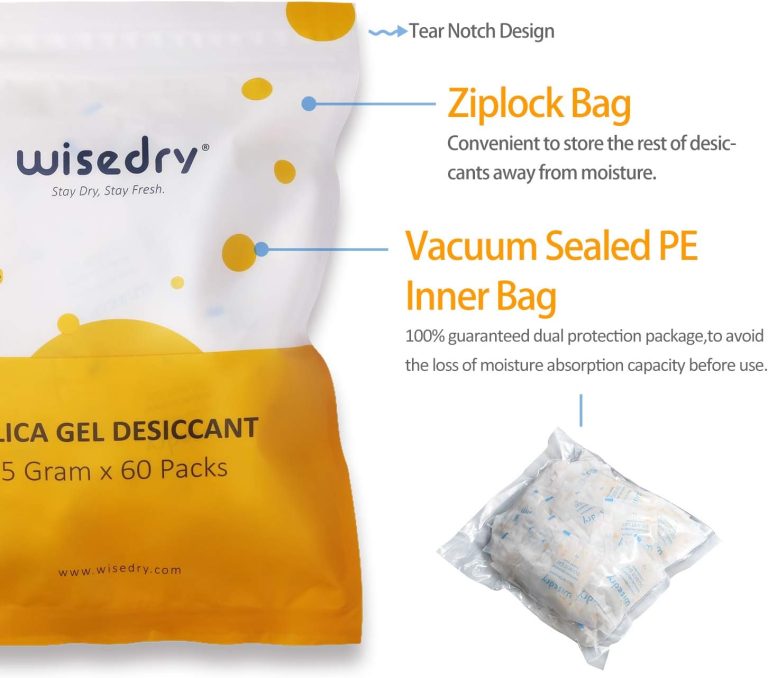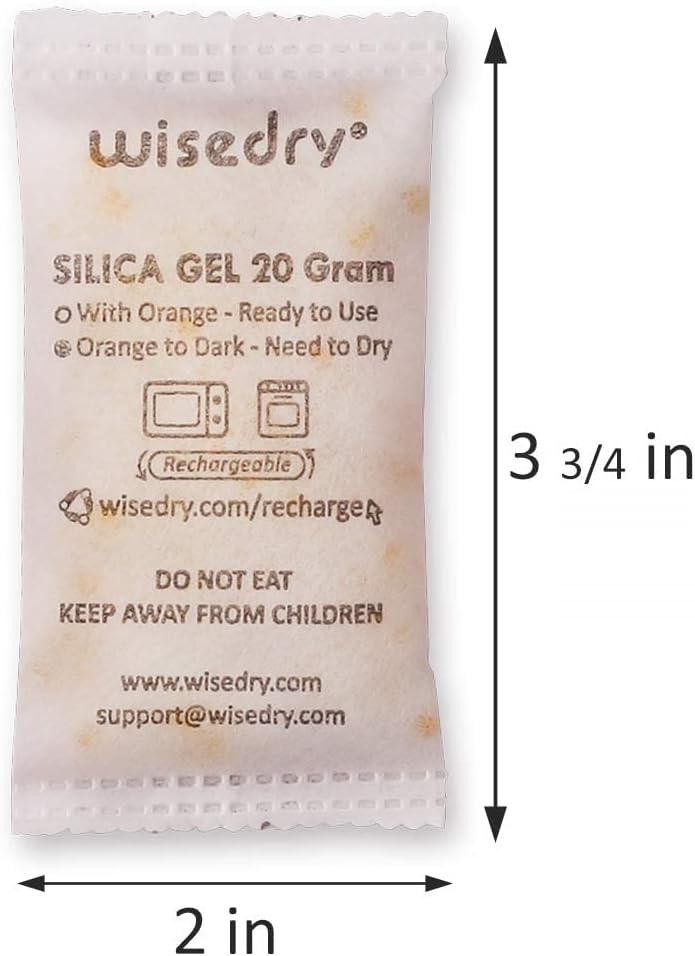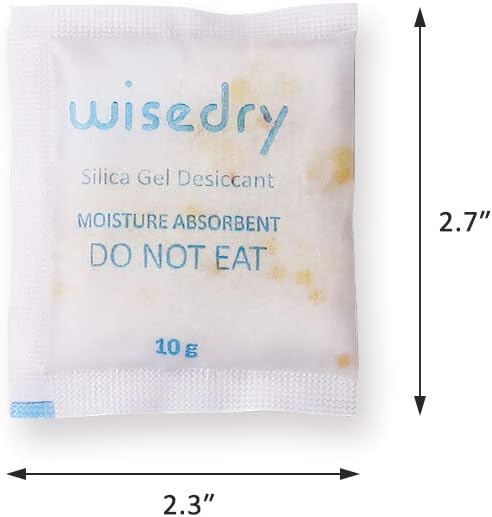
The best desiccant pack size for a small container is the one that helps you reach the total amount your setup needs while still fitting safely, staying visible, and allowing air to move around it. Packet size is not a substitute for calculating the total amount. First estimate the total with the Wisedry Silica Gel Amount Guide, then decide whether that total is easier to use as one packet or several smaller packets.
For many small boxes, a compact packet is easier to place than a large sachet that must be bent, compressed, or buried under the stored items. But smaller is not automatically better. Too many tiny packets can make counting, checking, and recharging harder. The right choice balances amount, physical fit, airflow, opening frequency, and maintenance.
Start With Total Amount, Not Packet Dimensions
A packet marked 2 g, 5 g, 10 g, or another weight tells you how much desiccant it contains. It does not, by itself, tell you which container it suits. Container volume, seal quality, what goes inside, how often the lid opens, and the surrounding humidity all affect the starting amount and the checkup schedule.
Use this order:
- Measure or estimate the container’s internal volume.
- Use the Amount Guide to choose a reasonable starting total.
- Check how much clear placement space remains after the contents are loaded.
- Divide the total into packet sizes that fit without folding, crushing, or blocking the lid.
- Plan where you will see and remove every packet during a checkup.
For example, if your chosen starting total can be supplied by one medium packet or two smaller packets, the decision should come from the container layout—not from assuming that one format always absorbs moisture better. The total, exposure to the enclosed air, and maintenance routine matter more than the number printed on an individual packet.
Choose A Packet That Fits Without Being Forced
Place the stored items in the container before deciding where the desiccant will go. Look for a dry, open area where a packet can lie flat or remain in its intended shape. The packet should not need to be wedged into a narrow gap, folded around an object, or trapped between the contents and the lid.
A packet is probably too large for the location if:
- it must be sharply folded to fit;
- the lid presses on it when closed;
- a hinge, latch, divider, or sharp corner touches it;
- stored items slide onto it when the box moves;
- you cannot remove it without pulling or scraping the outer material;
- it covers labels, vents, controls, or access points on the stored item.
In those cases, use a smaller packet format while keeping the planned total amount unchanged. If every available space is a pinch point, reorganize the container rather than forcing a sachet into an unsafe position.
Before adding desiccant, run through the Airtight Box Checklist. A poorly seated lid, damaged gasket, or obstructed closure can make packet-size decisions less useful because humid air keeps entering the box.
One Packet Or Several Smaller Packets?
One packet is usually simpler to count, inspect, label, remove, and recharge. It can be a practical choice when the container has one clear placement zone and the packet fits without pressure.
Several smaller packets can be useful when:
- one larger packet does not fit flat;
- the container has separated compartments;
- stored objects create more than one open-air zone;
- you need to distribute the planned total without blocking access;
- a single location would leave the packet buried or difficult to inspect.
Do not scatter packets simply to make the setup look more complete. Every packet adds another item to find and maintain. If you use multiple packets, count them, keep their sizes consistent when practical, and note their positions. The guide to one large desiccant pack versus several small packs explains the tradeoff in more detail.
Match Packet Size To The Container Layout
Small containers vary more than their outside dimensions suggest. A shallow document box, divided parts organizer, compact gear case, and small craft bin may have similar total volumes but very different usable spaces.
Shallow Boxes
A thinner packet is usually easier to keep below the lid line. Close the empty container gently with the packet in its proposed location before loading valuable contents. Reopen it and confirm that the packet did not shift, crease, or catch on the edge.
Divided Organizers
A single larger packet may not share air evenly with tightly separated compartments. If the dividers create distinct sections, smaller packets may be easier to position without covering small parts. Follow the practical placement steps in How To Use Silica Gel In A Parts Organizer.
Gear And Accessory Cases
Choose a packet that stays clear of latches, hinges, cables, and moving accessories. The fit should remain safe when the case is carried, not only while it sits open on a table. Avoid any spot where a heavy object can slide onto the sachet.
Small Storage Bins
If the bin is deeper than it is wide, prioritize visibility. A slightly larger packet in a clear side position may be easier to manage than several tiny packets hidden under the contents. Leave yourself a direct path to inspect and remove it.
Opening Frequency Changes The Maintenance Plan
A container opened every day exchanges air with the room more often than a box that stays closed for weeks. That does not automatically mean you should choose the largest packet that fits. It means the total amount and checkup interval deserve closer attention.
For a frequently opened container:
- keep packets visible so you can check them without unpacking everything;
- avoid a location that is disturbed every time you reach inside;
- inspect after unusually long openings or damp conditions;
- follow the indicator and recharge instructions for the exact Wisedry product;
- reconsider the starting amount if the setup repeatedly reaches its check point sooner than expected.
Read How To Choose Desiccant For A Container You Open Every Day for a fuller setup routine. Packet size should support that routine: easy to see, easy to remove, and hard to lose beneath the contents.
Leave Airflow Around The Packet
A desiccant sachet should be exposed to the air inside the container. Do not seal it inside another plastic bag, cover it with tightly packed objects, or press it flat beneath the stored contents. Avoid placing it where paper, fabric, foam, or loose supplies completely surround its surface.
You do not need to create a large empty chamber around every packet. A practical goal is simply to prevent the packet from being buried, wrapped, crushed, or isolated from the enclosed air. A visible edge and a stable open position also make future checks easier.
If using multiple small packets, distribute them only where the layout supports a real purpose. Keep a simple location note so none remains forgotten when you empty, clean, or reorganize the box.
Do A Dry Fit Before Final Placement
A quick dry fit prevents many avoidable problems:
- Load the container as it will normally be used.
- Put the selected packet or packets in the proposed positions.
- Confirm that every sachet lies naturally without a sharp fold.
- Close the lid slowly and check for resistance.
- Reopen the box and look for shifting, pinching, or new creases.
- Make sure every packet is still visible and removable.
- Count the packets and record the starting date if that helps your routine.
If the setup fails this test, change the placement or divide the planned total into a more suitable packet format. Never cut open a sachet, transfer its contents to an improvised wrapper, or alter a packet to make it fit.
Common Packet-Size Mistakes
Choosing By Container Name Alone
A “small box” is not a standard volume or layout. Measure the inside and account for the contents, seal, and opening routine.
Using The Largest Packet That Physically Fits
Physical fit is only one requirement. A packet that barely fits may be pinched, hidden, or difficult to inspect. Comfortable placement is better than a forced fit.
Splitting The Total Into Too Many Pieces
More packets create more inspection points. Use multiple packets when the layout benefits, not because a higher packet count looks more thorough.
Forgetting Displacement
The stored items reduce open space and can change airflow paths. Choose the final packet arrangement with the real contents loaded.
Ignoring The Lid And Hinge
A packet may look safe while the box is open but move into a pressure point when the lid closes. Always perform a slow close-and-reopen test.
Mixing Unidentified Packets
If you cannot confirm a packet’s size or instructions, do not rely on appearance alone. Keep identifiable products together and use Wisedry Support when the label or product format is unclear.
Frequently Asked Questions
Is one 10 gram packet the same as two 5 gram packets?
They provide the same labeled total weight, but they do not create the same physical layout. One packet is simpler to track; two smaller packets may fit separate spaces. Choose the arrangement that remains uncompressed, visible, and maintainable.
Should I use the smallest packets available in a tiny box?
Not automatically. First determine the total starting amount, then use the fewest appropriately sized packets that fit the available spaces without being forced or buried.
Can I fold a larger silica gel packet to make it fit?
Avoid sharp folding or compressing a sachet. Choose a smaller packet format or reorganize the container so the outer material and seams are not stressed.
Where should the packet sit in a small container?
Use a dry, stable, visible area with exposure to the enclosed air. Keep it away from pinch points, spills, moving parts, sharp edges, and the direct weight of stored objects.
When should I change the packet-size setup?
Review it when the contents change, the packet keeps moving, the lid contacts it, inspections are difficult, or the product reaches its recharge point sooner than your routine can manage. Adjust placement, total amount, or packet division based on the observed setup.
Build A Setup You Can Maintain
For a small container, the best desiccant pack size is not a universal number. It is a format that supplies the planned total amount, fits without stress, stays exposed to the enclosed air, and remains easy to see and remove.
Next step: Estimate your starting total with the Wisedry Silica Gel Amount Guide, then visit the Wisedry Shop to compare packet formats that fit your container. If the product or setup is unclear, contact Wisedry Support before use.