Rechargeable silica gel is made to be dried out and used again, but there is no single reuse count that applies to every packet, bag, bead container, or storage setup. A packet used in a tight document box will age differently from one used in a humid garage, a frequently opened camera bag, or a flower drying project.
Quick answer: rechargeable silica gel can be reused as long as it still responds to the correct recharge method, the packet or container is clean and undamaged, and it is still doing its moisture-control job in a sealed space. Do not rely on a fixed number of cycles. Check the indicator color, weight, pouch condition, storage history, and product instructions before each reuse.
Why There Is No Universal Reuse Number
Silica gel reuse depends on the product design and the way it is used. The silica gel material absorbs moisture. Recharging drives that moisture out again when the product is designed for reactivation and the correct instructions are followed.
The hard part is that “one reuse” can mean different things:
- A short stay in a small sealed box.
- A month in a camera bag opened every day.
- A saturated packet recharged after a damp storage season.
- A flower drying batch with heavy moisture exposure.
- A car or garage setup with changing temperature and humidity.
Those are not equal cycles. That is why a practical inspection routine is more useful than a fixed number.
For Wisedry products, start with the Wisedry recharge hub and then open the guide for the exact packet size or material. Recharge method and timing can differ by product type.
What Makes Silica Gel Reusable?
A rechargeable silica gel product is reusable when three things are true:
- The desiccant is designed to be recharged.
- The packet, pouch, canister, or container remains intact.
- The product still returns to a dry usable state after the correct recharge process.
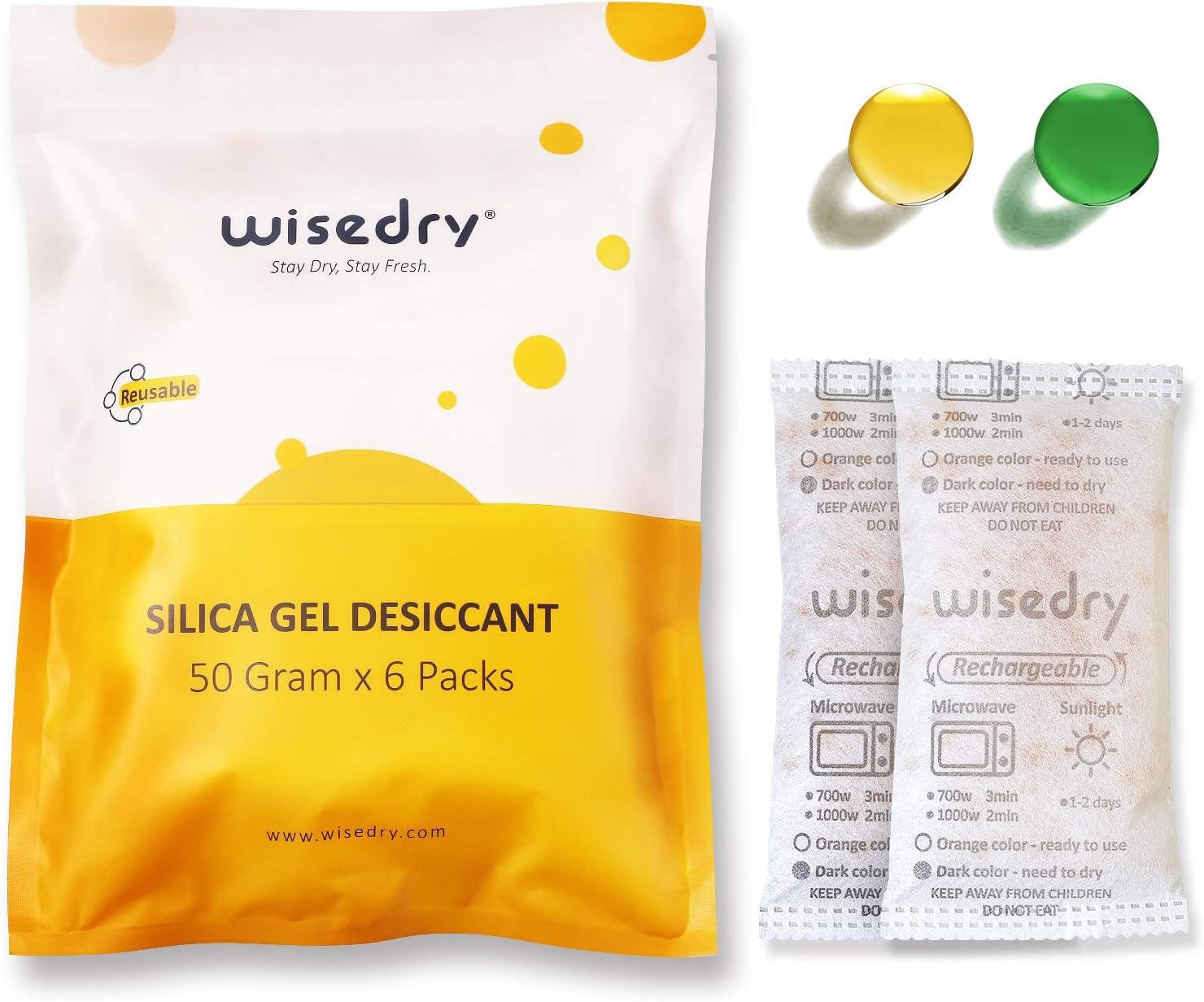
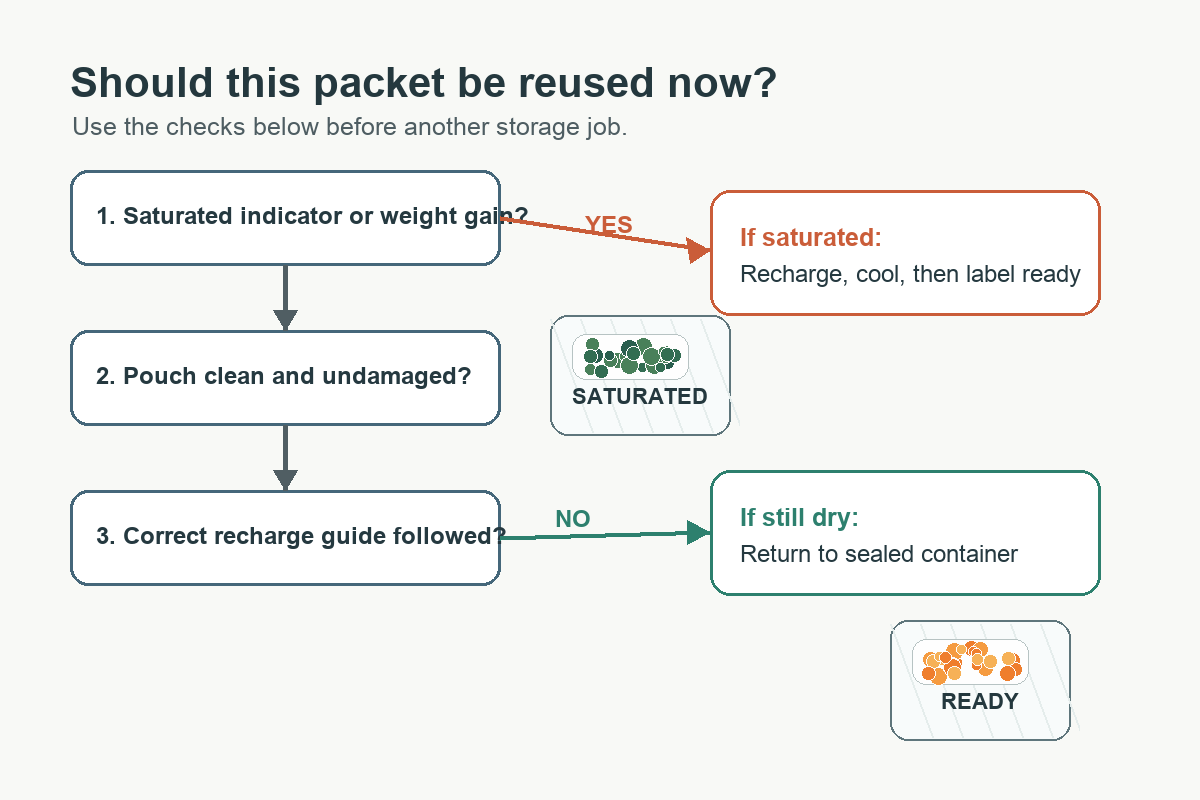
If a packet has an indicator, color helps you decide when to recharge. In Wisedry indicating packets, orange beads show the dry color and dark green beads show saturation. White beads do not change color, so they need other checks such as weight, storage history, and performance in the container.
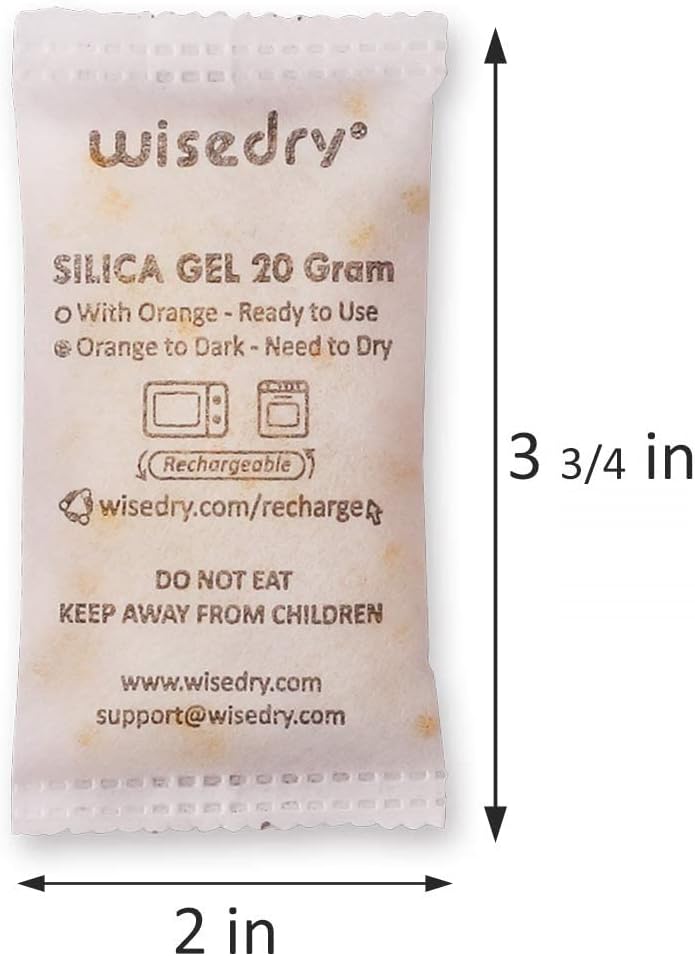
For Wisedry 20g, 50g, and 112g packets, the product guide says to recharge when indicator beads are saturated or the packet has gained about 32% weight. Use the 20g, 50g, and 112g recharge guide instead of copying timing from a different packet size.
The Reuse Cycle To Follow
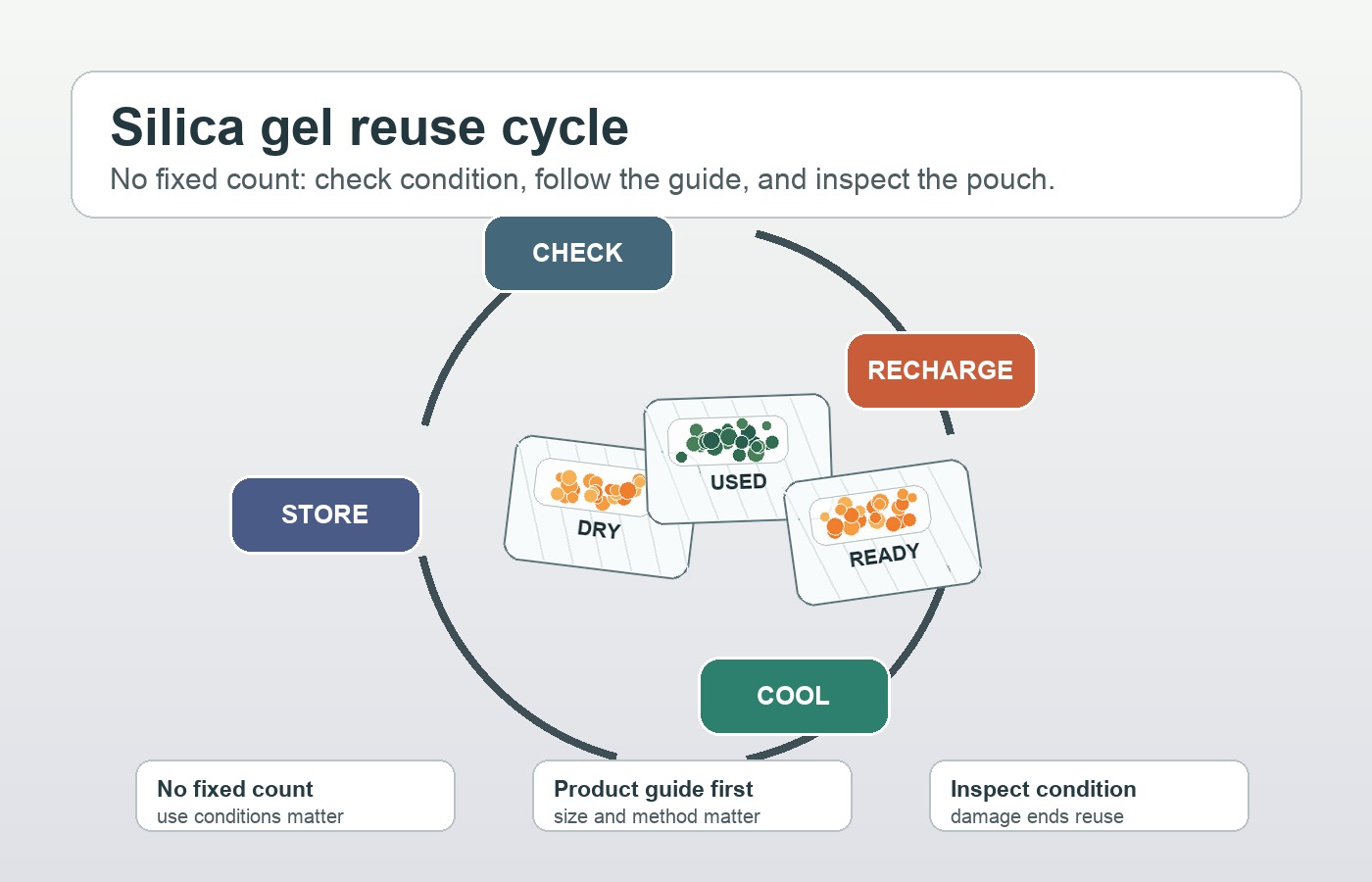
Think of reusable silica gel as a simple cycle:
- Check whether the packet is saturated.
- Recharge only when the product instructions call for it.
- Let the packet cool fully after heating.
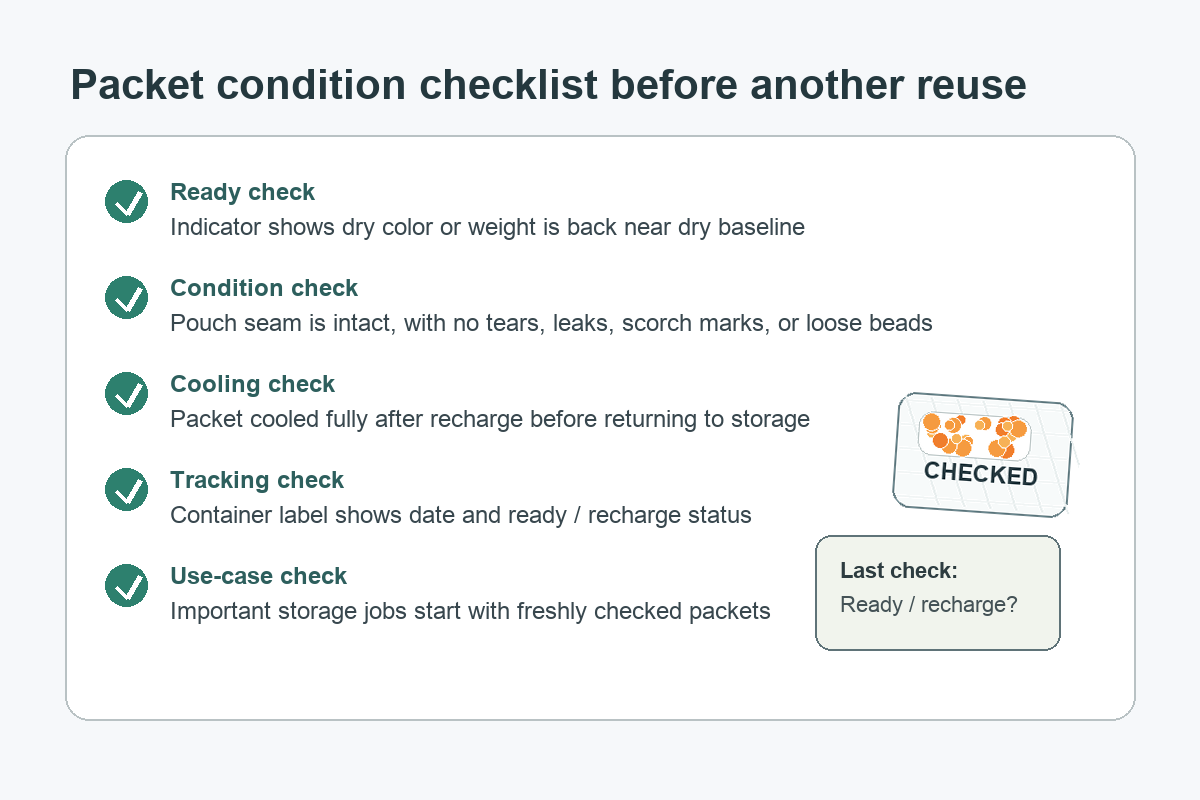
- Inspect the pouch or container.
- Store the dry packet in a sealed place until the next use.
This cycle is safer than heating packets on a calendar schedule. It also helps you avoid returning a questionable packet to an important storage job.
If you are unsure whether a packet is saturated, use the Wisedry saturation checklist before deciding.
What Shortens The Useful Life Of A Packet?
The silica gel itself may continue to absorb and release moisture for many cycles, but the whole product is more than the beads. The pouch, seams, indicator window, labels, and the way the packet is handled all matter.
Common things that shorten useful life include:
- Heating with the wrong method or for the wrong packet size.
- Recharging a packet that is not designed for that method.
- Heating very dry packets unnecessarily.
- Not letting a hot packet cool before storage.
- Exposing the pouch to sharp tools, crushed gear, or heavy containers.
- Letting dust, oil, spilled liquids, flower debris, or workshop residue contact the packet.
- Storing ready packets open to room air between projects.
- Mixing dry packets with packets that need recharge.
This does not mean a packet becomes unusable after one mistake. It means the reuse decision should include condition checks, not only indicator color.
When To Recharge Again
Recharge a reusable silica gel packet when one or more signs point to saturation or reduced moisture capacity:
- Indicator beads have changed to the saturated color.
- The packet has gained noticeable weight compared with a known dry packet.
- The storage container feels damp or has been opened often.
- The packet came out of a high-moisture project.
- You are preparing for a longer storage period and want to start with a freshly checked packet.
Avoid heating a packet just because it is a few days old. The article on recharging silica gel too early explains when early recharging makes sense and when it only adds unnecessary heat exposure.
When To Replace Instead Of Reuse
Replace or stop using a packet when inspection shows the product is no longer in good condition. Watch for:
- Torn fabric, split seams, or leaking beads.
- Scorch marks, melted areas, or unusual hard spots after heating.
- Oil, chemical residue, dirt, or material contamination.
- A packet that no longer returns to the expected dry indicator color after correct recharging.
- A packet that repeatedly seems saturated soon after being placed in a good sealed container.
- Missing or unclear product instructions for the packet you have.
If the packet is damaged, do not keep trying to recharge it. Move it out of service and choose a replacement. If you are unsure whether a Wisedry packet is still suitable for use, contact Wisedry Support with the product type and what you observed.
How To Get More Useful Reuse From Each Packet
You can help reusable silica gel last longer by reducing avoidable exposure and handling stress.
Use these habits:
- Match the packet size and recharge guide to the product.
- Recharge because the packet is saturated or close to saturated, not only because time passed.
- Let recharged silica gel cool before sealing it with stored items.
- Keep ready packets in a clean, sealed container between projects.
- Use labels or a simple rotation log if packets move between containers.
- Keep packets away from sharp edges, heavy tools, spills, and loose debris.
- Check the container seal if packets saturate unusually quickly.
The cooling step is easy to overlook. After heating, let packets rest on a clean, dry, heat-safe surface until they feel close to room temperature. The cooling after recharge guide explains why this pause matters before putting packets back into a camera case, safe, storage box, or filament container.
A Simple Rule For Important Storage
For everyday bins, a quick indicator and pouch check may be enough. For important storage, use a stricter rule:
Start with a packet that has been checked, recharged when needed, cooled fully, and stored sealed until use.
This is useful for:
- Camera bags and lens cases.
- Document boxes and home safes.
- Seasonal storage totes.
- 3D printer filament boxes.
- Flower drying or dried flower storage supplies.
- Toolboxes and parts organizers.
If you store extra dry packets between projects, keep them separate from packets that need recharge. The unused packet storage guide shows a simple way to label and separate ready packets from recharge packets.
FAQ
Can rechargeable silica gel be reused forever?
No article should promise that. Reusable silica gel can be used again while it still recharges correctly and the packet or container remains clean and intact. Replace it if the pouch is damaged, contaminated, overheated, leaking, or no longer responds as expected after correct recharging.
How do I know if I have reached the last reuse?
There is usually no single “last cycle” warning. Look for condition changes: torn fabric, leaking beads, scorch marks, contamination, unclear instructions, poor indicator response, or repeated fast saturation in a good sealed container.
Should I recharge after every use?
Not automatically. Recharge when the packet is saturated, close to saturated, or being prepared for an important storage period. If the indicator still shows the dry color and the packet has not gained much weight, recharging may not be needed.
Does microwave recharging reduce the number of times I can reuse a packet?
Microwave recharging can be appropriate only when the product guide allows it and the timing matches the packet size and quantity. Wrong timing, wrong packet type, or unnecessary heating can add stress. Follow the Wisedry product guide instead of guessing.
What should I do with a packet that looks damaged?
Take it out of service. Do not put a torn, scorched, leaking, contaminated, or questionable packet back into a storage box with items you care about. Use a replacement or ask Wisedry Support if you need product-specific help.
Bottom Line
Rechargeable silica gel reuse is best managed by condition, not by a universal number. Use the right product guide, recharge only when needed, let packets cool fully, inspect the pouch, and store ready packets sealed between projects.
For Wisedry products, start with the Wisedry recharge instructions. If you need more reusable desiccants for a rotation setup, visit the Wisedry shop.