Plastic storage bins are common places to use silica gel packets because they can hold seasonal clothes, craft supplies, documents, keepsakes, camera accessories, tools, collectibles, and household items for weeks or months at a time. The tricky part is that one plastic bin can be compact and well sealed, while another can be large, loose-lidded, and opened every few days.
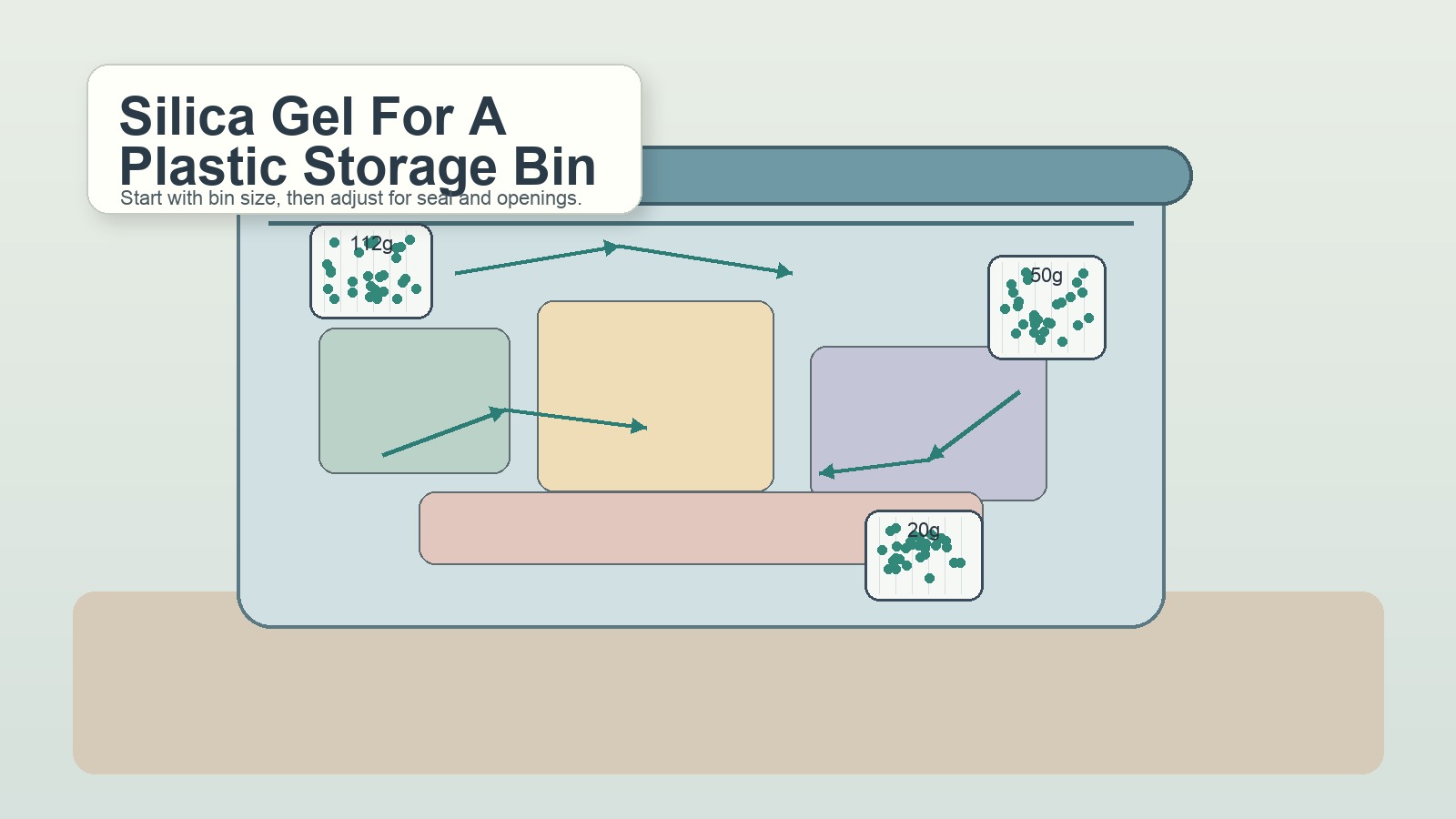
That is why a plastic storage bin should not be sized by a single fixed packet count. Start with the size of the bin, then adjust for the seal, the contents, the storage room, and how often the lid is opened.
This guide gives a practical way to choose and place silica gel in a plastic storage bin without making fixed humidity or protection guarantees.
Quick Answer
For a plastic storage bin, use the full Wisedry silica gel amount guide as the base, then adjust for the actual bin. A compact, tightly closed bin may need less desiccant than a large storage tote, a loose-lid bin, or a container that is opened often. Spread packets where air can circulate, keep them visible enough to check, and recharge or replace them when the indicator or product instructions show saturation.
If the packet saturates quickly, do not only add more packets. First check the lid seal, the storage environment, and whether damp contents are being stored inside the bin.
Why Plastic Storage Bins Need A Different Approach
A plastic storage bin can look sealed even when humid air still gets in around the lid. Some bins have gasketed lids and strong latches. Others rely on a flexible snap lid that may gap at the corners, especially when the bin is overfilled or stacked under weight.
Silica gel only works inside the air space it shares with the stored items. It cannot fix a wet basement, dry soaked contents, or compensate for a lid that is left open. It can, however, help manage moisture inside a closed bin when the container is dry, reasonably sealed, and monitored.
Think of the packet amount as a starting setup, not a permanent answer.
Start With These Four Sizing Factors
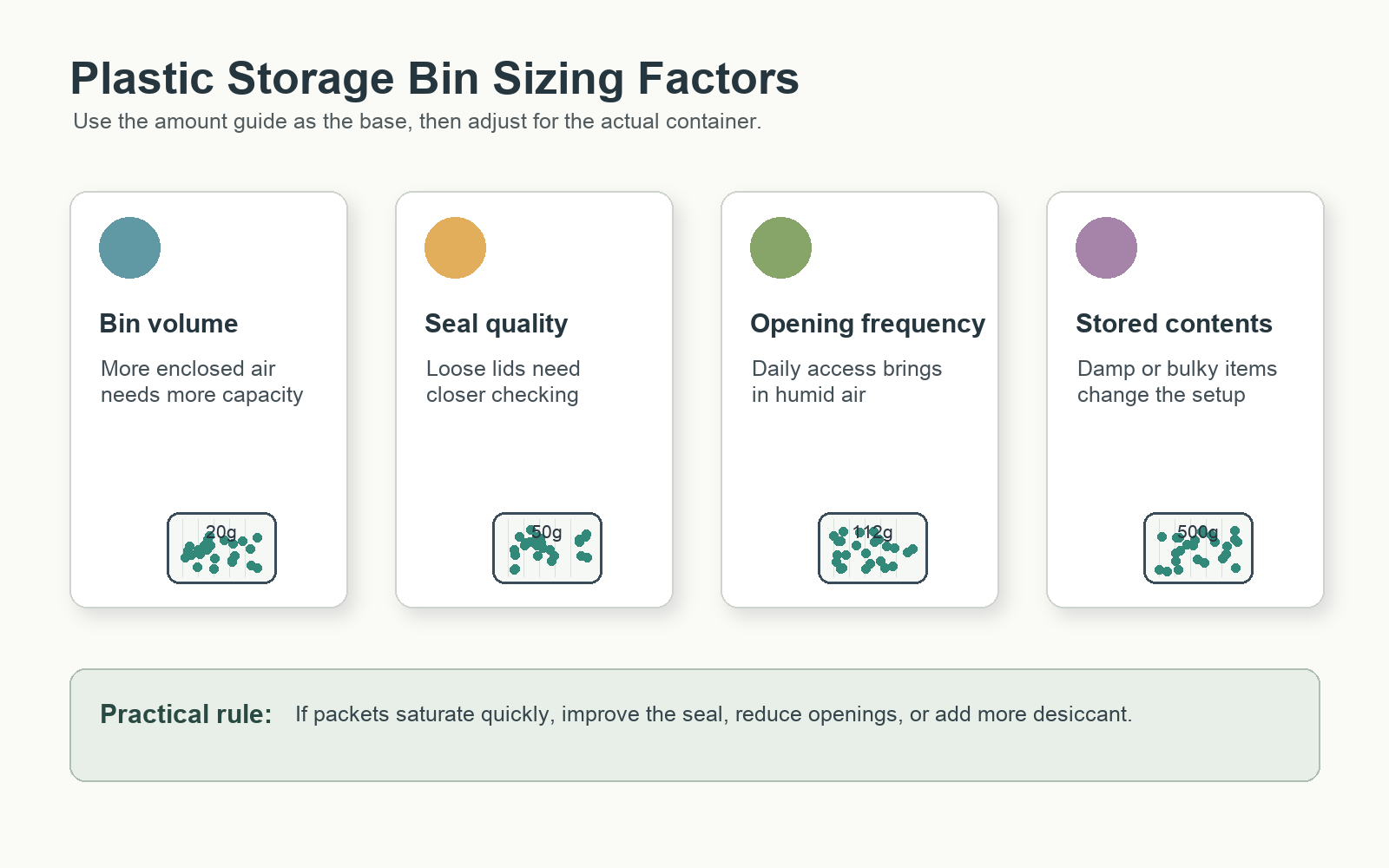
Before choosing packet size or count, look at four practical factors.
- Bin volume
A larger tote contains more enclosed air and more stored material than a small craft bin. More volume usually means more desiccant capacity is needed.
- Seal quality
A gasketed bin with firm latches usually holds a dry environment better than a loose-lid bin. If the lid flexes, gaps, or pops open at the corners, expect to check packets more often.
- Opening frequency
Every opening brings in new room air. A holiday storage tote that stays closed for months behaves differently from a craft bin or parts bin opened several times each week.
- Stored contents
Bulky fabric, cardboard, paper, unfinished wood, and recently moved items can bring moisture into the bin. If the contents feel damp, silica gel should not be the first fix. Dry the contents and the container before sealing them together.
A Simple Setup Method
Use this process for a dry plastic storage bin:
- Empty and dry the bin.
- Check the lid for obvious gaps, warping, cracks, or loose corners.
- Estimate whether the bin is small, medium, or large compared with the Wisedry amount guide.
- Choose packets that fit without being crushed.
- Place packets in more than one visible area when the bin is wide or deep.
- Close the lid fully and avoid overfilling the bin.
- Check the packet indicator after real use, especially during the first few weeks.
If a smaller bin is your main use case, the smaller-container guide explains why compact containers usually need less desiccant than larger spaces.
Small Plastic Bins
Small plastic bins are often used for craft parts, accessories, small keepsakes, camera accessories, packets of seeds, or hobby supplies. In a compact bin, the main concern is usually not raw capacity. It is fit and placement.
For a small bin:
- Use a packet that fits without pressure.
- Keep the packet in the same air space as the stored items.
- Avoid burying the packet under heavy contents.
- Keep it away from sharp objects that could tear the packet.
- Place it where you can see or reach it during checks.
If the bin is opened often, check the packet sooner than you would in a sealed storage tote.
Medium Plastic Storage Bins
Medium bins are common for seasonal items, craft supplies, photo boxes, documents in folders, small tools, and household storage. These bins usually benefit from spreading desiccant rather than putting every packet in one corner.
For a medium bin:
- Use the Wisedry amount guide as the base reference.
- Put packets on different sides or layers when contents fill the bin.
- Leave some air space around each packet.
- Keep packets away from lid edges and latch points.
- Label the date the packets were added or recharged.
This setup helps you learn how the bin behaves. If the packets reach saturation quickly, the lid seal, opening frequency, or storage room may be the real issue.
Large Plastic Totes
Large storage totes need more care because they often hold bulky contents, more air volume, and stacked layers. A single small packet hidden at the bottom may not be enough to support the whole space.
For a large tote:
- Use larger-capacity packets or multiple packets that match the bin size.
- Spread packets across the top, sides, or separate layers of the contents.
- Keep at least one packet visible near the top so it can be checked without unpacking the whole tote.
- Avoid sealing damp clothes, cardboard, paper, or fabric inside the tote.
- Check after the first storage cycle instead of assuming the setup will last all season.
For unusual bin sizes, start with the full Wisedry silica gel amount guide and adjust based on saturation speed.
Need rechargeable packets for a storage-bin setup? Shop Wisedry rechargeable desiccants.
Where To Place Silica Gel In A Plastic Bin
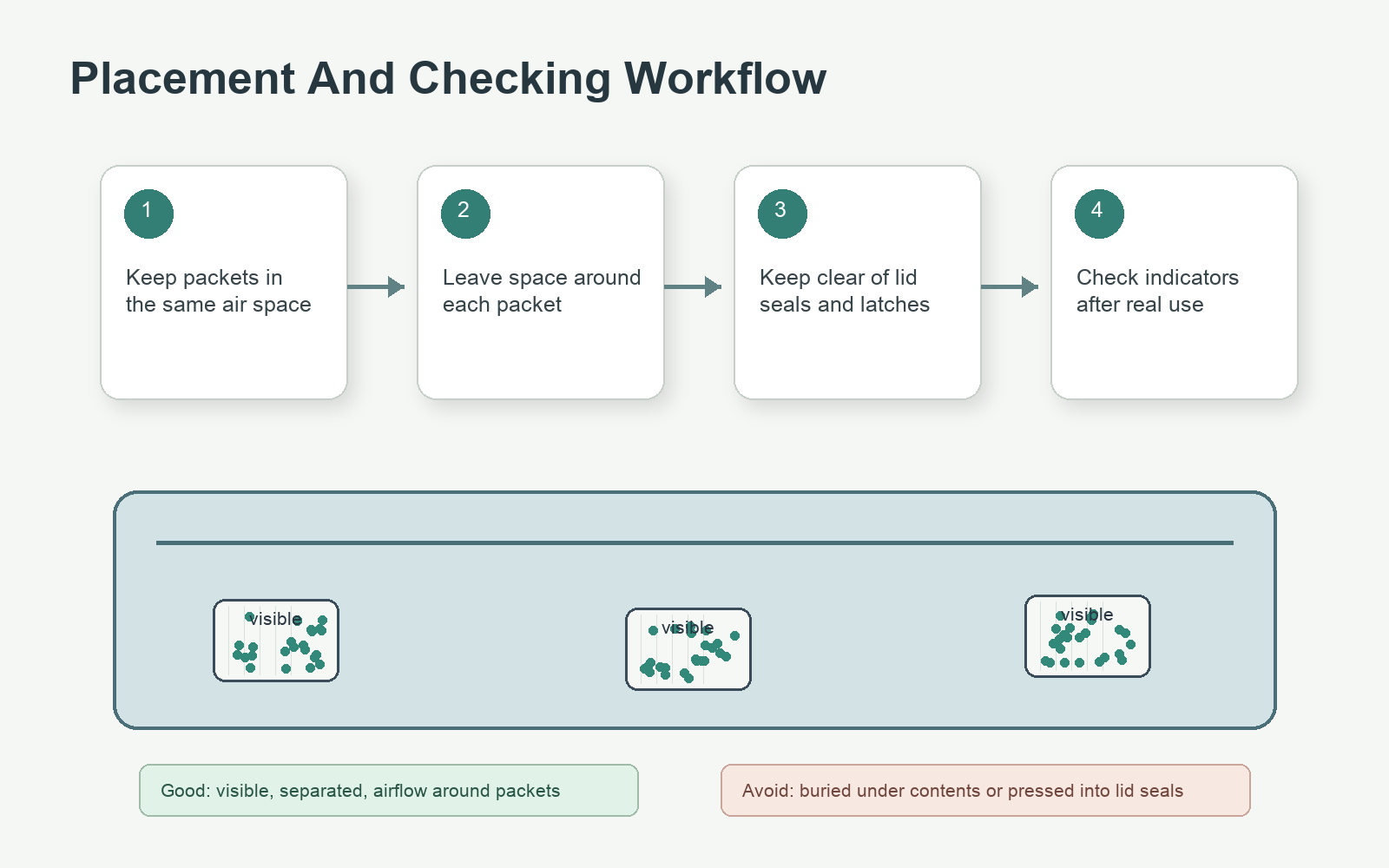
Placement matters because the packet needs access to the same air space as the stored items. A good placement is easy to inspect, not crushed, and not blocking the lid.
Good places include:
- A visible corner inside the bin.
- A shallow tray or small breathable pouch.
- A mesh pocket or organizer pocket inside the bin.
- Near the top layer when the bin is deep.
- Separate corners when the bin is wide.
Avoid placing packets:
- Outside the bin.
- Under heavy items.
- Against lid seals, hinges, or latch areas.
- Inside a sealed bag inside the bin.
- Against sharp tools or rough hardware.
- Pressed directly into fragile paper, photos, screens, polished surfaces, or delicate materials.
For more placement mistakes, see where not to place desiccant packs.
Check The Lid Before Adding More Packets
If silica gel seems to saturate faster than expected, the lid is often the first thing to check. A loose lid can bring in humid room air again and again.
Look for:
- Corners that do not close evenly.
- A lid that bends upward when the bin is full.
- Cracks or warped plastic.
- Missing or damaged gasket material.
- Overfilled contents pushing against the lid.
- Stacking weight that changes the shape of the bin.
You can run simple container seal checks before assuming you need a much larger amount of desiccant.
How Often Should You Check Silica Gel In A Storage Bin?
Check more often when the setup is new. After you understand how fast the packet saturates in that exact bin, you can adjust the routine.
Check sooner when:
- The bin is opened every day or every week.
- The storage room is humid.
- The bin sits in a garage, basement, shed, boat, RV, or seasonal storage space.
- The lid is flexible or loose.
- The contents include fabric, paper, cardboard, craft supplies, or other moisture-sensitive items.
- The packet indicator changes faster than expected.
If you use rechargeable Wisedry products, follow the Wisedry recharge hub and the product-specific instructions when the product indicates saturation.
Troubleshooting: The Packet Saturates Too Fast
If a packet becomes saturated quickly, use this checklist:
- Confirm the bin and contents were dry before storage.
- Check the lid for gaps, warping, or pressure from overfilled contents.
- Reduce how often the bin is opened if possible.
- Move packets where air can circulate.
- Add more desiccant only after the setup and seal make sense.
- Recharge or replace saturated packets according to the product instructions.
Do not rely on silica gel alone when there is standing water, a leak, visible mold, soaked fabric, wet paper, or an active moisture source. Fix the moisture source first, dry the bin and contents, then use silica gel as storage support.
Common Mistakes
Avoid these common storage-bin mistakes:
- Using a tiny packet in a large tote and never checking it.
- Hiding every packet under bulky contents.
- Pressing a packet into the lid seal.
- Placing packets in a sealed inner bag where they do not share air with the bin.
- Storing damp items and expecting silica gel to dry the whole load.
- Forgetting to recharge or replace saturated packets.
- Using the same setup for every bin without considering size, seal, room humidity, and opening frequency.
FAQ
Can I Put Silica Gel In Any Plastic Storage Bin?
Silica gel works best in a clean, dry, closed bin with a reasonable lid seal. If the bin has cracks, large gaps, standing water, damp contents, or an active leak nearby, fix those issues before relying on desiccant packets.
Should I Use One Large Packet Or Several Smaller Packets?
Either can work if the total capacity fits the bin and the packets are placed well. Several smaller packets can be easier to spread across a wide or layered bin. A larger packet can be convenient when there is enough space and it remains visible for checking.
Should Silica Gel Go On Top Or Bottom Of The Bin?
It should go where air can circulate and where the packet will not be crushed. In a deep bin, keeping at least one packet near the top can make checking easier. If the bin has multiple layers, use more than one placement point.
Why Did My Packet Change Color Quickly?
Fast indicator change can mean the packet is doing its job in a humid space, but it can also point to a loose lid, frequent openings, damp contents, or too little desiccant for the bin size. Check the setup before only adding more packets.
Can Silica Gel Dry Wet Items Inside A Plastic Bin?
Do not use silica gel as the main fix for wet items. Dry the items and the container first. Silica gel is better used as support inside a dry, closed storage setup.
Final Takeaway
For a plastic storage bin, start with the main amount guide, then adjust for bin size, seal quality, opening frequency, and contents. Place packets where they share air with the stored items, keep them clear of seals and pressure points, and check the indicator after real use.
For product-specific questions, contact Wisedry support.