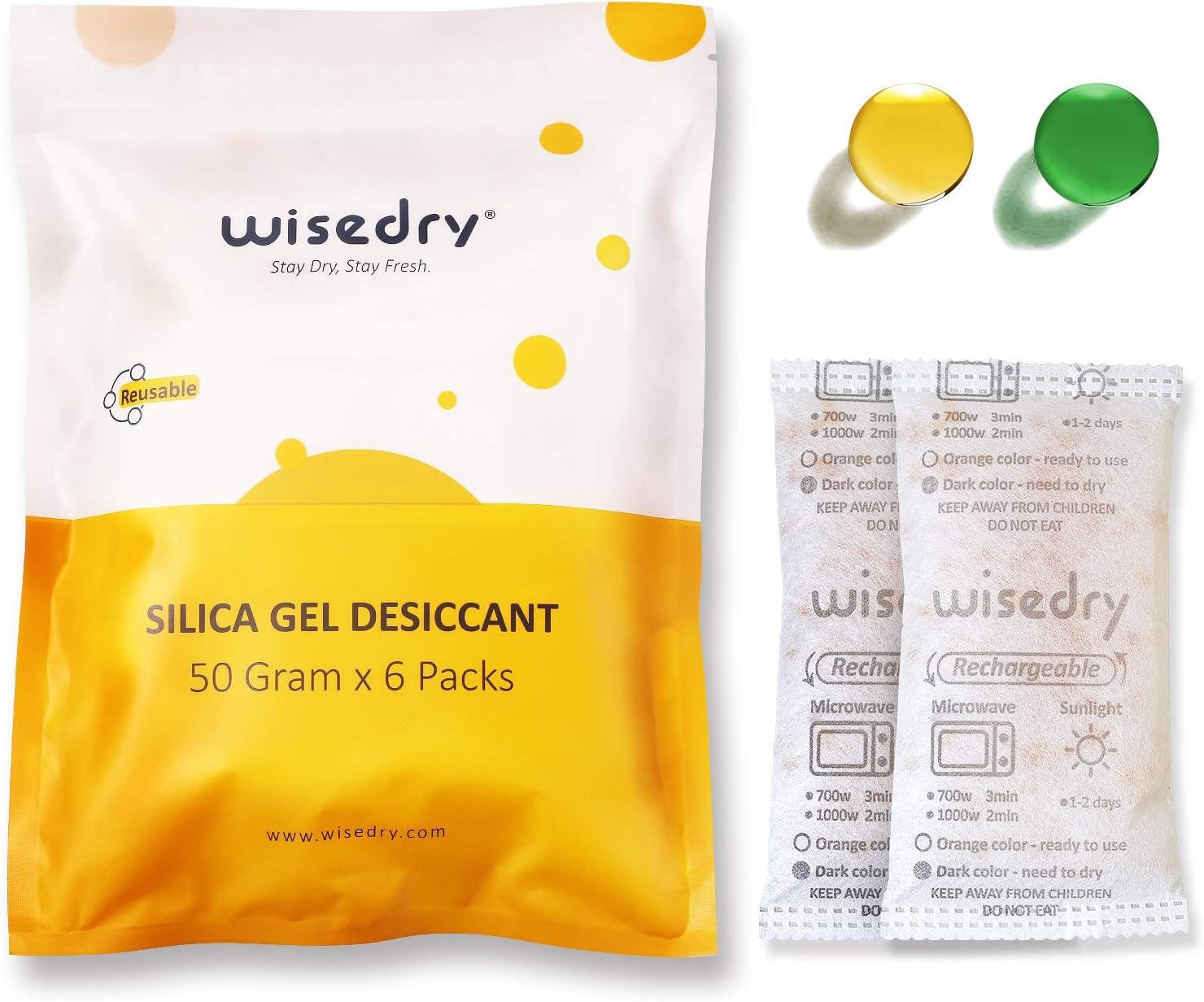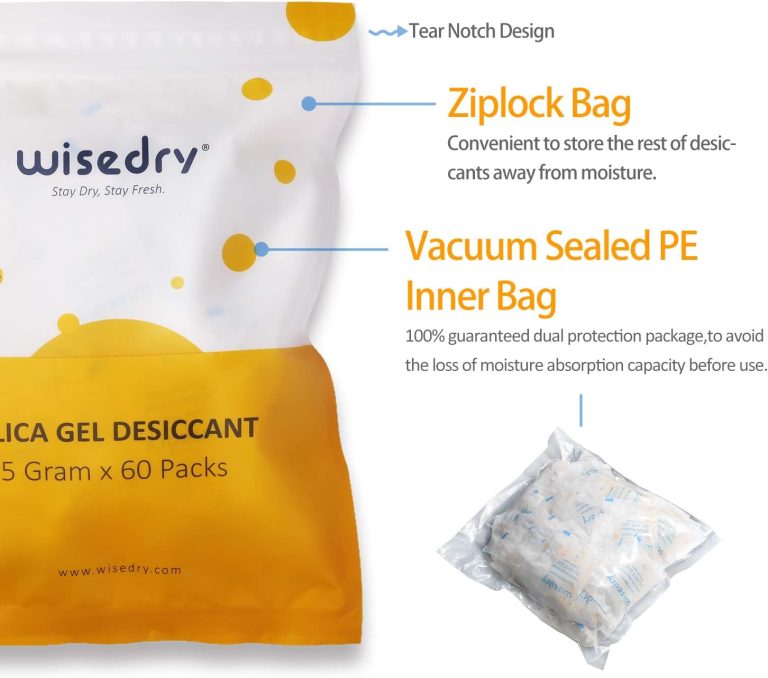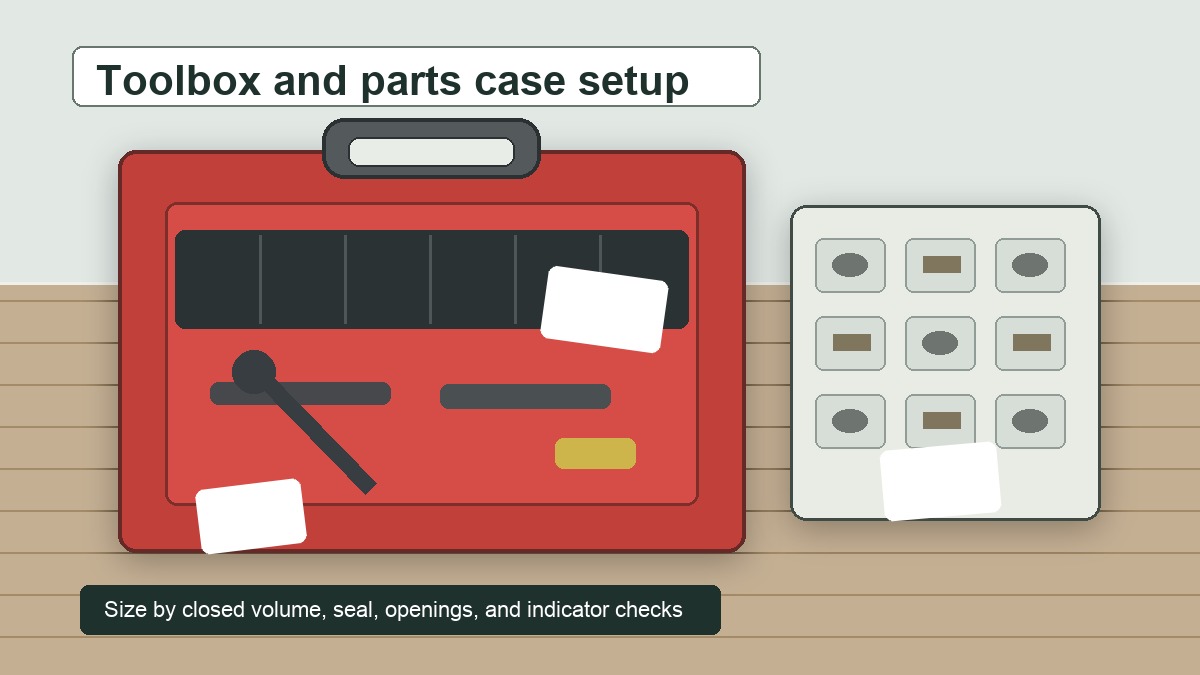
Toolboxes, hardware organizers, socket cases, fastener bins, craft tool kits, and small parts cases are common places to use silica gel packets. They are usually closed, compact, and easy to check. That makes them better candidates than open shelves or a whole garage.
The right amount still depends on the box. A small gasketed parts case that stays closed most of the month is different from a deep toolbox that is opened every day in a humid workspace. Silica gel can help manage moisture inside a closed dry container, but it is not a substitute for drying wet tools, cleaning residues, fixing leaks, or following the storage instructions for sensitive equipment.
Use this guide to choose a practical starting amount, place packets where they can work, and adjust based on real indicator checks.
Quick Answer
For a toolbox or parts case, start with the Wisedry silica gel amount guide based on the case’s usable inside volume. Then adjust for seal quality, opening frequency, storage location, and whether the tools or parts are dry before the case is closed.
A small parts organizer may need only a small packet if it seals well and stays closed. A deep toolbox, drawer-style case, loose-lid organizer, or daily-use work box may need more capacity, more placement points, and more frequent checks.
Need active packets for a toolbox setup? Shop Wisedry rechargeable desiccants.
First, Choose The Right Kind Of Storage Space
Silica gel works best when it shares a closed air space with the items you want to store. Before choosing packet amount, define the actual container.
Good candidates include:
- Small parts organizers with tight lids.
- Socket cases, bit cases, and accessory boxes.
- Lidded hardware bins.
- Closed household toolboxes.
- Fishing tackle-style organizers used for dry hardware or craft parts.
- Craft tool kits and hobby cases.
- Small sealed drawers inside a storage cabinet.
Less predictable setups include:
- Open pegboards.
- Open garage shelves.
- Tool chests with large air gaps.
- Tool bags that stay unzipped.
- Vented trays.
- Boxes stored near leaks, wet floors, or damp walls.
If the container is open to the room, the silica gel is exposed to much more air and can saturate quickly. In that case, a better-sealed case usually matters more than simply adding more packets.
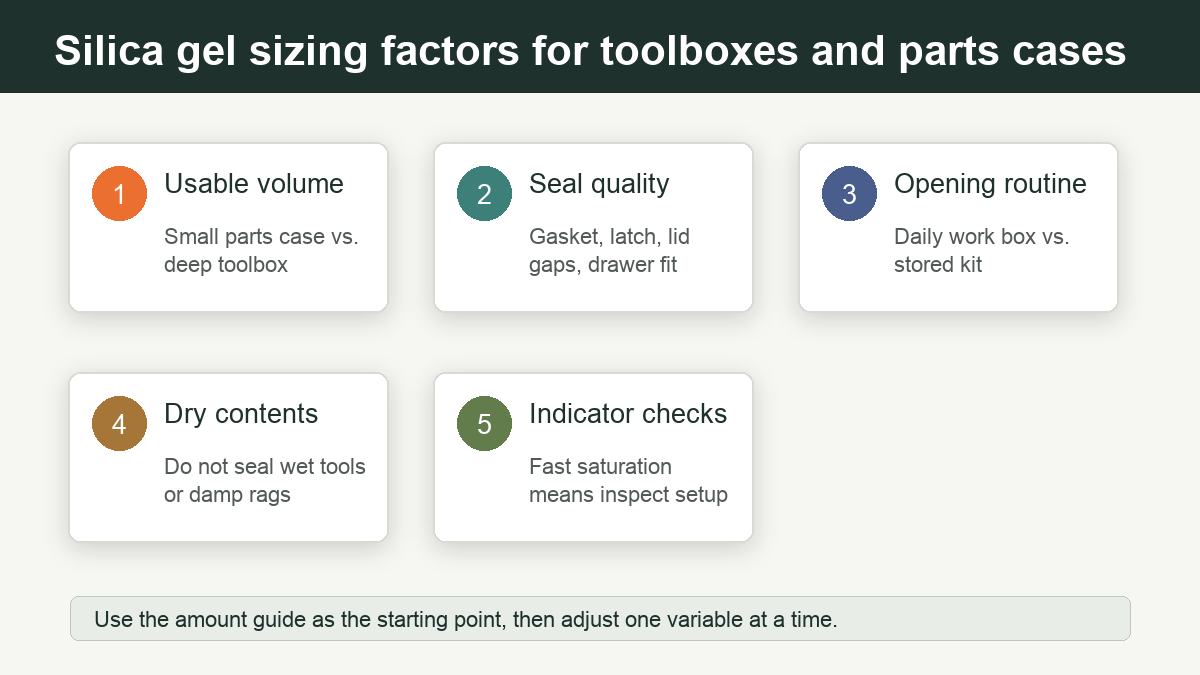
Five Factors That Change The Amount
Use the amount guide as the baseline, then adjust for the real setup.
- Usable volume
A compact screwdriver-bit case needs less capacity than a deep toolbox with removable trays. Estimate the inside space that will actually be closed around the stored items.
- Seal quality
A gasketed latch case usually holds a dry setup better than a loose snap lid, bent metal lid, soft tool bag, or drawer with visible gaps.
- Opening routine
A work box opened several times a day sees more fresh room air than a stored emergency kit opened twice a year.
- Contents
Store dry tools, dry hardware, and dry parts. Silica gel should not be used to hide wet tools, damp rags, chemical spills, oily wipes, or residues that need cleaning.
- Indicator checks
Fast saturation tells you to inspect the box, the seal, the stored contents, and the opening routine before only adding more packets.
A Simple Sizing Method
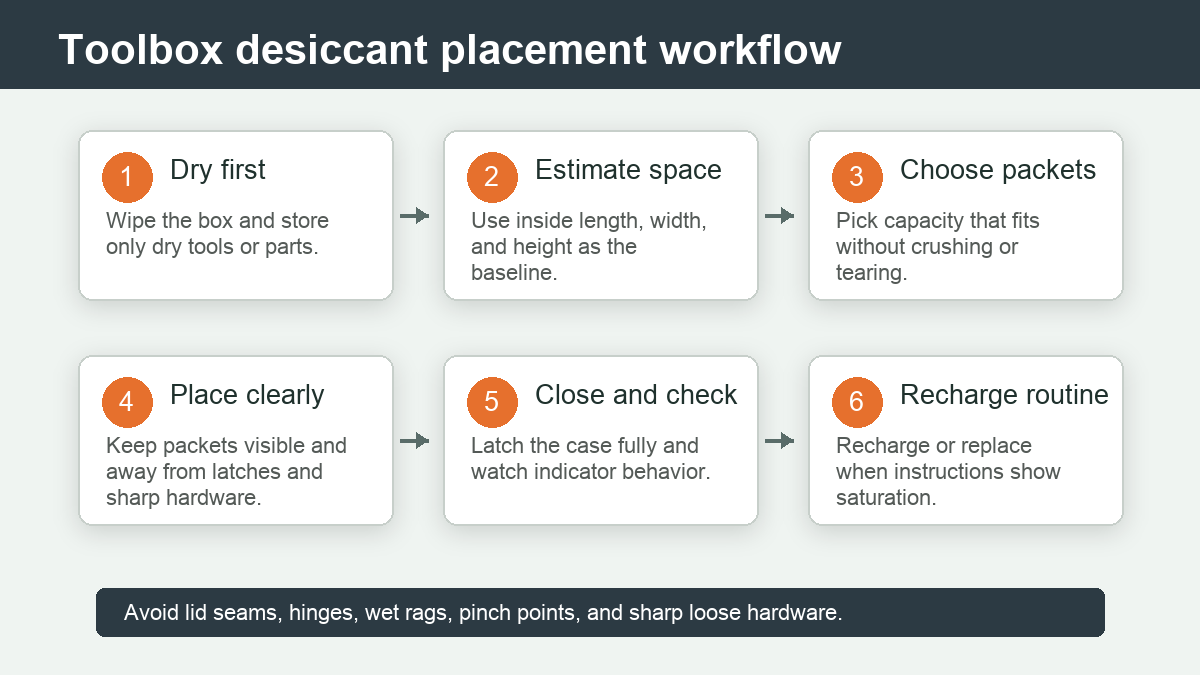
Use this process for a closed toolbox or parts case:
- Empty the case and wipe away dust, grit, water, and loose debris.
- Let tools and parts dry before storing them.
- Estimate the inside length, width, and height of the closed space.
- Use the amount guide for a starting packet amount.
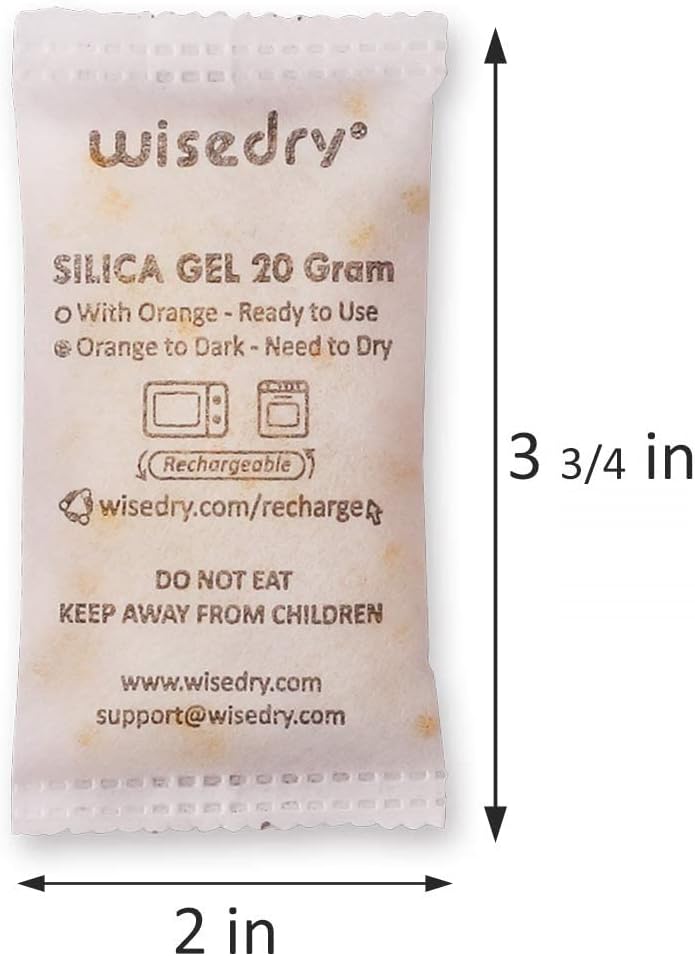
- Choose packets that fit without being crushed, cut, or pinched.
- Place packets where air can circulate.
- Keep packets away from latch points, hinges, sharp hardware, and drawer slides.
- Close the case fully and check the indicator after real use.
For very compact cases, the smaller-container guide explains why a small enclosed air space usually needs less desiccant than a large bin or tote.
Small Parts Cases
Small parts cases are often used for screws, nuts, bolts, drill bits, craft hardware, beads, hooks, blades, adapters, and small repair parts. These cases can work well with silica gel when they close tightly and are not overfilled.
For a small parts case:
- Use a packet that fits in a compartment or corner without pressure.
- Keep the packet inside the same air space as the stored parts.
- Avoid placing the packet under heavy metal parts.
- Keep it away from sharp fasteners that could tear the packet.
- Put it where you can see or reach it during checks.
If the case has many sealed internal compartments, one packet in the lid area may not support every compartment equally. Use placement points that share air with the parts you care about, or use smaller packets in separate sections when the design allows it.
Medium Toolboxes
Medium toolboxes often hold mixed tools, replacement bits, tape measures, blades, hardware packs, small meters, and accessories. They may have a top tray, bottom compartment, and side pockets. That layout matters because a packet buried at the bottom may be harder to inspect and may have less airflow.
For a medium toolbox:
- Start from the amount guide instead of guessing by packet count.
- Place one packet in the main compartment and another in a tray if both areas share air.
- Keep at least one packet visible near the top.
- Avoid latch edges, hinge lines, and handles.
- Keep packets out of direct pressure from heavy tools.
- Label the date the packet was added or recharged.
If the box is carried often, choose a placement that will not let the packet slide into a hinge, blade, or pinch point.
Large Or Daily-Use Toolboxes
A large or daily-use toolbox is harder for silica gel because it is opened often and may hold many materials. Each opening brings in new air. Every damp tool, cloth, or recently used item adds extra moisture load.
For a large or frequently opened toolbox:
- Use larger-capacity packets or multiple packets sized to the inside volume.
- Spread packets across separate areas instead of placing everything in one corner.
- Check sooner during the first few weeks.
- Remove wet tools, damp gloves, and cleaning cloths before closing the box.
- Keep packets away from batteries, liquids, adhesives, solvents, and chemical containers.
- Do not expect silica gel to compensate for storage near an active moisture source.
If a box is opened all day in a humid jobsite, garage, shed, boat, or outdoor area, the packet may reach its recharge condition much faster than a packet in a stored kit.
Where To Place Packets
Good placement makes the packet easy to inspect and keeps it out of damage points.
Good locations include:
- A visible corner inside the toolbox.
- A shallow tray that shares air with the main compartment.
- A breathable pouch clipped away from moving parts.
- A top tray in a deep case.
- A separate compartment in a parts organizer.
- A small area away from sharp hardware.
Avoid placing packets:
- Outside the case.
- Under heavy tools or loose metal parts.
- Across a latch, hinge, gasket, drawer slide, or lid seam.
- Inside a sealed inner bag that does not share air with the case.
- Against sharp blades, drill bits, screws, hooks, or abrasive parts.
- Next to liquid containers, adhesives, oils, solvents, wet rags, or battery spills.
For more placement examples, see where not to place desiccant packs.
Check The Seal Before Adding More
If a packet changes indicator color quickly, inspect the container before assuming the answer is always more silica gel.
Look for:
- A lid that does not close evenly.
- Bent metal, warped plastic, or cracked corners.
- Missing gasket material.
- Overfilled contents pushing against the lid.
- Drawers that do not close fully.
- A tool bag or soft case that stays partly open.
- Storage near a wet floor, damp wall, or active leak.
You can run simple container seal checks before changing packet amount.
What Silica Gel Can And Cannot Do In Tool Storage
Silica gel can support a closed dry storage setup by adsorbing moisture from the air inside the container. It is useful when the box is dry, the stored items are dry, and the case stays reasonably closed.
Silica gel should not be treated as:
- A rust-prevention guarantee.
- A repair method for tools that are already damaged.
- A way to dry wet tools while they are sealed in a case.
- A substitute for cleaning, oiling, coating, or maintenance where those steps are appropriate.
- A fix for leaks, flooding, condensation, or a damp storage room.
- A safety method for batteries, chemicals, ammunition, or hazardous materials.
Metal condition can depend on material, coatings, salt exposure, residues, prior damage, humidity, storage location, and maintenance routine. Keep the article’s sizing advice focused on closed-container moisture support, not guaranteed equipment protection.
How Often Should You Check?
Check more often at the beginning. After you understand how the packet behaves in that exact toolbox or parts case, you can set a practical routine.
Check sooner when:
- The case is opened daily.
- The case is stored in a garage, shed, RV, boat, basement, or humid workspace.
- The lid or drawer seal is loose.
- The box holds mixed materials such as cardboard, fabric pouches, wood handles, or foam inserts.
- Tools were recently moved from a humid area.
- The indicator changes faster than expected.
If you use rechargeable Wisedry packets, follow the Wisedry recharge hub and the product-specific instructions when the product indicates saturation. Let recharged packets cool as directed before putting them back with stored tools or parts.
Fast Saturation Troubleshooting
If the packet reaches its recharge condition quickly, use this checklist:
- Confirm the toolbox or parts case was dry before setup.
- Confirm tools, parts, trays, foam inserts, and cloth pouches were dry.
- Remove wet rags, gloves, wipes, liquids, or chemical containers.
- Check whether the lid, drawer, latch, or gasket closes fully.
- Move packets out from under heavy or sharp items.
- Reduce opening frequency if possible.
- Use a better-sealed case if the current one is loose or breathable.
- Increase packet amount only after the case and contents make sense.
- Recharge or replace saturated packets according to product instructions.
Do not seal visibly wet tools, soaked foam, damp cloth, chemical residue, or items affected by leaks inside a closed case and expect silica gel to solve the underlying problem. Dry and clean the contents first.
Common Mistakes
Avoid these toolbox and parts-case mistakes:
- Treating silica gel as a whole-garage dehumidifier.
- Using one tiny packet in a deep toolbox and never checking it.
- Pressing a packet into a latch, hinge, or drawer slide.
- Dropping packets into loose screws, blades, hooks, or drill bits.
- Sealing damp tools or wet cloths inside the box.
- Placing packets in sealed inner bags where they cannot share air with the case.
- Copying the same setup across every box without considering size, seal, and opening routine.
FAQ
Can I Put Silica Gel In A Toolbox?
Yes, if the toolbox is clean, dry, and reasonably closed. Silica gel works better inside a closed case than on an open shelf. Keep packets away from hinges, latches, sharp hardware, liquids, and heavy pressure points.
How Much Silica Gel Do I Need For A Small Parts Case?
Start with the inside volume of the case. A compact sealed organizer may need only a small packet, while a larger case with many compartments or frequent openings may need more capacity or separate placement points.
Can Silica Gel Prevent Rust On Tools?
Do not treat silica gel as a rust-prevention guarantee. It can help manage moisture in a closed dry container, but tool condition also depends on material, coatings, residues, prior damage, storage location, maintenance, and exposure to salt or chemicals.
Should I Use One Large Packet Or Several Smaller Packets?
Either can work if the total active amount fits the case. Several smaller packets are easier to spread in a wide toolbox or layered organizer. One larger packet may be simpler in a compact case if it fits without being crushed or blocking the lid.
Should Packets Touch Tools Or Hardware?
Direct contact is not required. Place packets in the same enclosed air space, but avoid sharp hardware, heavy pressure, moving parts, liquids, adhesives, batteries, and surfaces where the packet could tear or get pinched.
Why Did My Packet Change Color So Fast?
Fast indicator change can point to a loose lid, frequent openings, damp contents, humid storage, too little desiccant for the case, or poor placement. Inspect the setup before only adding more packets.
Final Takeaway
The right amount of silica gel for a toolbox or parts case starts with the case’s closed volume, then changes with seal quality, opening routine, stored contents, and indicator behavior. Use active packets, keep the case and contents dry, place packets away from latches and sharp hardware, and check the setup after real use.
For baseline sizing, start with the Wisedry silica gel amount guide. For product-specific recharge help, use the Wisedry recharge hub or contact Wisedry support.
If your hardware lives in divided cells instead of one open tray, follow this compartment-by-compartment silica gel setup for parts organizers to place a packet in every closed cell.
The same zone logic applies to hobby collections — this guide to silica gel for board game and card storage boxes walks through per-box placement and a monthly indicator check.