A reusable silica gel pack only works if the container around it is actually sealed. If air leaks in through the lid, the desiccant will keep pulling moisture out of that incoming air instead of protecting the items inside the bin. Before blaming the pack, it is worth spending ten minutes checking the seal with tools you already own.
Quick answer: close the container with a dry desiccant pack inside, then run four short tests — paper slip, flashlight, smell, and weight — to see whether the lid is holding. If even one of those tests fails, the seal is not doing its job and the amount of silica gel you need will quietly double.
Why The Seal Matters More Than The Pack
Many home storage containers look airtight but are not. Plastic totes flex when warm, latch lids slowly drift open, foam gaskets compress with age, and rubber seals collect dust. Silica gel inside a leaky container will still feel like it is working — it just works on the wrong job.
If the seal is good, a normal rechargeable pack can keep a small enclosed space dry for weeks between recharges. If the seal is weak, the same pack saturates much faster. That is why the Wisedry amount guide always begins with the container, not the pack size.
Test 1: The Paper Slip Test
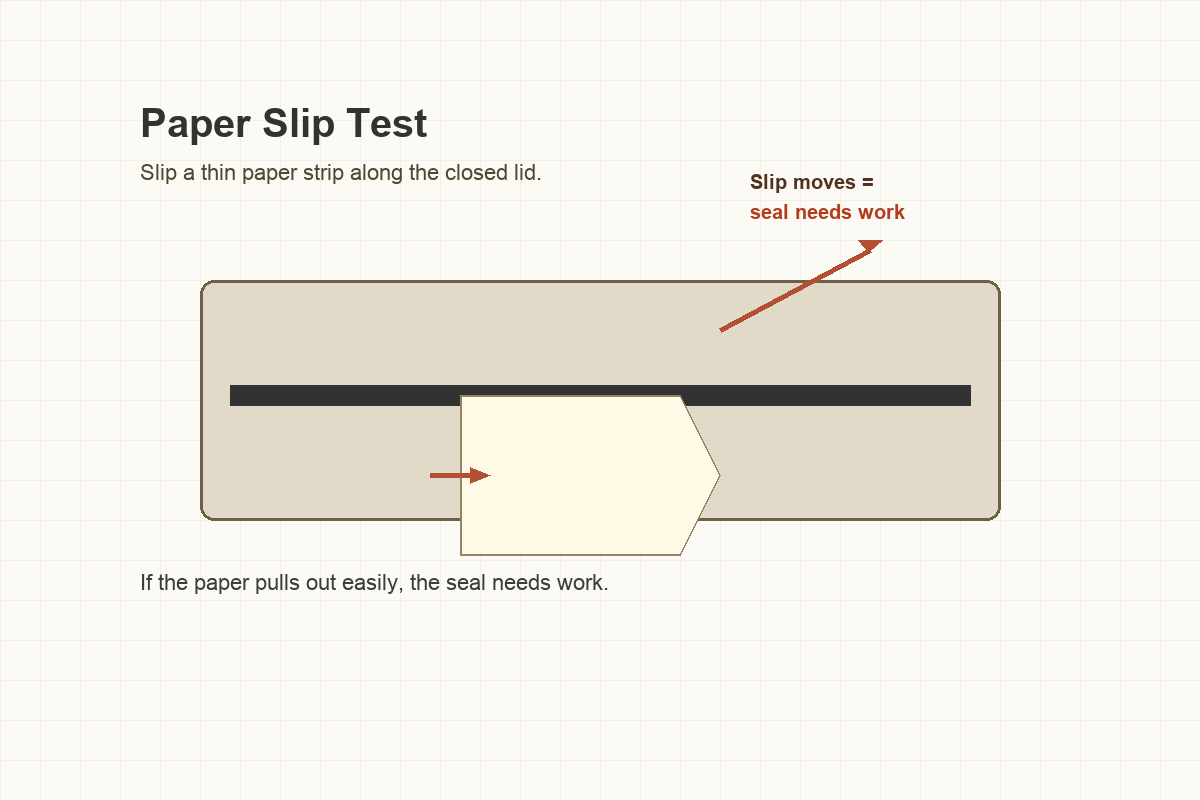
This is the fastest and most honest check.
- Cut a thin strip of paper about 2 cm wide and 15 cm long.
- Close the container lid fully so the latch or seal is engaged.
- Slide the paper strip along the lid seam at several points: corners, latch side, hinge side, and the middle.
- Pull the strip gently.
If the strip pulls out cleanly with almost no resistance, the seal is loose at that spot. If the strip tears or you cannot move it without pulling hard, that spot of the seal is doing its job. Repeat around all four sides.
This test does not require special tools and works for plastic totes, ammo cans, camera dry boxes, and small safes. It also tells you which side of the lid needs attention, instead of guessing.
Test 2: The Flashlight Test
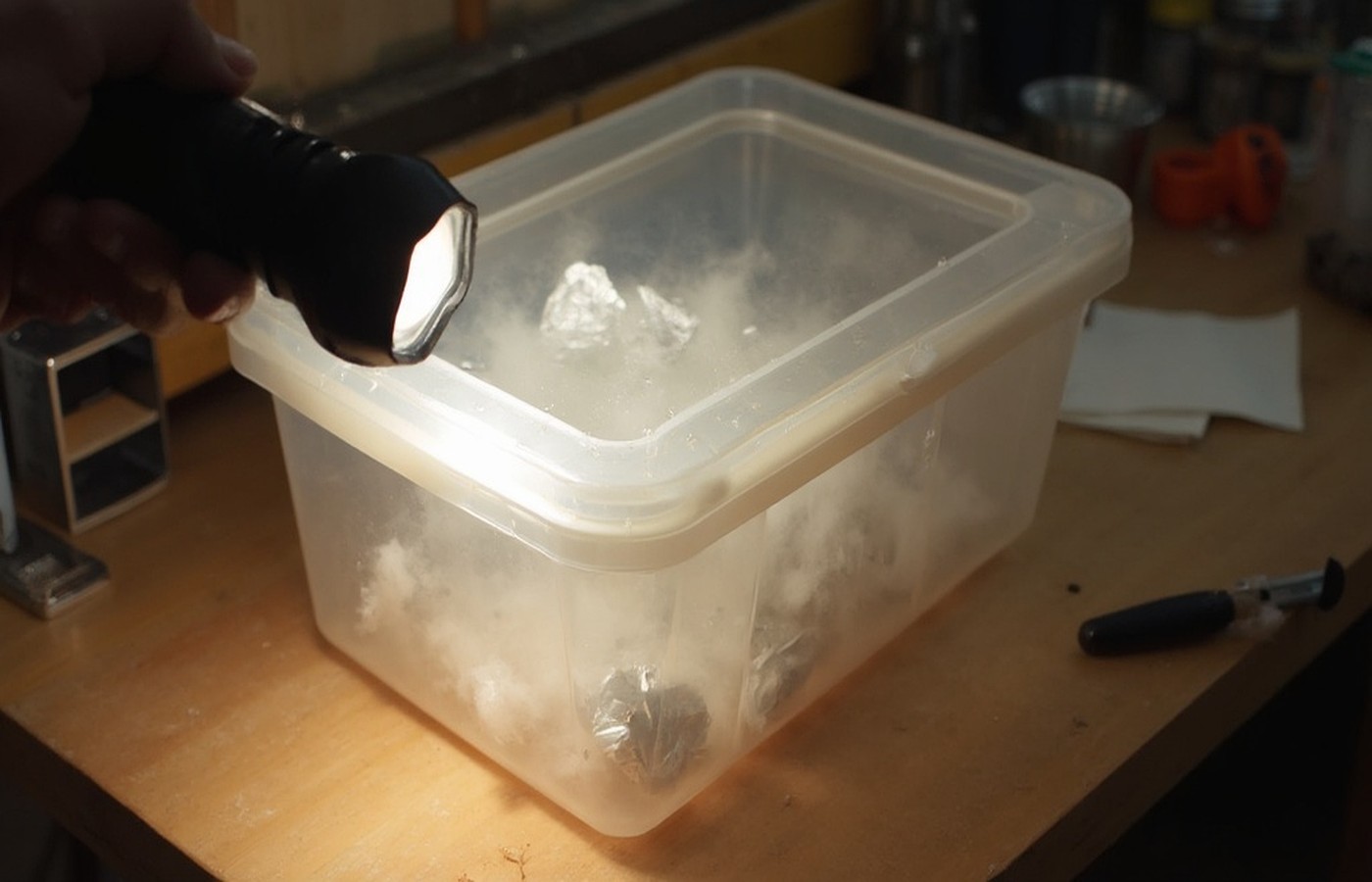
Light leaks and air leaks travel through the same paths, so a flashlight is a surprisingly good detector.
- Place a working flashlight inside the container.
- Close the lid and turn the room lights off.
- Look at the seam from outside.
Any bright sliver of light at the seam is a leak path. A faint glow along foam gaskets is normal for cheap containers, but clear pinholes or bright lines mean the seal needs new foam, a fresh gasket, or a heavier latch. This test pairs well with the Wisedry rotation log — once you know the weak side, you can rotate which face of the container faces the wall.
Test 3: The Smell Test
A weak seal is often a smelly seal.
- Close the container with a dry desiccant pack inside for 24 hours.
- Open the lid and smell right at the opening.
A clean, neutral smell means the seal held. A musty, stale, or paper-damp smell means moisture got in even though the lid was closed. If the bin smells musty every time you open it, the seal is the problem, not the silica gel. Recharging or replacing the pack will not fix the smell until the seal improves.
Test 4: The Weight Test
This test takes longer but is the most objective.
- Weigh a fully dried rechargeable desiccant pack and write the number on a label.
- Place the pack inside the closed container for 3–5 days in a normal room.
- Reweigh the pack.
If the pack gains more than a few percent of its dry weight, moisture is leaking in faster than the pack can keep up. The exact threshold depends on room humidity, but a clear weight gain inside a closed container is a strong sign that the seal is not airtight. Pair this with the Wisedry saturation checklist so you know what `saturated` looks like for that specific pack size.
What To Do If A Test Fails
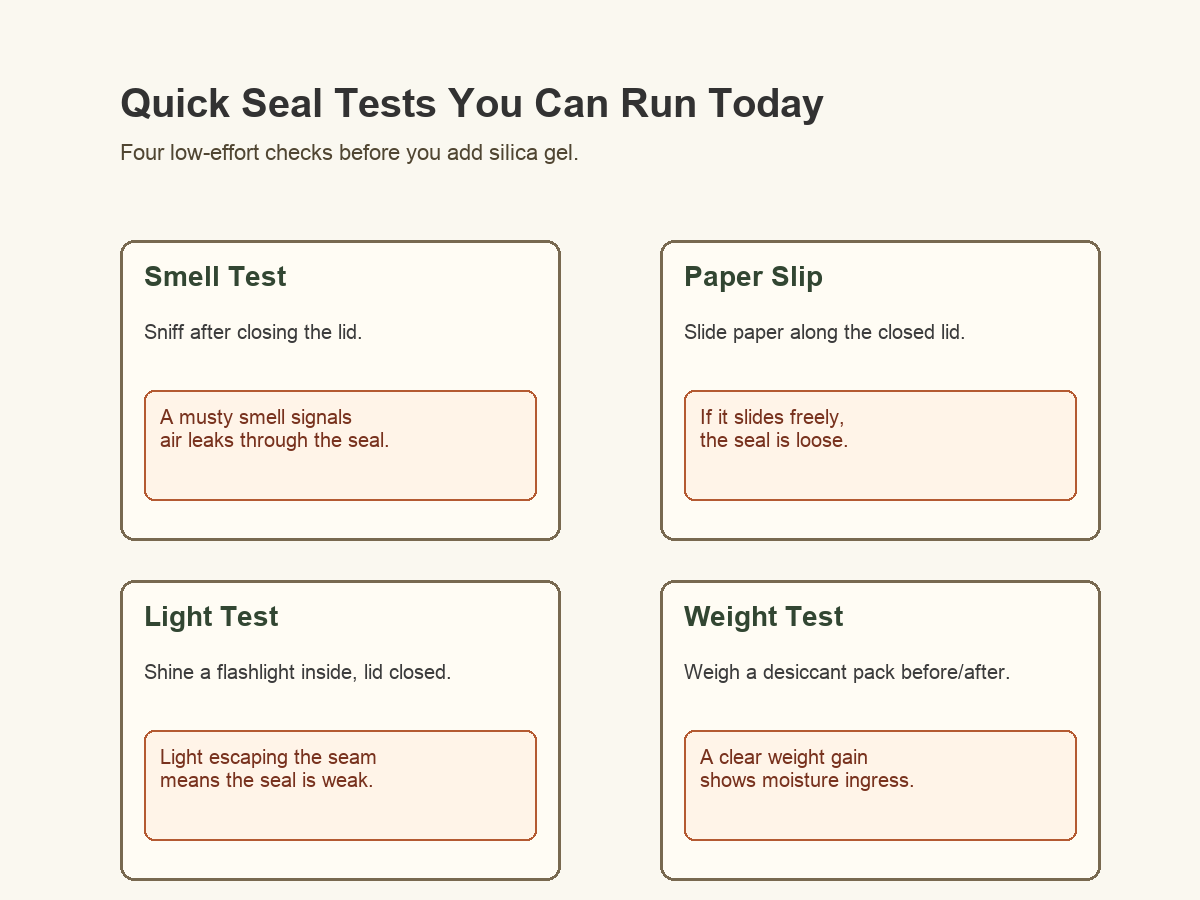
If any of the four tests fails, fix the seal before adding more silica gel. Common fixes:
- Clean the lid groove and the gasket with a dry cloth. Dust and label residue are common leak causes.
- Add a foam weather-strip tape to the lid contact surface if the original foam has compressed.
- Place a small silica gel pack along the latch side as a buffer — it is not a fix, but it slows leakage.
- For ammo cans and tool boxes, check the rubber gasket for splits and replace it if it no longer springs back.
After any fix, rerun the paper slip test. If the strip now holds, the seal is back in service. Then return to the Wisedry amount guide to confirm the right pack size for the now-better-sealed container.
Common Mistakes To Avoid
Trusting A Brand-New Container
New plastic totes often have a tighter seal than the same tote after six months of opening and closing. Re-test periodically, especially before seasonal storage.
Sealing Only The Edges You Can See
Latches and hinges leak just as much as the long seams. Always run the paper slip test on all four sides and around any hardware.
Adding More Silica Gel Instead Of Fixing The Seal
Doubling the pack size in a leaky container usually means the pack saturates twice as fast and you spend more time recharging. Fix the seal first; then size the pack.
Skipping The Test For \”Small\” Containers
Small parts organizers, lens cases, and document boxes are exactly where a weak seal causes the most damage, because the air volume is tiny. The Wisedry cabinet organization guide covers small-bin workflow; the same paper slip test applies to those bins.
FAQ
Can I check a container seal without removing the lid?
Yes. The flashlight test and a careful sniff at the seam are both lid-on checks. The paper slip test only needs the lid closed normally, not removed.
What if the paper slips out a tiny bit?
A tiny bit of movement at the corners is common on cheap plastic totes. Movement along a long stretch of the seam, or movement with no resistance, means the seal is too loose to rely on.
How often should I retest the seal?
Every few months is enough for most home storage. Retest sooner if the container is stored in a hot attic, a cold garage, or anywhere with big temperature swings — those conditions age gaskets faster.
Do I still need silica gel if the seal is perfect?
Yes. A perfect seal keeps new moisture out, but the air already inside the container at the moment you close it still carries humidity. Silica gel pulls that initial moisture down so the interior reaches a dry, stable state.
What if I cannot improve the seal?
That is when you either replace the container, switch to a higher-grade reusable product, or accept that you will recharge more often. The Wisedry recharge hub explains how to keep packs in service when the container is less than perfect.
Recommended Next Step
Pick one container today. Run the paper slip test around all four sides, then run the flashlight test. If either test fails, clean the seal groove and retest before adding more silica gel.
Need a fresh rechargeable pack for the now-better-sealed bin? Visit the Wisedry shop for reusable silica gel desiccants. For questions about a specific Wisedry product or seal setup, the Wisedry support center is the right handoff.
If you are planning a specific seasonal setup, see how to use silica gel in holiday decoration storage with a simple packing and checkup routine.
If a box still feels damp after the seal check, use the storage-container troubleshooting sequence to inspect wet contents, packet saturation, airflow, opening frequency, and starting amount in order.
Once the seal passes, keep the habit consistent with this airtight box checklist to run before adding silica gel — it covers lid fit, gasket state, packet placement, and a final seal-down check.