Recharging silica gel is only part of the reuse process. After heating, the packet, beads, pouch, tray, or container may still be hot. If you put hot silica gel straight back into a storage box, camera bag, document safe, resin supply bin, or flower storage container, the heat can create avoidable handling risk and may expose stored items to warmth they do not need.
The simple rule is to let recharged silica gel cool in a clean, dry, open area before sealing it with moisture-sensitive items. Once it feels close to room temperature and the packet or container is dry on the outside, it is usually ready to go back into service.
Quick Answer
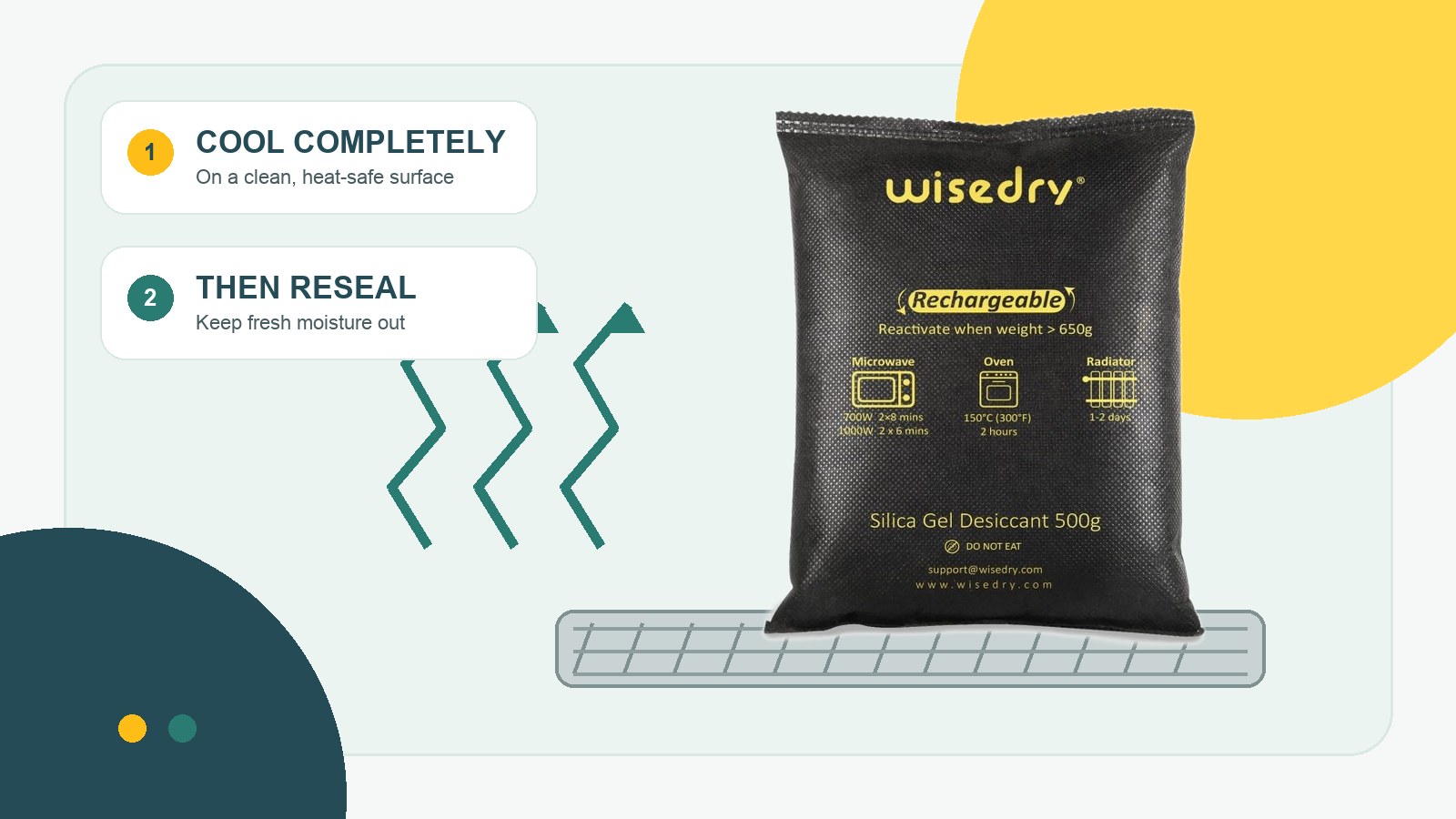
After recharging silica gel, place it on a clean, heat-safe, dry surface and let it cool in open room air before reuse. Do not seal hot silica gel inside a plastic container, storage bag, safe, camera case, filament box, flower container, or resin supply box. Wait until the packet or beads feel close to room temperature, then return them to the storage space.
Always follow the product-specific heating instructions first. Use the Wisedry recharge hub if you need the correct guide for a Wisedry product.
Why Cooling Matters
Silica gel absorbs moisture, and heat helps drive that moisture out during recharging. But the material and its pouch can remain warm after the microwave, oven, or other approved recharge method is finished.
Cooling matters for four practical reasons:
- Comfort: a hot packet can be uncomfortable or unsafe to handle.
- Stored items: some items should not be exposed to unnecessary heat.
- Condensation control: sealing warm material too quickly can create moisture problems inside a closed container.
- Inspection: cooling gives you a chance to check the packet, color indicator, pouch condition, and storage setup before reuse.
This does not mean recharged silica gel needs a complicated cooling process. It usually needs a simple pause before you put it back into a sealed space.
Step 1: Finish The Recharge According To The Product Guide
Before thinking about cooling, make sure the recharge step itself follows the correct product instructions. Different Wisedry products can have different forms, packet sizes, indicators, and heating instructions.
For example, the guide for recharging Wisedry 20g, 50g, and 112g silica gel packets is the right starting point for those packet sizes. Flower drying crystals, see-through packets, beads, and car dehumidifier products should be checked against their own guide instead of using one universal heating routine.
If the indicator has not returned to the expected dry color, do not solve that by guessing or overheating. Let the material cool, review the guide, and use the allowed recharge steps for that product.
Step 2: Move It To A Heat-Safe Dry Surface
When the recharge step is complete, place the silica gel on a clean, heat-safe, dry surface. Good options include a dry ceramic plate, a clean baking tray, or another surface that can handle residual heat.
Avoid cooling hot silica gel on:
- Wet counters or damp towels.
- Plastic bags or thin plastic containers.
- Paper that could scorch if the packet is still hot.
- Upholstery, carpet, or fabric surfaces.
- The item you are trying to protect.
Do not rinse silica gel with water to cool it faster. Water reverses the drying purpose and can leave the silica gel wet again.
Step 3: Let Air Move Around The Packet
Silica gel cools more evenly when air can move around it. Place packets in a single layer instead of stacking them in a pile. If you recharged loose beads or crystals in an approved container, keep them spread out according to the product instructions and avoid sealing the container while it is still warm.

For indicating silica gel, use the indicator as a recharge clue, not as a cooling thermometer. A packet can show the dry color and still be warm from heating. Wait for the physical packet to cool before you put it back with stored items.
If you are using see-through packets, the see-through desiccant packet instructions can help you interpret the color change and choose the next step.
How Long Should Silica Gel Cool?
There is no single cooling time that fits every packet or container. A small packet may cool faster than a larger pouch. Loose beads in a shallow layer may cool differently from beads held in a deeper container. Room temperature, airflow, and heating method also matter.
Use these practical checks instead of a fixed timer:
- The packet feels close to room temperature on both sides.
- The outer pouch or container is dry, not sweaty or damp.
- The packet is firm enough to handle normally.
- The storage container is ready, dry, and clean.
- The silica gel is not giving off noticeable heat when held near the item it will protect.
If you are unsure, wait longer. Extra cooling time in a dry indoor area is usually safer than rushing hot silica gel back into a sealed box.
Do Not Seal Hot Silica Gel In A Storage Container
Putting hot silica gel into a closed container can create a few problems. Heat can warm the items inside. Warm air can hold moisture differently than cooler air. If the storage container or the items inside are cooler, condensation can become a concern in some conditions.
This is especially worth avoiding with:
- Camera bags, lens cases, and small electronics storage.
- Document boxes, safes, and keepsake containers.
- Resin flowers, dried flowers, and craft supplies.
- 3D printer filament boxes.
- Seed, sample, or hobby storage containers where the contents are sensitive to heat.
Think of cooling as part of the recharge workflow, not as an optional extra step.
Step 4: Check The Packet Before Reuse
Cooling time is also inspection time. Before putting the desiccant back, look for signs that the packet should not be reused immediately.
Check for:
- Torn seams, holes, or loose beads.
- Scorching, melting, or unusual marks.
- A damp surface after cooling.
- Strong odor that was not present before.
- Color indicator that still shows saturation after following the correct recharge instructions.
- A storage container that is still humid, dirty, or not sealed well.
If the packet is damaged, do not place it with important stored items. If the indicator still looks saturated, review how to tell if a silica gel packet is saturated and the product guide before deciding whether to recharge again or replace the packet.
Step 5: Return It To A Clean, Dry Storage Space
Once the silica gel has cooled, place it where it can work without being crushed, covered, or blocked.
For a small box, safe, or document container, put the packet where air can reach it and where it will not press directly against fragile paper, photos, or keepsakes. For a camera bag or lens case, keep it in a pocket or open area where it will not scratch equipment. For craft or resin supplies, keep the packet separate from sticky, wet, or uncured materials.
If you are not sure how many packets you need, use the silica gel amount guide as a planning reference.
What If The Packet Still Feels Warm After A Long Time?
If a packet stays warm longer than expected, give it more time in a safe place and make sure it is not stacked with other hot packets. Larger packets and deeper containers can retain heat longer than small packets.
Do not place a warm packet into a sealed plastic bag just to keep it dry. It is better to let it cool first, then store it in an airtight container after it has reached room temperature.
If the packet looks damaged, smells unusual, leaks beads, or does not behave normally after cooling, stop using it with valuable items and contact support for product-specific guidance.
Can You Put Recharged Silica Gel In The Freezer To Cool It Faster?
For ordinary home reuse, forced cooling is usually unnecessary. A freezer can introduce condensation when warm material meets cold air or when the packet is moved back into room air. That defeats the goal of keeping the desiccant dry.
Use room-air cooling on a dry surface unless the product guide says otherwise.
Common Cooling Mistakes
Mistake 1: Putting Hot Silica Gel Back With Stored Items
This is the main mistake to avoid. Recharged silica gel should cool before it touches or sits near moisture-sensitive items.
Mistake 2: Sealing It In Plastic While Still Warm
A sealed plastic bag or storage container can trap heat and moisture. Let the packet cool first, then close it inside the final storage space.
Mistake 3: Stacking Packets In A Pile
Stacked hot packets cool slowly and unevenly. Use a single layer while cooling.
Mistake 4: Using Water Or A Damp Towel
Water adds moisture back to the system. Keep the cooling surface dry.
Mistake 5: Treating Color As The Only Signal
Indicator color helps with saturation, but it does not prove the packet is cool. Touch temperature still matters before reuse.
Simple Cooling Workflow

Use this workflow after each recharge:
- Follow the product-specific recharge guide.
- Move the silica gel to a dry, heat-safe surface.
- Spread packets in a single layer.
- Let them cool in open room air.
- Check temperature, pouch condition, and indicator color.
- Place the cooled packet back into a clean, dry storage space.
- Recheck the packet later based on the storage conditions and indicator.
This routine keeps the process simple and avoids the most common mistakes.
When To Recharge Again
Cooling does not decide when silica gel needs the next recharge. Saturation does. After reuse, check the indicator, packet weight, storage conditions, and the condition of the items inside the container.
If you are tempted to recharge after every short use, read can you recharge silica gel too early before adding unnecessary heat cycles. If the packet is saturated or being prepared for an important storage period, recharging may make sense. If it is still dry and the container was only opened briefly, waiting may be reasonable.
FAQ
Can I reuse silica gel while it is still warm?
It is better to wait until it feels close to room temperature. Warm silica gel may expose stored items to unnecessary heat and can create avoidable issues in a sealed container.
Should silica gel cool with the lid open or closed?
Cool it in open room air on a dry, heat-safe surface. After it has cooled and feels dry on the outside, place it into the storage container and close the lid.
Is it bad if recharged silica gel feels hot?
It is normal for silica gel and its packet to be warm or hot after an approved recharge step. Let it cool before handling more than necessary or returning it to storage.
Can I put hot silica gel in a camera bag or safe?
Do not put hot silica gel directly into a camera bag, lens case, safe, document box, or other storage area with heat-sensitive items. Let it cool first.
What should I do if the packet is damaged after recharging?
Do not use a damaged packet with valuable stored items. If beads are leaking, the pouch is scorched, or the packet looks abnormal, replace it or contact Wisedry support for product-specific help.
Final Takeaway
Recharged silica gel should be dry and cool before it goes back into storage. Finish the approved recharge process, place the packet on a dry heat-safe surface, let it cool in a single layer, inspect it, and then return it to the container.
Need product-specific instructions? Start with the Wisedry recharge hub. Need replacement or extra packets for a storage setup? Shop reusable silica gel packets. For unusual packet damage, odor, or use-case questions, ask Wisedry support.