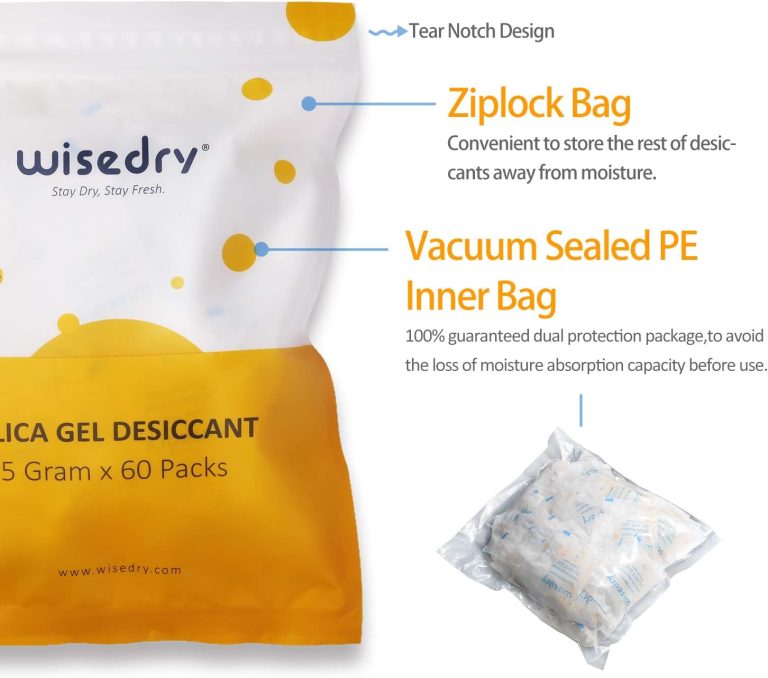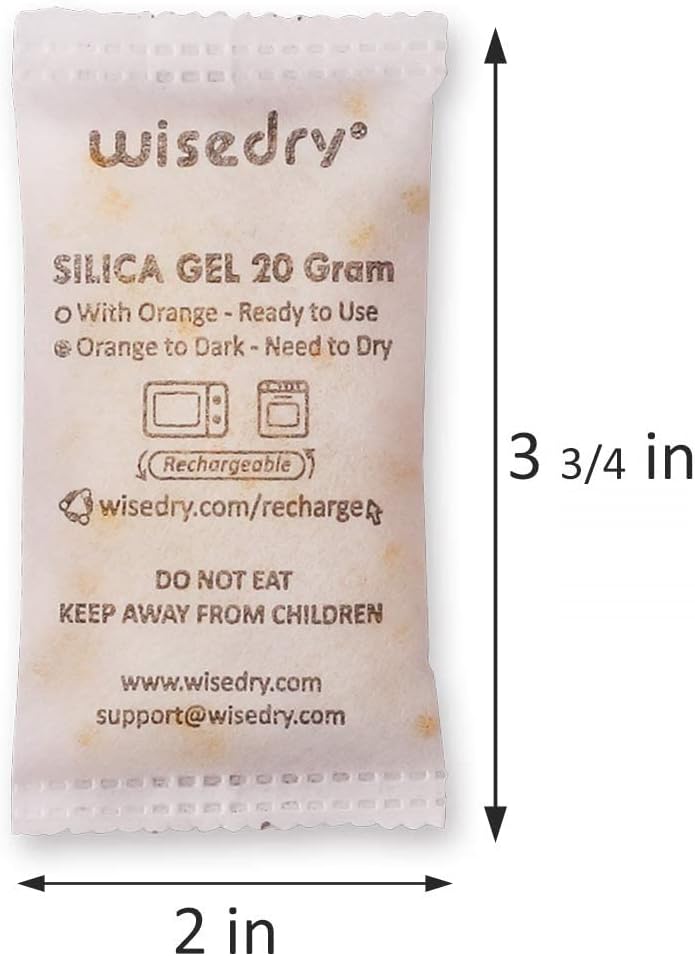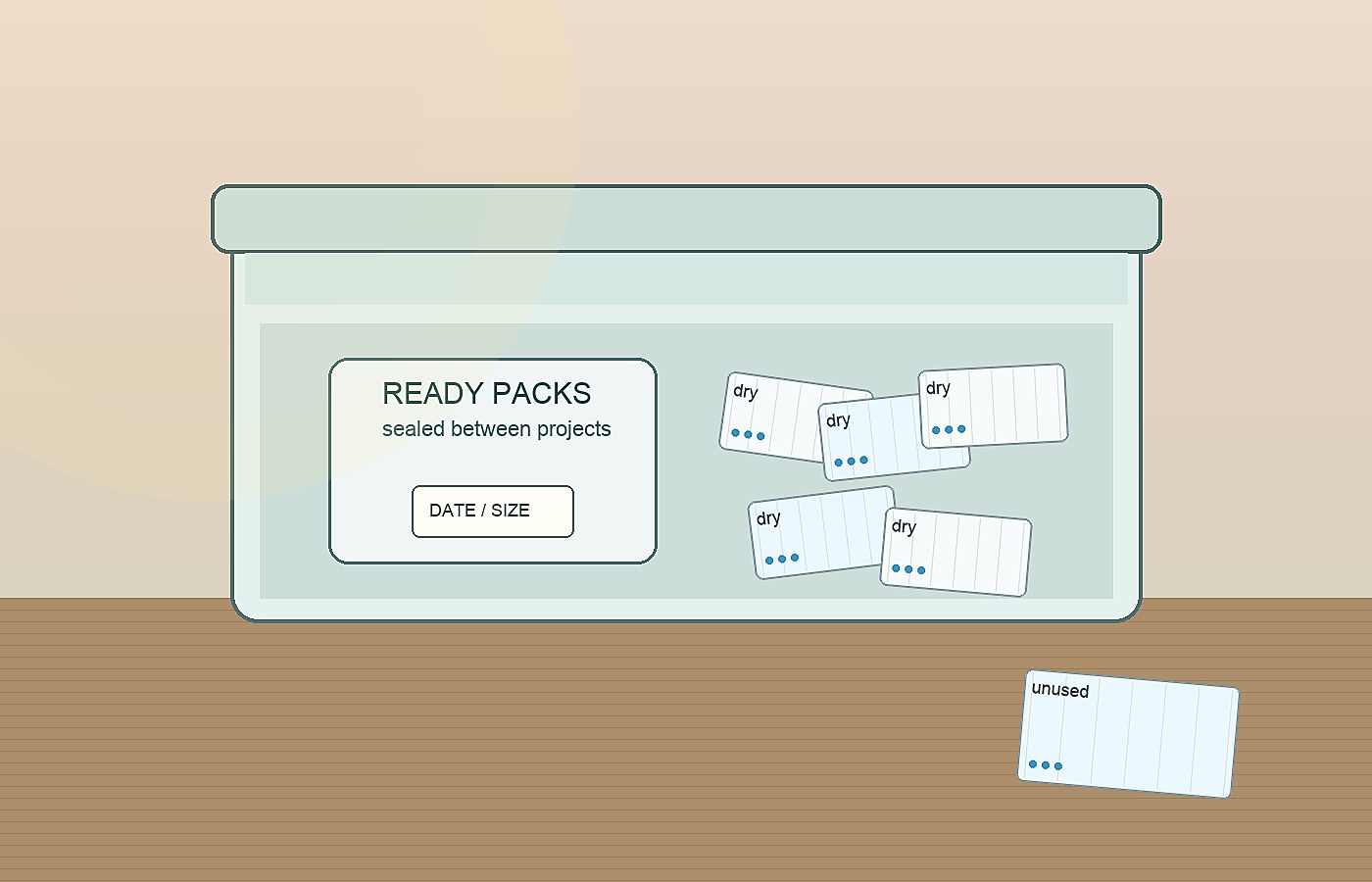
Unused silica gel packets do not stay useful just because they are sitting in a drawer. If dry packets are left open to room air, mixed with packets that need recharge, or stored beside damp tools and materials, they can start absorbing moisture before the next project even begins.
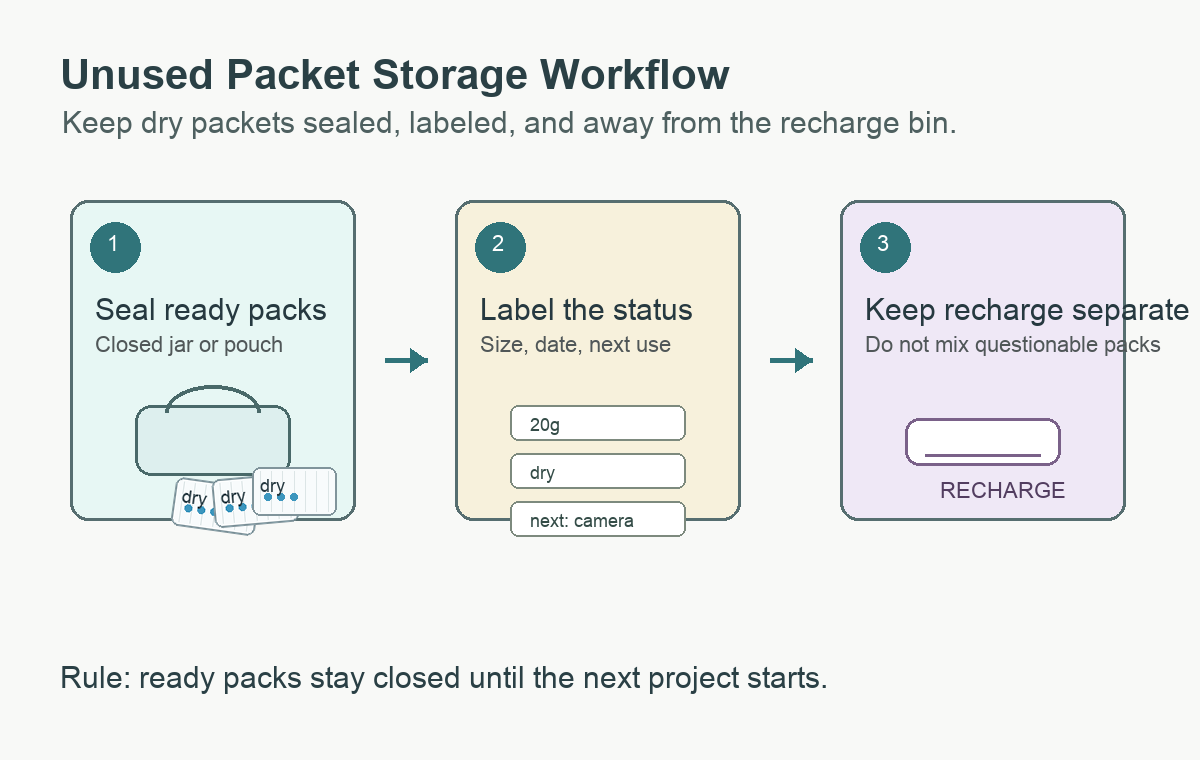
Quick answer: store unused silica gel packets in a clean, sealed, labeled container. Keep ready-to-use packets separate from packets that need recharge, add a date or status label, and close the storage bin between projects so the dry packs are not exposed to room humidity.
Why Unused Packets Need Their Own Storage
Silica gel starts working whenever it is exposed to air. That is useful inside a camera bag, document box, flower drying container, filament box, craft bin, or seasonal storage tote. It is less useful when a dry packet sits uncovered on a shelf between projects.
A simple storage setup helps you avoid three common problems:
- A dry packet quietly absorbs moisture from the room before you use it.
- A packet that needs recharge gets mixed back into the ready supply.
- You forget which packet size or project a packet was meant for.
This is not about creating a permanent shelf life promise. It is about reducing avoidable moisture exposure and making the next setup easier to check.
The Best Container For Unused Silica Gel Packets
Use a small container that closes firmly and stays clean. Good options include:
- A lidded plastic food-storage box kept only for desiccant.
- A screw-top jar with a dry interior.
- A zip pouch placed inside a harder storage bin.
- A small parts box with a gasketed lid.
- A labeled cabinet bin that closes between uses.
The container does not need to be expensive, but it should close better than an open drawer. If you are not sure whether the lid is tight enough, run the paper-slip and flashlight checks from the Wisedry container seal guide.
Separate Ready Packs From Recharge Packs
Do not store every packet in one mixed pile. Create at least two zones:
- Ready to use: dry, cool, clean packets that are waiting for the next project.
- Needs recharge: packets that changed indicator color, feel heavier than expected, sat in open air, or came out of a damp container.
If you manage more than a few packets, add a third temporary zone for packets that have just been recharged and are cooling or waiting for a final check. The Wisedry cabinet organization guide shows a fuller four-zone system, but two zones are enough for most homes.
Label The Storage Bin, Not Every Packet
For day-to-day use, one clear label on the bin is usually enough. Include:
- Packet size or type.
- Last recharge or last check date.
- Status: ready, needs recharge, or cooling.
- Intended next use, such as camera bag, craft bin, flower drying, safe, or filament box.
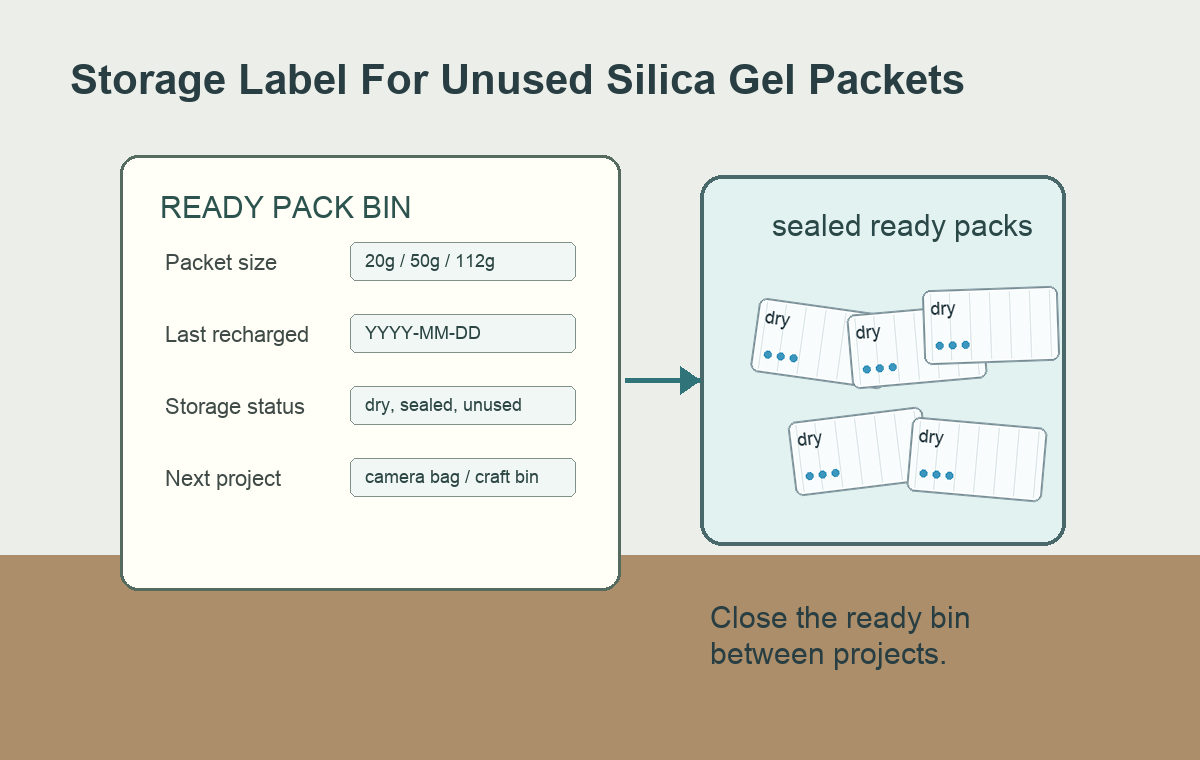
If you rotate packets across several containers, keep the detailed notes in a log and keep the bin label short. The label should help you avoid mix-ups, not turn packet storage into paperwork.
Keep The Ready Bin Closed Between Projects
The simplest rule is also the easiest to forget: close the ready bin after you take out a packet.
Avoid storing ready packets:
- In an open drawer.
- Next to sinks, laundry areas, bathrooms, or damp basements.
- Beside wet tools, recently cleaned items, or damp craft materials.
- In direct sun or near a heat source that may age labels, pouches, or container seals.
- In the same tray as packets waiting for recharge.
A closed bin slows unnecessary moisture pickup. It also keeps dust, pet hair, loose paper fibers, and workshop debris away from packet seams and indicator windows.
What To Do Before Reusing A Stored Packet
Before a packet goes into a new project, take 30 seconds to check it:
- Look at the indicator color if the packet has one.
- Feel whether the packet seems unusually heavy compared with a known dry packet.
- Check that the packet is clean and undamaged.
- Confirm the label says ready, not recharge or review.
- Match the packet size to the container and use case.
If the packet looks saturated or questionable, recharge it according to the product instructions before using it. For Wisedry medium packets, use the 20g, 50g, and 112g recharge guide. For a broader overview, use the Wisedry recharge hub.
How To Handle Leftover Packets After A Project
When a project ends, do not automatically return every packet to the ready bin.
Use this quick routine:
- Inspect the packet for saturation signs.
- Set aside any packet that came from a damp or frequently opened container.
- Recharge questionable packets before marking them ready.
- Let recharged packets cool before closing them inside a storage bin.
- Update the bin label or rotation log before you forget where the packet came from.
This routine is especially useful after flower drying, seasonal storage, filament handling, and craft projects where the container may have been opened repeatedly.
Mistakes To Avoid
Leaving Dry Packets On The Workbench
A dry packet left uncovered for a day is doing work, just not the work you planned. Put ready packets back into the sealed bin as soon as sorting is finished.
Mixing Packets With Unknown Status
If you cannot tell whether a packet is dry, do not guess. Move it to the recharge area and check it against the Wisedry saturation checklist.
Storing Packets Beside Damp Project Materials
Unused desiccant should not sit next to wet craft tools, freshly cleaned containers, damp flowers, damp filament spools, or laundry-area storage. Keep the ready bin dry and boring.
Assuming A Closed Bag Is Airtight
Some zip bags leak slowly, especially after repeated use. If a pouch is your only option, place that pouch inside a lidded box or jar for a second layer of protection.
FAQ
Can I store unused silica gel packets in the original packaging?
Yes, if the original packaging still closes cleanly and has not been torn or left open. If the packaging no longer seals well, move the packets into a clean, lidded container and label the status.
Do unused packets need to be recharged before every project?
Not always. Check the indicator color, weight feel, label status, and storage history. Recharge when the packet looks saturated, was exposed to open air for a long time, or came out of a damp container.
Is a glass jar better than a plastic box?
Both can work. A clean jar with a tight lid is easy to inspect, while a plastic box may be easier for larger packets. The practical question is whether the container closes well and stays dry where you store it.
Should I store different packet sizes together?
You can, but sorting by size makes setup easier. If you use small packets for camera bags and larger packs for storage bins, keep those groups separated or label the bin clearly.
What if I only have one unused packet?
Use a small sealed pouch or jar and add a simple note with the last check date. Even one packet is easier to trust later when its storage history is clear.
Recommended Next Step
Set up one ready bin today. Put only dry, clean packets inside, add a date/status label, and close the lid. If a packet looks questionable, move it to the recharge area instead of returning it to the ready supply.
Need more ready-to-use reusable packets for storage projects? Visit the Wisedry shop for reusable silica gel desiccants. For product-specific storage or recharge questions, use the Wisedry support center.
When those stored packets go into hobby or craft boxes, the silica gel for craft supply storage guide maps placement and checkup steps for supply containers.