Silica gel packets work quietly, so it is not always obvious when they are still active and when they have already absorbed as much moisture as they can. A packet can look normal from the outside but work slowly because the beads inside are saturated, the container is too leaky, or the packet is too small for the space.
The goal is not to guess a fixed number of days. The better approach is to check the packet, check the container, and decide whether to recharge, add more desiccant, or replace a damaged packet.
Quick Answer
A silica gel packet is probably saturated when its color indicator shows the wet color, when it has gained noticeable weight compared with its dry condition, when moisture returns quickly in a sealed container, or when stored items still feel damp even though the packet has had enough time to work.
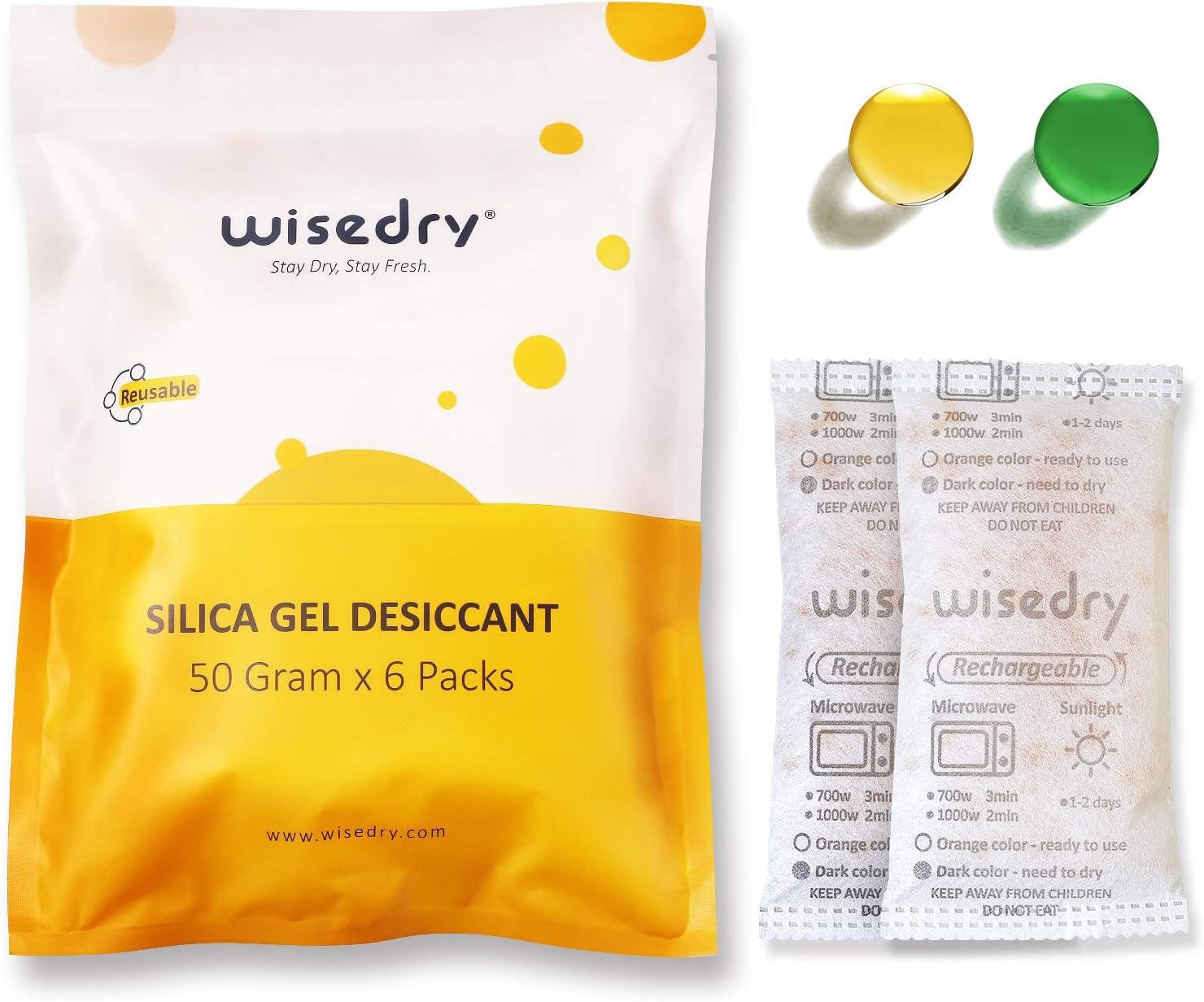
For Wisedry see-through and indicating packets, orange beads mean the packet is ready to absorb moisture. Dark green beads mean the packet is saturated and should be reactivated before reuse. White beads and many ordinary silica gel beads do not change color, so do not judge those by appearance alone.
For product-specific indicator details, see the Wisedry see-through desiccant packet instructions.
What Saturated Means
Saturated does not mean the packet has expired like food. It means the silica gel has absorbed moisture and has little remaining capacity until it is dried again or replaced.
In real storage, saturation depends on several things:
- How much silica gel is in the container.
- How tightly the container seals.
- How humid the room is.
- How often the container is opened.
- Whether the packet has airflow around it.
- Whether the packet has been spilled on, crushed, contaminated, or overheated.
This is why two identical packets can behave differently. One packet in a small airtight lens case may stay useful for a long time. The same packet in a frequently opened storage box in a humid room may become saturated much sooner.
Sign 1: The Color Indicator Has Changed

If your silica gel packet has color-indicating beads, color is the easiest first check.
For Wisedry indicating packets:
- Orange beads mean the packet is dry and ready to absorb moisture.
- Dark green beads mean the packet has absorbed moisture and needs reactivation before reuse.
- White beads do not change color.
Do not assume every brand uses the same color system. Some products use different indicator colors, and some packets have no indicator at all. If you are using a non-Wisedry packet, follow that product’s label or instructions.
Also check the whole visible window, not one bead. A few darker beads may appear before the packet is fully saturated, especially if one side faces humid air first. If most visible indicating beads have reached the wet color, treat the packet as ready to recharge.
Sign 2: The Packet Feels Heavier Than Before
Silica gel gains weight as it absorbs moisture. If you use the same packet in a repeat setup, weighing can be more reliable than appearance, especially when:
- The packet has no color indicator.
- The indicator color has become harder to read after repeated use.
- The packet contains both indicating and non-indicating beads.
- You want to compare several packets in the same storage box.
The simple method is to weigh the packet when it is freshly recharged and cool, write that dry weight on a label or notebook, then weigh it again after use. If the packet has gained noticeable weight, it has absorbed moisture and may need recharging.
Do not heat a packet just because it is old. Recharge because the indicator shows saturation, the weight has increased, or the storage problem suggests the packet is no longer active.
Sign 3: Moisture Returns Quickly In A Closed Container
A saturated packet cannot keep absorbing much more moisture. If you put a packet into a closed box and the space still becomes humid quickly, the packet may be saturated, undersized, poorly placed, or working inside a container that leaks too much air.
Look for practical signs:
- Camera lenses or screens fog again after storage.
- Paper feels soft or wavy in a document box.
- Dried flowers soften after being sealed.
- A storage box develops a damp smell after being closed.
- The packet’s indicator changes soon after you put it back into service.
These signs do not prove that the packet is the only problem. They tell you to check the whole setup: packet condition, amount, placement, and seal quality.
Need help choosing enough desiccant for the space? Use the silica gel amount guide.
Sign 4: The Packet Was Used In A Very Humid Or Open Space
Silica gel works best in enclosed spaces. If a packet has been sitting in open air, a damp cabinet, a car that is opened often, or a storage bin with a poor lid, it may become saturated faster than expected.
Common high-humidity situations include:
- A container stored in a basement, garage, laundry room, boat, RV, or damp closet.
- A box that is opened every day.
- A bag with many gaps, vents, or fabric openings.
- A storage space with damp items placed inside.
- A packet used after drying flowers, shoes, camera gear, or craft materials.
In these cases, recharge the packet when the indicator or weight suggests saturation, then improve the storage setup. A better seal and enough packet capacity usually matter more than simply adding one more small packet.
When To Recharge A Silica Gel Packet
Recharge a reusable silica gel packet when it is saturated and the product instructions allow reactivation.
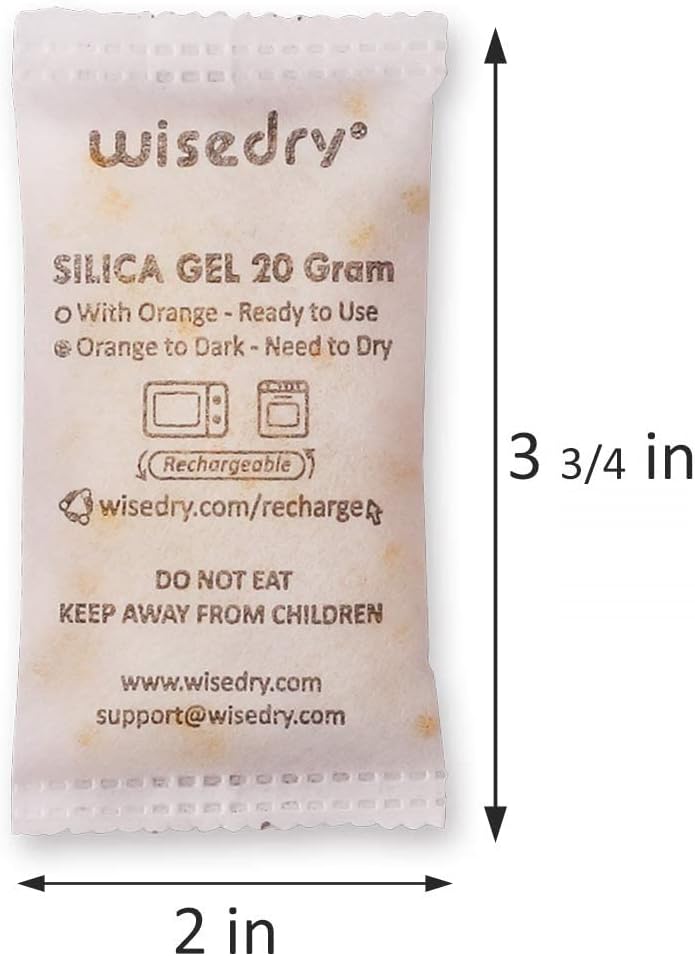
For Wisedry 20g, 50g, and 112g packets, use the product-specific guide for time, method, and handling details: recharge Wisedry 20g, 50g, and 112g silica gel packets.
For other Wisedry products, start with the Wisedry recharge hub.
After recharging:
- Let the packet cool fully before putting it back with stored items.
- Confirm the indicator has returned to the dry color when your product has one.
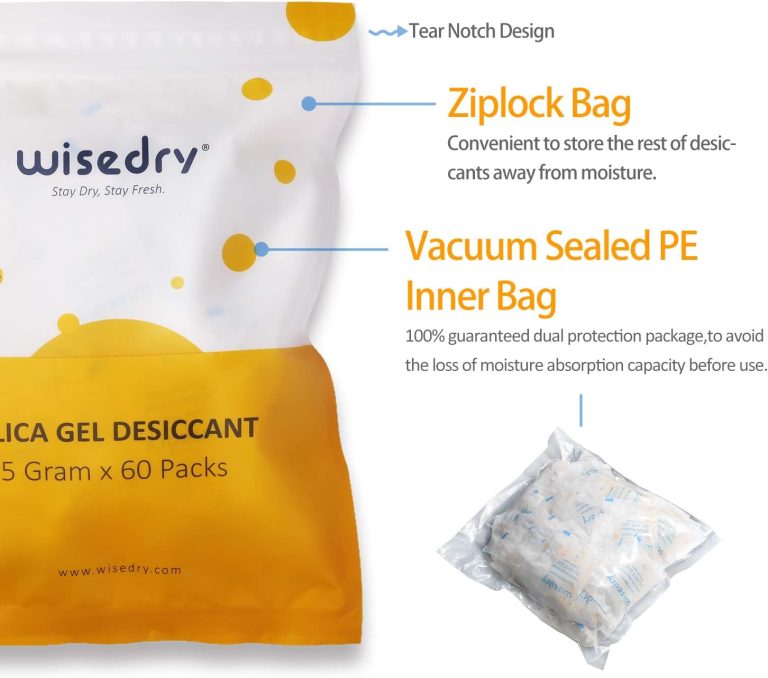
- Store unused packets in an airtight container.
- Keep a simple date or weight note if the packet is used for important storage.
Do not overheat packets or use a heating method that is not listed for that product. Different packet materials and sizes can need different handling.
When To Replace Instead Of Recharge
Recharge is useful only when the packet is still in good physical condition and designed for reuse. Replace the packet if it is torn, leaking beads, scorched, melted, contaminated, or giving off an unusual odor after normal handling.
Also replace or retire a packet if:
- The outer material is brittle or damaged.
- Beads are escaping through the seam or paper.
- The packet was soaked with liquid water.
- The packet touched oil, cleaner, fragrance, soil, or food residue.
- It no longer fits the storage use safely.
Desiccant should help keep already-dry items dry. It is not a repair method for items that are already wet, moldy, rusted, or contaminated.
How To Check Non-Indicating Silica Gel Packets
Some packets do not have visible indicator beads. They may still work, but you need a different check.
Use this simple routine:
- Start with a freshly recharged or new packet.
- Weigh it after it cools, if it is reusable and safe to weigh.
- Put it in a sealed container with the items you want to protect.
- Check the container after a reasonable period.
- Weigh the packet again or watch for moisture returning.
- Recharge or replace based on weight gain, storage conditions, and product instructions.
If you cannot inspect, weigh, or recharge the packet, treat it as a limited-use support item. In important storage, replace uncertain packets instead of relying on them indefinitely.
Quick Troubleshooting Checklist

If your silica gel packet seems saturated too quickly, ask these questions:
- Is the container actually airtight?
- Is the packet large enough for the container volume?
- Is the packet buried under items with no airflow?
- Are damp items being placed into the container?
- Is the container opened often?
- Is the room unusually humid?
- Is the packet old, torn, scorched, or contaminated?
- Was the packet fully recharged and cooled before reuse?
If several answers point to the container, fixing the setup may matter more than changing the packet. Use a tighter lid, reduce opening frequency, dry the stored items first, and choose enough desiccant for the space.
FAQ
Can silica gel be saturated even if it still looks normal?
Yes. Non-indicating silica gel can absorb moisture without changing appearance. Some packets also have only a small number of indicator beads, so appearance may not tell the whole story.
Do all silica gel packets change color when saturated?
No. Only packets with color indicators change color. For Wisedry indicating packets, orange means ready and dark green means saturated. Other products may use different colors or no indicator.
Should I recharge a packet every time I open the container?
Usually no. Recharge when the packet is saturated, when its indicator shows the wet color, when weight gain suggests moisture absorption, or when the storage setup shows moisture returning.
Can I use a saturated silica gel packet anyway?
It may still sit in the container, but it will not have much remaining moisture capacity. Recharge or replace it before relying on it for dry storage.
Why did my packet saturate so fast?
The packet may be too small, the container may leak, the room may be very humid, or damp items may have been placed inside. Check the storage setup before assuming the packet failed.
Is a saturated packet the same as an expired packet?
No. Saturation means the packet has absorbed moisture. Expiration is a broader question about age, damage, contamination, and whether the packet can still be recharged or reused. For more detail, read the silica gel packet lifespan guide.
Bottom Line
If a packet that should have an indicator shows no visible change, use the focused checklist in What To Do If Your Desiccant Pack Does Not Change Color before changing the recharge method or deciding that the packet has failed.
The best way to tell if a silica gel packet is saturated is to combine the visible indicator, packet weight, storage conditions, and the results inside the container. For Wisedry indicating packets, orange means ready and dark green means saturated. For non-indicating packets, use weight, timing, and storage behavior instead of appearance alone.
If your packet is saturated and designed for reuse, recharge it according to the product instructions. If it is damaged, contaminated, leaking, or uncertain for an important storage job, replace it.
Need more packets for sealed storage? Shop reusable silica gel packets or ask Wisedry support for help choosing a safer setup.