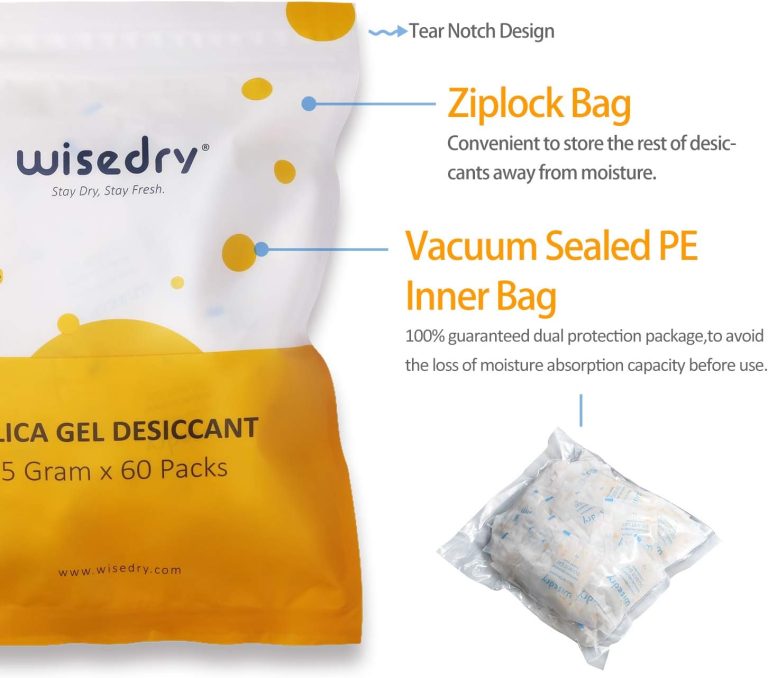
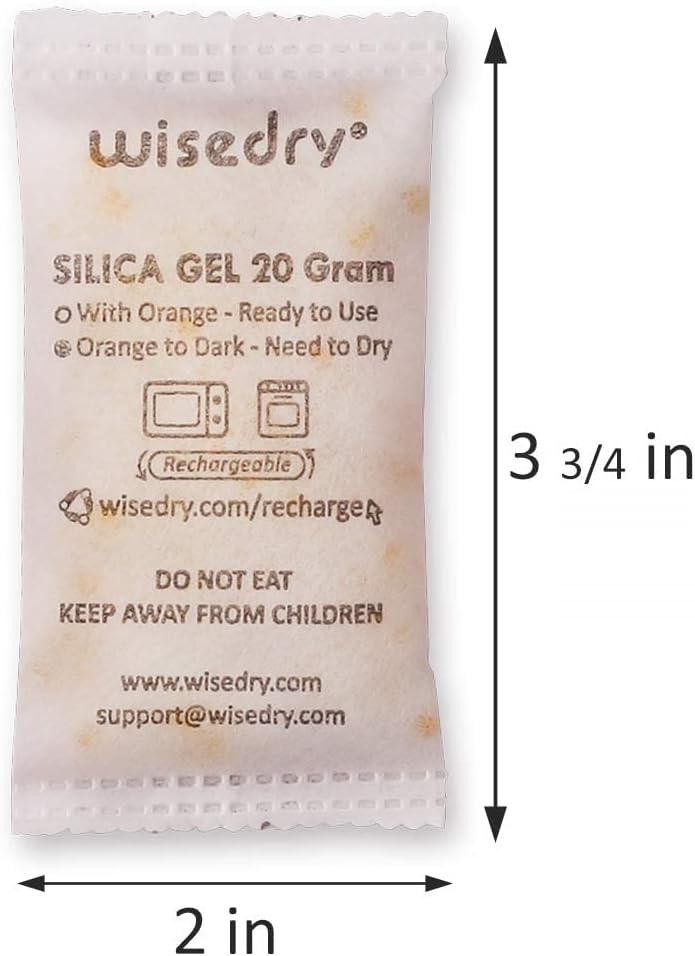
Silica gel and small parts get along well. Screws, O-rings, electrical connectors, bearings, and hobby components are rarely damaged by a little humidity on day one, but months in a closed organizer in a humid garage slowly dull plating, cloud plastic lids, and leave condensation film on metal. A parts organizer is also one of the easiest containers to protect, because it is divided, compact, and usually closes with a real lid. This guide shows where packets belong in a divided organizer, how many to start with, and how to keep the setup working with a short check routine.
Quick Answer
Use one small packet per closed compartment, not one big packet for the whole box. Keep the packet in open airspace on top of the parts, keep parts dry before they go in, and check the indicator whenever you open the box for parts anyway. The Wisedry amount guide gives the starting size by compartment volume.
Need fresh packets for the job? Shop Wisedry reusable silica gel packets.
Why A Divided Organizer Behaves Differently
A single-box storage bin shares one air volume, so one packet can treat the whole space. A parts organizer is different in three ways:
- Each compartment is its own small air space. Lids, dividers, and tight part stacks slow air movement, so moisture in one cell does not reach a packet on the far side quickly.
- Compartments open one at a time. Every time you flip one lid open in a humid room, that cell takes on fresh moist air whether the rest of the box stays closed.
- Parts often sit packed tight. Bins full of screws and fittings have almost no air gaps, so a packet buried under them barely works.
That is why the setup below treats compartments as the unit of protection rather than the box as a whole.
Step 1: Start With Dry Parts
Silica gel manages humidity in the air; it cannot dry out parts that are already wet or corroded.
- Wipe off any parts that came in from a cold car or a damp workshop and let them reach room temperature first, so they do not leave condensation on everything else in the box.
- Do not store parts with cutting fluid, flux residue, or water-based lubricant on them in a sealed cell; clean them first.
- If a part is already showing rust or white corrosion, deal with that separately. Silica gel slows new moisture damage, but it does not repair anything.
Step 2: Choose Packets That Fit The Compartments
Small 5–10 gram packets are the natural fit for divided organizers: they sit flat, they fit between dividers, and one per compartment is affordable when you buy them in multi-packs.
- A shallow screw-organizer cell may only need one 5 gram packet.
- A deeper 100 mm compartment with dense metal parts is closer to a small toolbox cell, so start with one 10 gram packet.
- For a small hardware cabinet with a few large drawers instead of many cells, treat each drawer like a mini toolbox — the sizing logic in the toolbox and parts case guide applies directly.
Step 3: Place One Packet Per Closed Compartment
Placement matters more than the exact gram count:
- Lay the packet flat on top of the parts, never underneath them. Warm, moist air rises; a packet on top sees the air first.
- Keep it away from the latch side if the lid flexes, so closing never pinches or tears the packet.
- In two-layer organizers, put a packet in the top layer and one in the bottom tray — the divider blocks airflow between them more than most people expect.
- Never let the packet’s contents spill into the cells. If a packet is torn or leaking dust, replace it instead of shaking it out; the saturated packet check covers what to look for.
Step 4: Check Indicators On A Natural Rhythm
You do not need a calendar for this one. The best check time is whenever you open the organizer for parts anyway:
- Glance at the indicator while the compartment is open. Orange means ready; green or dark means the packet has absorbed its share and needs recharging.
- A compartment you open every week rarely needs its packet recharged often, because you keep refreshing the air. A cell that stays closed for months is the one that saturates quietly.
- If one compartment’s packet keeps saturating while others stay orange, check that cell for a warped lid or an overfilled divider that keeps the lid from closing — that is a seal problem, not a desiccant problem. The container seal check walks through finding it.
Step 5: Recharge, Cool, And Rotate
When several packets have gone green, pull them in one batch instead of one at a time:
- Recharge following the Wisedry recharge guide.
- Let them cool fully before they go back near plastic lids or foam inserts — hot packets can warp divider walls.
- Drop the cooled packets back on top of the same compartments, or rotate in a spare set so the organizer is never sitting open waiting for packets.
If you keep spare packets in the same cabinet, label their container with the recharge date so you know which set is dry. The rotation workflow for storage containers explains a simple ready / in-use / recharging split that works for organizer spares too.
Common Mistakes
- One jumbo packet under the tray insert. It cannot pull moisture through the plastic, so the cells above it stay humid.
- Packets buried in the parts. Only the surface of the packet that touches open air does any work.
- Packing damp parts after a humid workshop day. You are charging the box with moisture and then sealing it in.
- Forgetting the spare-packet drawer. A resealable bag of spares without its own packet slowly humidifies too.
- Trusting the lid sticker instead of the indicator. Organizer lables wear off; the orange-to-green indicator is the real status.
FAQ
How many silica gel packets should a parts organizer have?
One small packet per closed compartment is the reliable default. A 12-cell organizer does better with a dozen small packets than with two big ones in the tray below.
Can silica gel touch screws, connectors, or foam inserts?
Brief contact with dry metal parts is harmless, but keep packets resting on top rather than mixing them into the bins. Direct, long-term contact with bare indicating beads can mark softer plastics and painted finishes.
Where should the packet go in a shallow compartment?
Flat on top of the parts, toward the middle of the cell, with the printed side up so you can read the indicator through the lid without opening anything.
How often should I recharge packets in an organizer?
There is no fixed schedule — it depends on how humid your space is and how often the box opens. Let the indicator decide, and expect closed-for-months compartments to need recharging more often than the cells you open weekly.
Do I need a different setup for electronics connectors?
No, the same placement rules apply. For static-sensitive components, keep them in their original anti-static bags inside the compartment and treat the bag as the part — the packet still goes on top.
What if my organizer has no divided lids, just open drawers?
Treat each drawer as one compartment: one appropriately sized packet per drawer, placed on top of the contents toward the back so it does not get buried when you dig for parts.
Next Steps
Set up the sizing first with the amount guide, then keep the packets ready with the recharge guide. Still choosing packets for a mixed workshop? Shop Wisedry reusable silica gel packets or visit Wisedry Support for fitment questions.