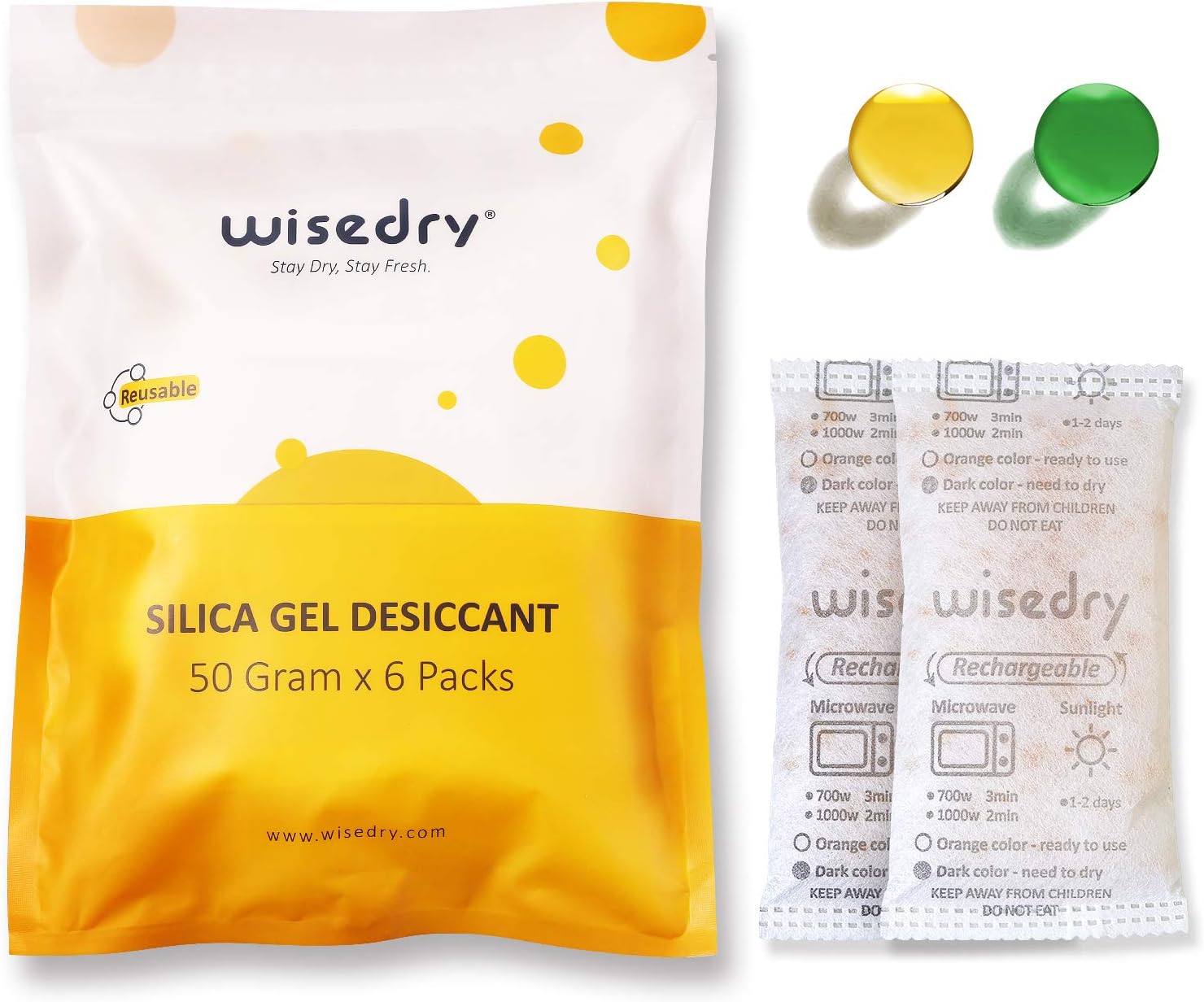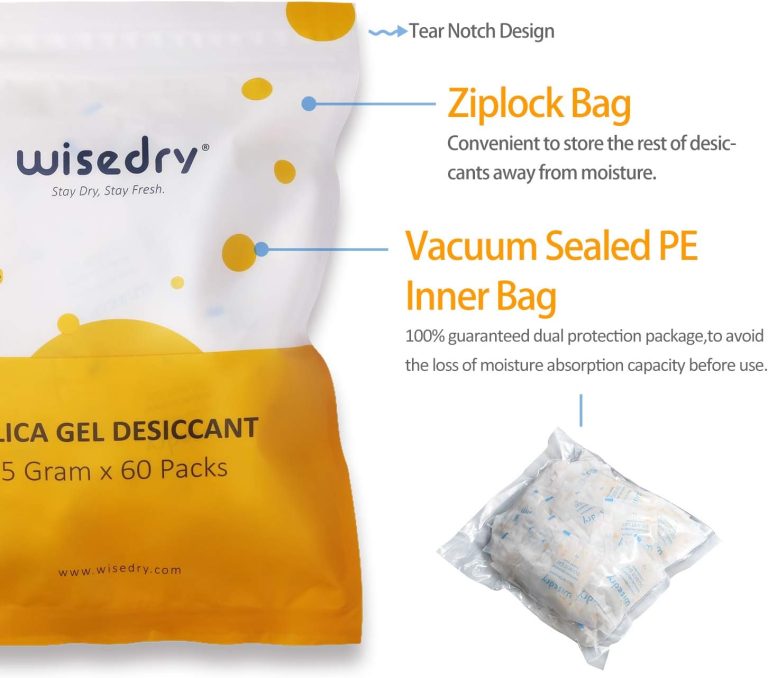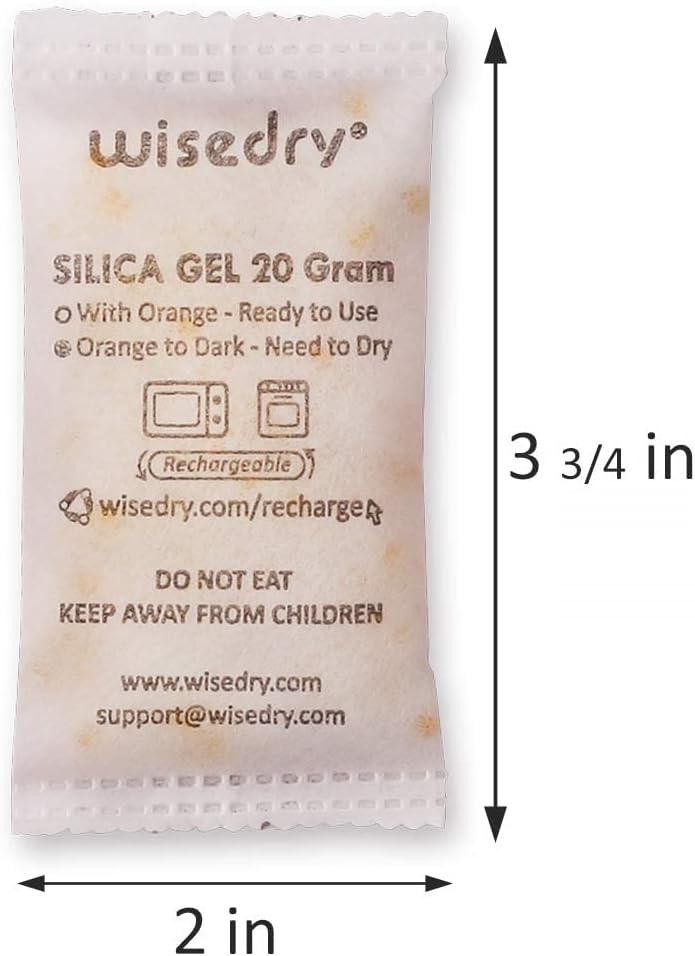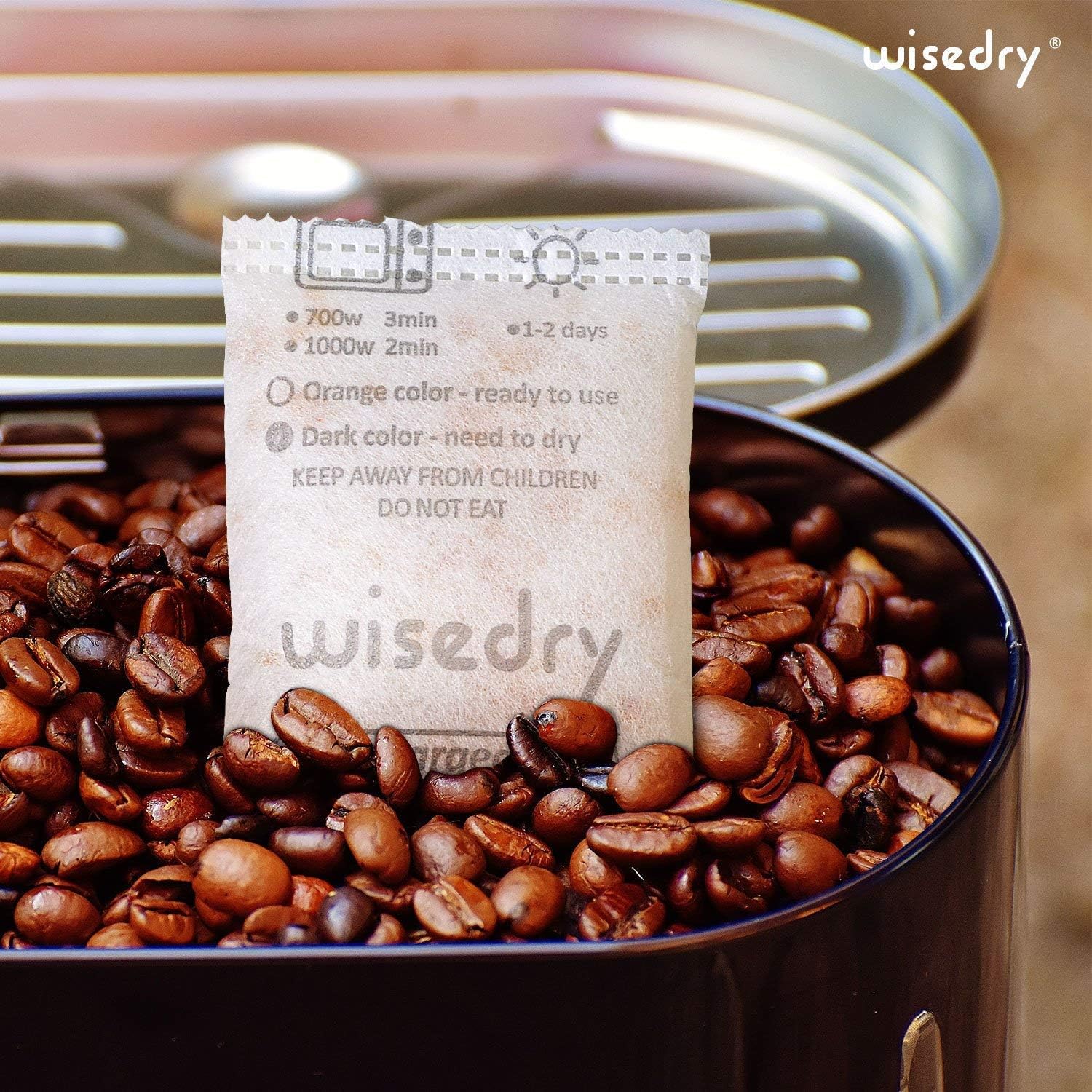
Deep storage bins hide things. That is convenient for clutter and annoying for moisture control, because a desiccant pack you cannot see is a pack you will forget to check. The fix is not more packets — it is a fixed check zone at the top of the bin, placement along the visible edges, and a check plan that works without unpacking the container. Estimate your starting amount with the Wisedry Silica Gel Amount Guide, then use the setup below so the packets stay visible, reachable, and rechargeable between checks.
Why Visibility Is Part Of Placement
In a shallow container, any packet position works because everything is one glance away. In a bin 40–60 cm deep, a packet dropped to the bottom is effectively out of service until you empty the box: you cannot see its condition, you cannot retrieve it quickly, and you are far less likely to recharge it on schedule.
Visibility is therefore a placement requirement, not a nice-to-have. A packet that is easy to see gets checked more often, gets recharged on time, and tells you whether the bin is staying dry. For containers you open every day, see the separate guide to choosing desiccant for a container you open every day; deep bins are usually the opposite case — closed for weeks at a time.
Step 1: Define A Top Check Zone
Reserve the top 5–8 cm of the bin as the check zone. Every packet that you want to inspect on a schedule lives in this zone, never buried under contents.
Practical setup:
- line the top zone with a breathable layer — a paper liner, a thin mesh sheet, or a cardboard divider — so packets do not sink as contents shift;
- keep the zone free of loose items so a glance is enough;
- if the bin is completely full, attach packets to the underside of the lid instead: a zip tie or a small fabric pouch taped inside the lid keeps them at the very top.
Lid-mounted packets are the most reliable option for full bins, because the lid is the one surface you always see when opening the container.
Step 2: Place Support Packs Along The Edges
Moisture that enters a closed bin usually travels down the walls, and contents pressing against the walls trap humid air in those corners. A few support packets placed vertically along the inside edges, halfway down, cover that path without entering the check zone.
Rules of thumb:
- keep support packets out of direct contact with fabrics, leather, paper, and photos — rest them against the wall, not on top of items;
- in very tall bins, add one mid-level pack per long wall rather than stacking several in one corner;
- never force packets down between items; compression restricts airflow and hides the indicator.
The goal is a bin where the top zone tells you the status, and the edge packets do the quiet work in the volume below.
Step 3: Make The Status Readable At A Glance
Indicating silica gel changes color as it saturates, which only helps if you can actually see the beads. Three habits make the check fast:
- Orient indicator windows upward. Place packets so the indicator strip or window faces the lid.
- Use a marker cue. A strip of masking tape on the lid with the last check date turns “did I check this?” into a one-second answer. The same habit pairs well with the monthly desiccant checkup routine if you manage several bins.
- Photograph the top zone when you pack the bin. If the arrangement has shifted or packets have gone missing at the next check, the photo shows it immediately.
If the color reading is ambiguous — part orange, part green, uneven across the pack — see why silica gel changes color unevenly before deciding whether to recharge or replace.
Step 4: Check, Recharge, And Rotate Without Unpacking
A deep bin should not need to be emptied for maintenance. With the top-zone setup:
- open the lid, read the indicator colors, and confirm the pack count matches your photo or label — a two-minute check;
- pull only the check-zone packets for recharging, and drop in a dry spare so the bin is never left uncovered;
- return recharged packets only after they have cooled fully to room temperature, so warm air does not introduce a fresh moisture load at the top of the bin;
- rotate: move a bottom-edge pack up to the check zone occasionally and send a top pack down, so condition stays observable across the whole set.
If a packet casing is cracked, torn, or leaking beads, take it out of service and review when to replace a damaged desiccant sachet before reusing that position.
Common Mistakes With Deep Bins
- Dropping packets to the bottom “where moisture collects.” The bottom is unreachable; a check you cannot perform is a check that does not happen.
- Covering the check zone with soft items. Folded blankets or stuffed bags on top of the packets hide the indicators and block airflow.
- Relying on memory instead of a date cue. A bin closed in spring and reopened in autumn has no reliable “recently checked” state without a written date.
- Stacking all packets in one corner. One corner is one airflow path; edge placement covers more of the volume.
- Refilling a bin without re-checking the seal. A lid that no longer closes flush undoes good placement; run the airtight box checklist before a long closed season.
FAQ
How many packs does a deep bin need?
It depends on bin volume, contents, and how often the lid opens, not on depth alone. Start from the Wisedry Silica Gel Amount Guide, then keep one or two packs in the top check zone and distribute the rest along the edges.
Should packets go on top of the contents or under the lid?
Either works if the position is visible. For full bins, lid-mounted packets are the more dependable choice because the indicator faces you every time you open the lid.
How often should I check a deep storage bin?
For a bin that stays closed for weeks, check the top zone monthly, and always at the start and end of a storage season. Increase frequency in humid summer months — silica gel saturates faster then, as covered in why silica gel saturates faster in summer.
Can I just use more packets instead of checking?
More packets extend the time between checks, but they do not remove the check. Saturated packs stop absorbing and can re-release moisture in a poorly sealed bin, so visibility and a schedule still matter.
What if the bin is not airtight?
Then the desiccant is treating the room, not the bin, and it will saturate faster than expected. Improve the seal first — the airtight box checklist covers the common gap points — and then set up the check zone.
Next Step
Ready to set up your bins? Shop Wisedry reusable silica gel desiccant packs in the size that matches your container volume, or visit Wisedry Support if you are unsure how many packs your setup needs.