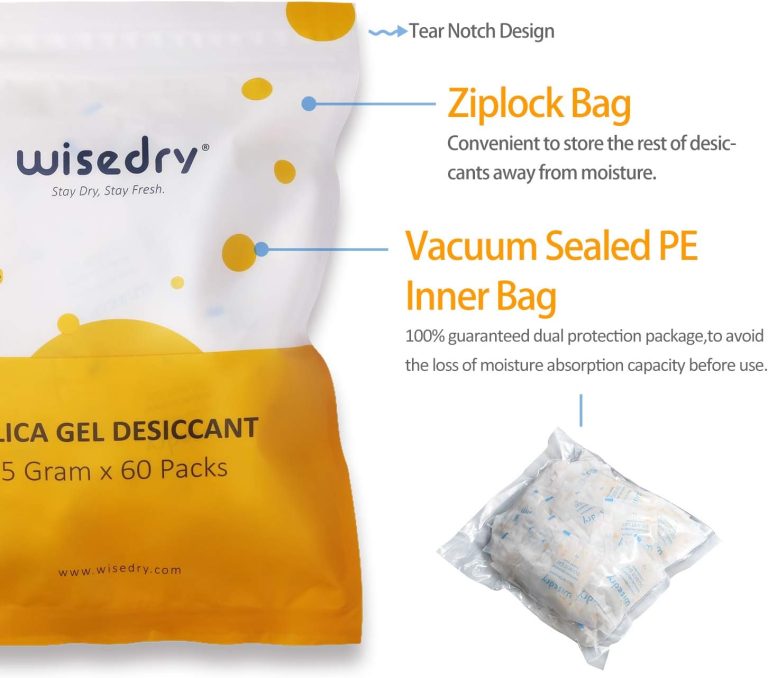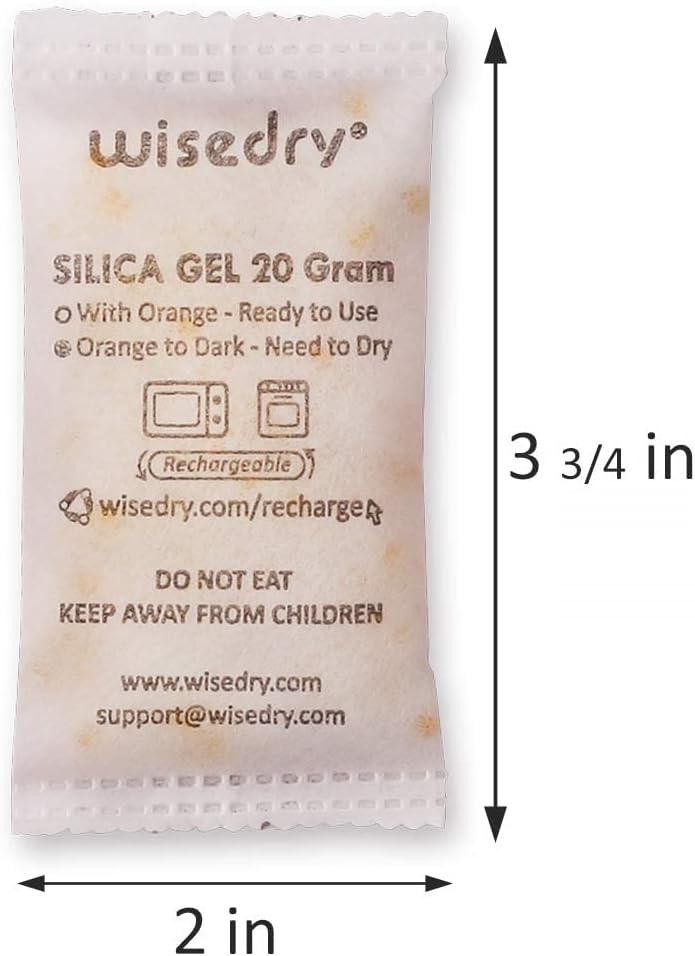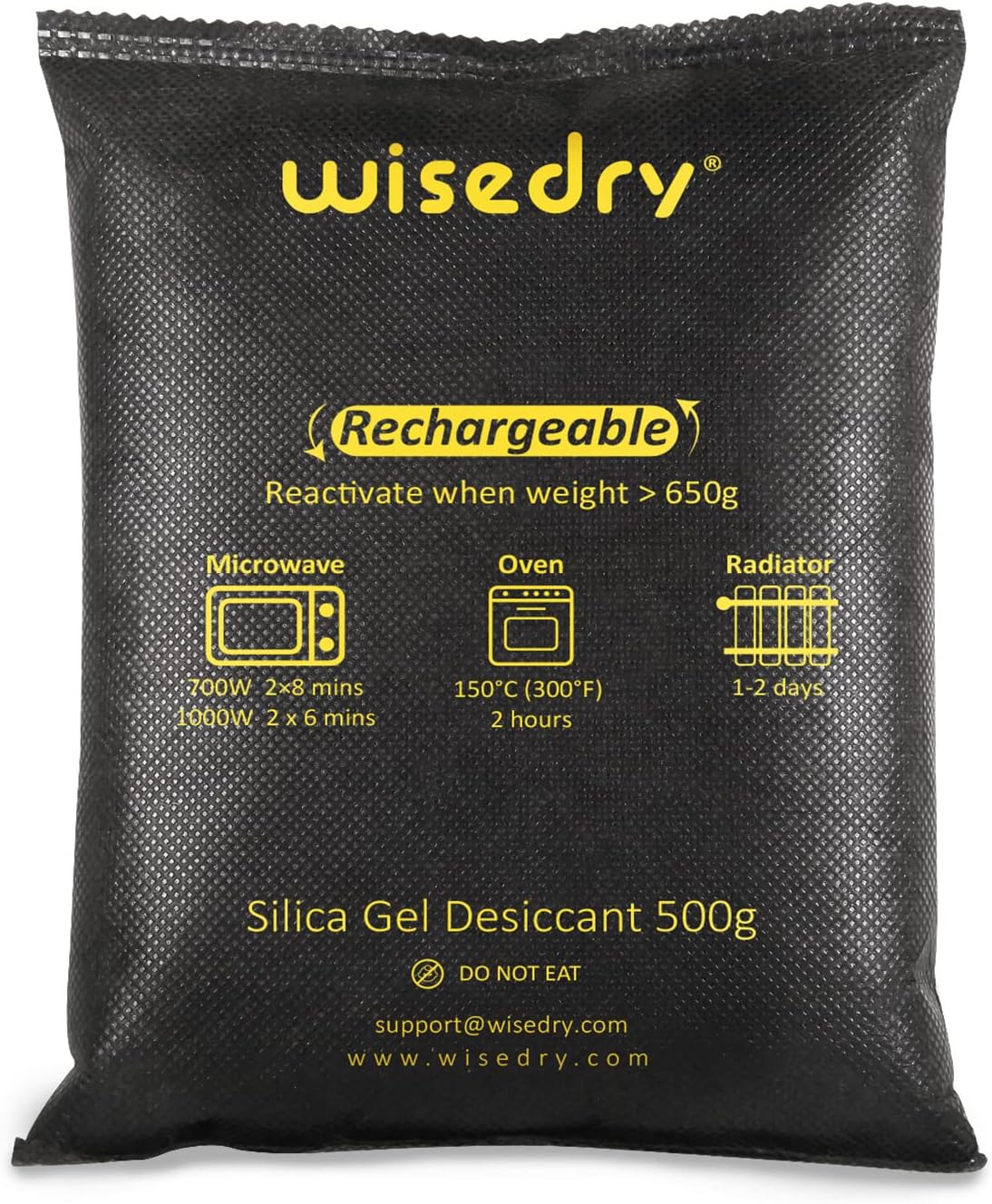
Desiccant works quietly, so it is easy to forget until a storage box feels damp or an indicator has already changed. A short monthly check keeps the whole setup understandable: the container seal, the packet, its location, and the condition of the stored items. You do not need special tools, and you should not add more silica gel automatically. The useful habit is to inspect first, recharge or replace only when the packet needs it, and leave a clear date for the next check.
Quick Answer
Once a month, open each storage box and check seven things in order: the outside of the box, the lid and gasket, the stored items, the desiccant packet, its moisture indicator or product instructions, its placement, and the date label. Recharge an intact reusable pack when its indicator or product instructions call for it. Replace a torn or leaking sachet. Then close the box fully and record the check date.
If you are setting up a new box rather than maintaining one, begin with the Wisedry Amount Guide instead of copying the number of packets used in a different container.
Why A Monthly Routine Helps
A calendar reminder does not measure humidity, but it prevents small, visible problems from being overlooked. During a regular check you may notice a lid that was not fully latched, a packet trapped under an item, damp material placed into the box, or an indicator that is ready for attention.
The same monthly interval will not fit every situation. A frequently opened box, a humid season, or items placed inside before they are fully dry may require more frequent checks. A well-sealed box that stays closed may need less attention. Use one month as a simple starting rhythm, then shorten or lengthen it based on what you actually observe. The guide to why silica gel saturates faster in summer explains why the interval can change with conditions.
The Seven-Step Storage Box Checkup
1. Look At The Box Before Opening It
Check whether the lid is sitting evenly and every latch is fully engaged. Look for a corner that has lifted, a warped edge, a cracked hinge, or anything caught across the closure. If the box has been moved, make sure it is still standing in its intended orientation and is not pressed against a wet floor or wall.
This outside check gives context before fresh room air enters the container. If a latch was open, note that first rather than assuming the desiccant itself failed.
2. Inspect The Lid, Rim, And Gasket
Open the box and examine the contact surfaces around the lid. Remove dust, fibers, labels, or straps that cross the sealing edge. A removable gasket should sit continuously in its channel without a folded section. Close-and-open wear also deserves attention around hinges and latch points.
For a more detailed pre-use inspection, follow the airtight box checklist. A poor seal continually admits room air, so adding more packets may only hide the real maintenance issue for a short time.
3. Check The Stored Items
Look for obvious dampness, condensation, a newly wet item, or packaging that has changed shape. If something entered the box wet, remove it and let it dry appropriately before returning it. Desiccant is for managing moisture in the enclosed air; it is not a substitute for drying wet objects or repairing a leaking container.
Also check whether the box has become overfilled. Contents pushed into the lid can prevent full closure, while tightly packed items can block air around a packet. If the container still feels damp despite desiccant, use this storage-container troubleshooting guide to separate seal, placement, and packet-status causes.
4. Inspect The Packet Or Bag
Lift the desiccant by its edge or handle and look at the full outer material. It should be intact, without an open seam, visible beads escaping, deep creases, heat damage, or contamination from the stored contents. Do not tape over a leaking sachet and return it to the box. Keep loose beads away from equipment and replace the damaged packet according to its product instructions.
A packet that has been squeezed under a heavy object should be moved to an open location. The related guide on preventing packs from being crushed in gear cases shows the same placement principle: intact packaging and open air matter more than hiding a packet wherever space remains.
5. Read The Indicator Or Product Instructions
For an indicating Wisedry pack, compare the visible indicator with the instructions supplied for that specific product. Different products can use different indicators and reactivation methods, so do not borrow a color rule, temperature, time, or weight threshold from another packet.
If the product calls for reactivation, follow its own instructions and the matching Wisedry recharge guide. Let a recharged pack cool as directed before it returns to a closed container. If a non-indicating packet has no check method in its instructions, use the replacement or maintenance interval supplied with that product rather than guessing from touch alone.
6. Restore A Clear, Open Placement
Return the packet where air can circulate around it and where you can see it at the next check. Good locations include an open side space, a dedicated mesh pocket, or the top of stable contents without pressure from the lid. Keep it away from a gasket line, beneath heavy items, and out of a tightly stuffed corner.
The article on where not to place a desiccant pack provides a quick placement review. If the box is divided into many compartments, several appropriately sized packets may distribute coverage better than one pack isolated behind a solid divider—but sizing should still follow the container and product guidance.
7. Close, Latch, And Record The Date
Before closing, confirm that no packet, fabric edge, cable, or label crosses the rim. Engage every latch and check that the lid sits evenly. Write the check date on a removable label or in a simple log, along with a short action such as “indicator unchanged,” “recharged,” “packet replaced,” or “gasket cleaned.”
A record prevents repeated guessing. It also reveals patterns: one box may need attention every month while another stays stable for much longer. If you manage several containers, the desiccant rotation guide can help keep ready packs separate from packs waiting to be recharged.
A Simple Monthly Checklist
Use this compact version at the storage shelf:
- Is the box dry outside and sitting correctly?
- Are the lid, rim, gasket, hinges, and latches clear and intact?
- Are the stored items dry, and is the box not overfilled?
- Is the desiccant packet intact, clean, and uncrushed?
- Does its indicator or product instruction call for recharge or replacement?
- Is the packet visible with open air around it?
- Is the box fully closed and the new check date recorded?
The routine should take only a few minutes per box once labels and packet locations are consistent.
Common Checkup Mistakes
- Adding packets before checking the seal. More desiccant cannot correct a lid that is not closing.
- Using one color rule for every product. Read the instructions for the exact packet in the box.
- Judging a packet only by touch. Softness, stiffness, or weight in the hand is not a universal saturation test.
- Returning a warm pack directly to storage. Follow the cooling step in the product-specific recharge instructions.
- Leaving the box open during the whole maintenance session. Complete the check efficiently so the container does not exchange more room air than necessary.
- Skipping the label. Without a date, “recently checked” quickly becomes uncertain.
FAQ
Do I need to check storage-box desiccant every month?
Monthly is a practical starting reminder, not a universal requirement. Check more often when the box opens frequently or conditions are humid. If a sealed box remains stable over repeated checks, its interval may be extended according to the product instructions and what you observe.
Should I recharge silica gel at every monthly check?
No. Inspect it every time, but recharge only when the indicator, weight method, or instructions for that specific product say it is ready. Unnecessary cycles add work without improving a properly functioning setup.
Should I add more desiccant when a box feels damp?
Not before checking the box seal, wet contents, packet condition, and placement. Correct those causes first. Then use the Amount Guide if the original quantity appears mismatched to the container.
What should I do with a torn desiccant sachet?
Remove it from the storage box and follow its disposal or support instructions. Do not patch a leaking sachet and place it back beside stored items. Clean up any loose material appropriately for the stored equipment and contact Wisedry Support if the product instructions do not resolve the question.
What belongs on a desiccant check label?
Record the container name, check date, packet size or identifier, status, and the next planned check. Keep the label outside the sealing surface so it cannot interfere with closure.
Next Steps
Set one recurring monthly reminder, keep the seven-step checklist near your storage shelf, and give each packet a visible home. For tall or deep bins where packets tend to disappear under the contents, see how to keep desiccant packs visible in deep storage bins with a fixed top check zone. For a new or resized container, use the Wisedry Amount Guide. When an intact reusable pack is ready, follow the recharge instructions. If a box needs a correctly sized replacement, shop Wisedry reusable desiccants or contact Support for product-specific help.