When you are setting up silica gel in a storage box, tool case, camera case, craft bin, closet container, or parts organizer, the question is not only “how much desiccant do I need?” It is also “should that amount be one larger pack or several smaller packets?”
Quick answer: use one larger desiccant pack when the container is simple, easy to open, and has enough open air around the packet. Use several smaller silica gel packets when the space is long, divided, tightly packed, or easier to cover by placing packets in different zones. In both cases, the total amount still depends on container volume, seal quality, humidity, opening frequency, and how often you check saturation.
This guide helps you choose the pack style without making a fixed performance promise. For total amount, start with Wisedry’s silica gel amount guide, then use the decision points below to decide how to distribute that amount.
The Real Choice: Amount And Distribution
A larger pack and several smaller packets can both work when the overall amount is reasonable for the container. The difference is distribution.
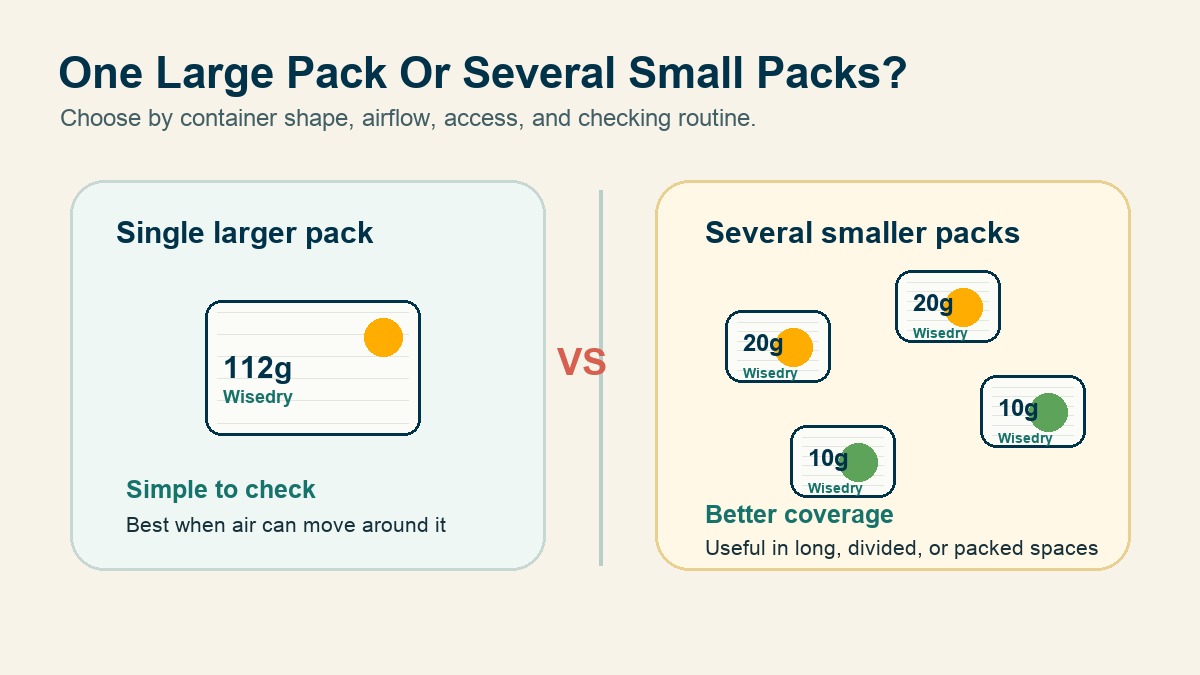
One larger pack concentrates the desiccant in one place. That can be simple and easy to check, especially in a clear box, small safe, camera dry box, or storage container with open space around the packet.
Several smaller packets spread the desiccant across the container. That can be useful when the container is long, divided into sections, crowded with contents, or opened from one side more often than the other.
The best setup is usually the one you can place correctly, inspect easily, and recharge or rotate consistently.
When One Larger Desiccant Pack Makes Sense
Choose one larger pack when the container is compact and the air inside can move around the packet.
This often fits:
- A small storage box with one open compartment.
- A clear document box or small safe where the packet is easy to see.
- A camera dry box with a dedicated open space.
- A toolbox or parts case with one main compartment.
- A plastic bin where the packet is not buried under contents.
The advantage is simplicity. You have fewer pieces to find, check, remove, recharge, and return. If the pack uses color indication, weight change, or another visible saturation clue, one larger pack may also be easier to monitor.
The limitation is coverage. If the larger pack sits in one corner while the far side of the box is tightly packed, the airflow around the contents may be uneven. A larger pack should not be sealed inside a plastic bag, covered by fabric, trapped under tools, or pressed flat where air cannot reach it.
When Several Smaller Packets Are Better
Several smaller packets make sense when coverage matters more than simplicity.
Use multiple packets when:
- The container is long, shallow, or divided into sections.
- Contents block airflow from one side to another.
- You open one area more often than the rest of the container.
- You want one packet near each group of items.
- The container has trays, dividers, pockets, shelves, or stacked layers.
For example, a long parts organizer may do better with small packets near separate sections than with one larger pack at one end. A closet storage container with shoes, fabric bags, and seasonal items may also benefit from more than one packet, because the contents can interrupt airflow.
The tradeoff is management. Multiple packets are easier to misplace. They may saturate at different speeds. If you use this setup, keep packets visible enough that you can check them without emptying the entire container.
A Practical Decision Matrix
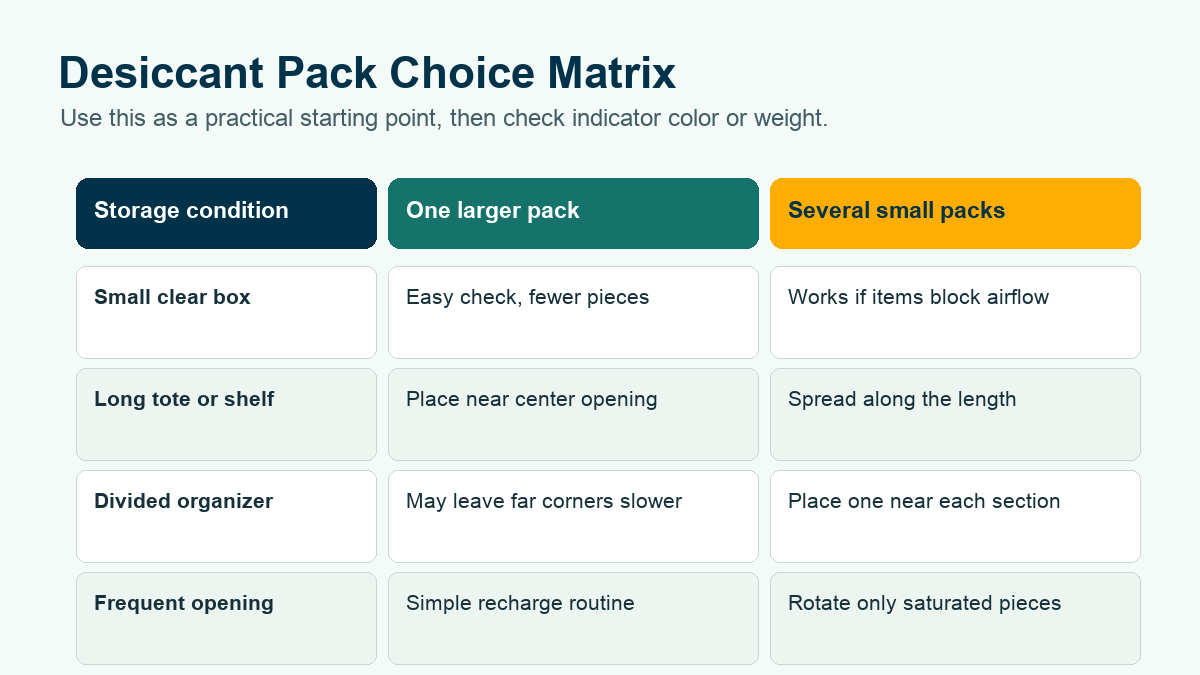
Use this table as a starting point:
| Storage setup | Better starting point | Why |
|---|---|---|
| Small clear box with open space | One larger pack | Easy to check and less likely to be lost |
| Long tote or wide shelf bin | Several smaller packets | Better coverage across the length |
| Divided parts organizer | Several smaller packets | Each section may have limited airflow |
| Small safe or document box | One larger pack | Simple placement and checking |
| Crowded craft bin | Several smaller packets | Contents can block air movement |
| Frequently opened container | Either, based on access | Choose the setup you will actually check |
If you are unsure, start with the total amount recommended for the container, then split it only when the shape or contents create separate zones. The Wisedry guide on why smaller containers usually need fewer desiccant packs explains why volume and enclosure quality matter before you add more packets.
Placement Matters More Than Packet Count
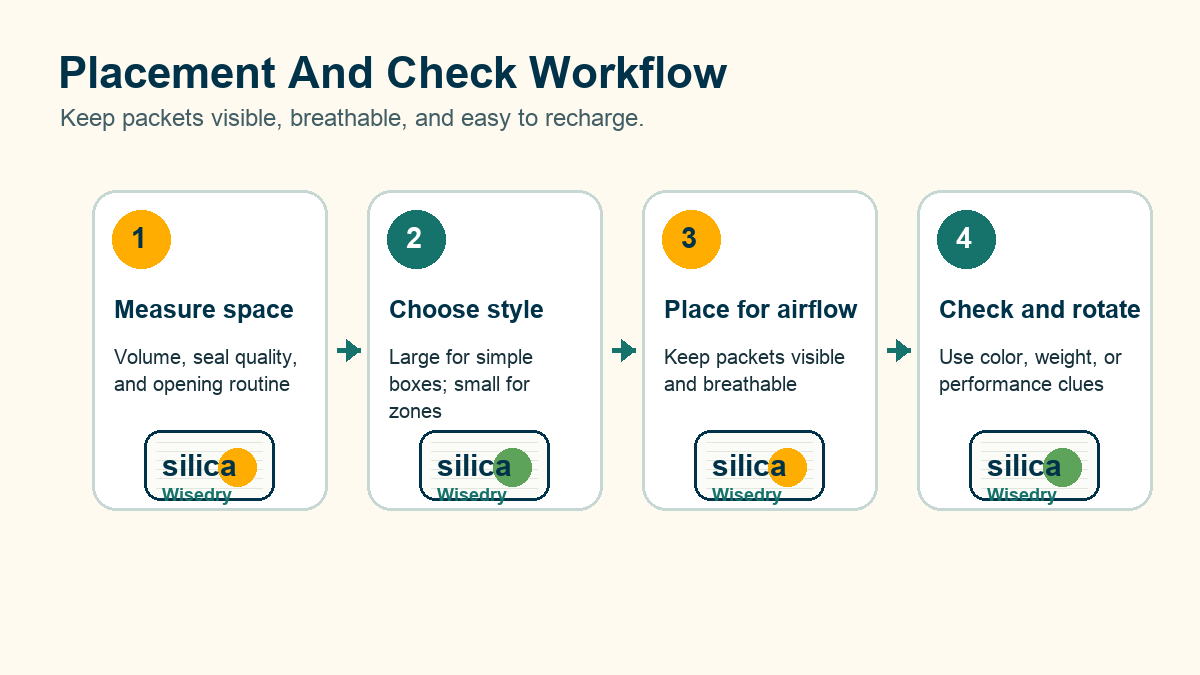
Packet count cannot fix poor placement. Whether you use one larger pack or several smaller packets, give each packet access to air inside the container.
Good placement usually means:
- Put packets inside the enclosed space, not outside it.
- Keep packets visible enough to check.
- Avoid burying packets under dense contents.
- Do not seal packets inside a non-breathable bag.
- Keep packets away from direct pressure points where they may be crushed.
- Leave a little air path around the packet when possible.
For more examples, see Wisedry’s guide on where not to place a desiccant pack in a storage box.
How Seal Quality Changes The Decision
A tight container usually makes the pack-style decision easier, because outside moisture enters more slowly. A loose lid, warped gasket, fabric cube, open shelf, or frequently opened box changes the situation.
If the seal is weak, adding several packets may help distribute coverage, but it does not turn an open or leaky space into a controlled container. In that case, first improve the enclosure if possible, then check the packets more often.
Use the simple container seal check if a packet seems to saturate too quickly or if stored items still feel exposed to damp air.
How To Manage Recharge And Rotation
The easiest desiccant setup is the one you can maintain.
With one larger pack:
- Keep it in a visible, reachable spot.
- Check indicator color, weight, or performance clues on a repeatable schedule.
- Recharge or replace it according to the product-specific instructions.
- Return it only after it has cooled fully if it was heated.
With several smaller packets:
- Place them in consistent zones.
- Check the zones that are opened most often first.
- Rotate saturated packets instead of assuming all packets age the same way.
- Avoid losing packets in pockets, tray corners, or under packed contents.
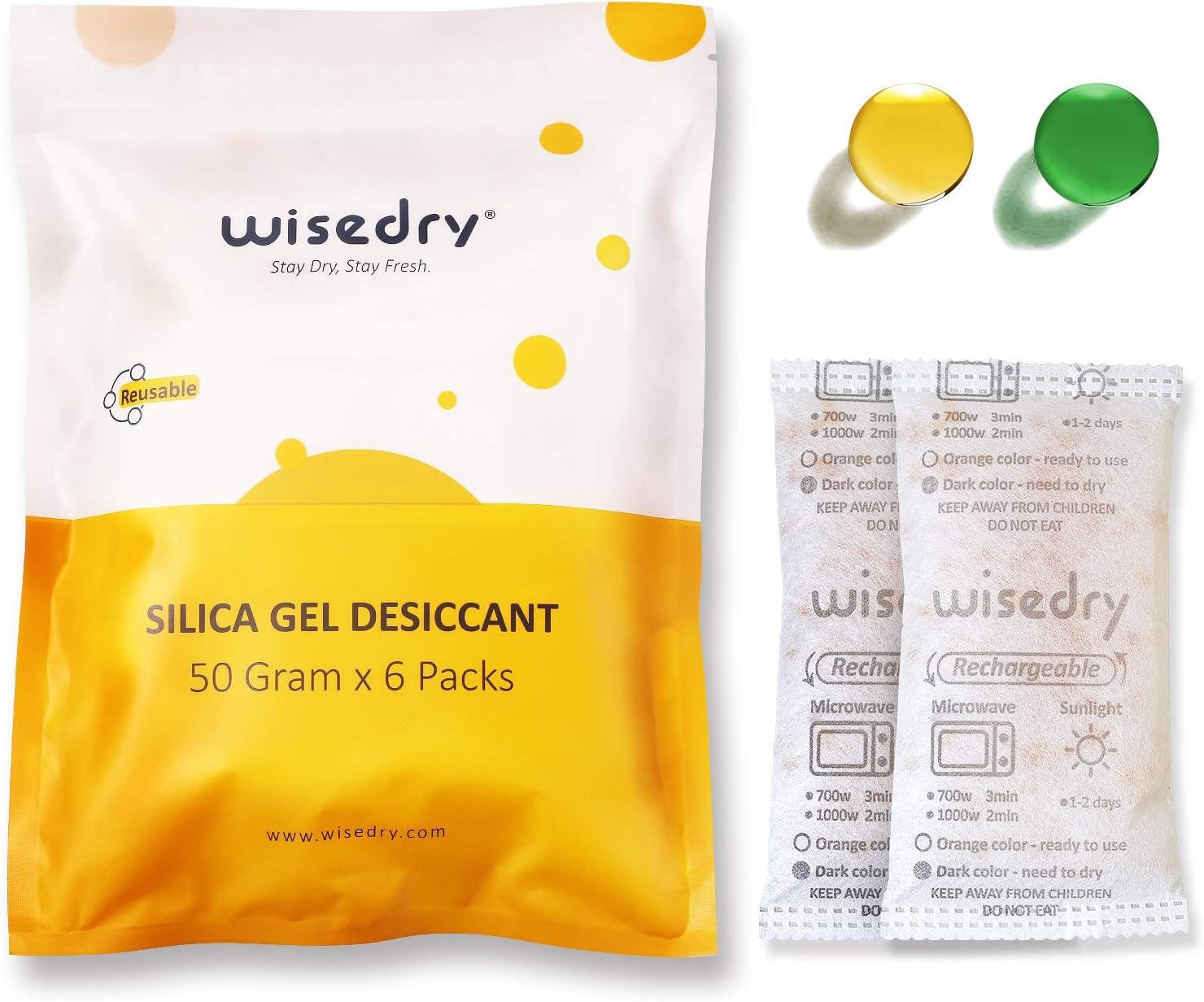
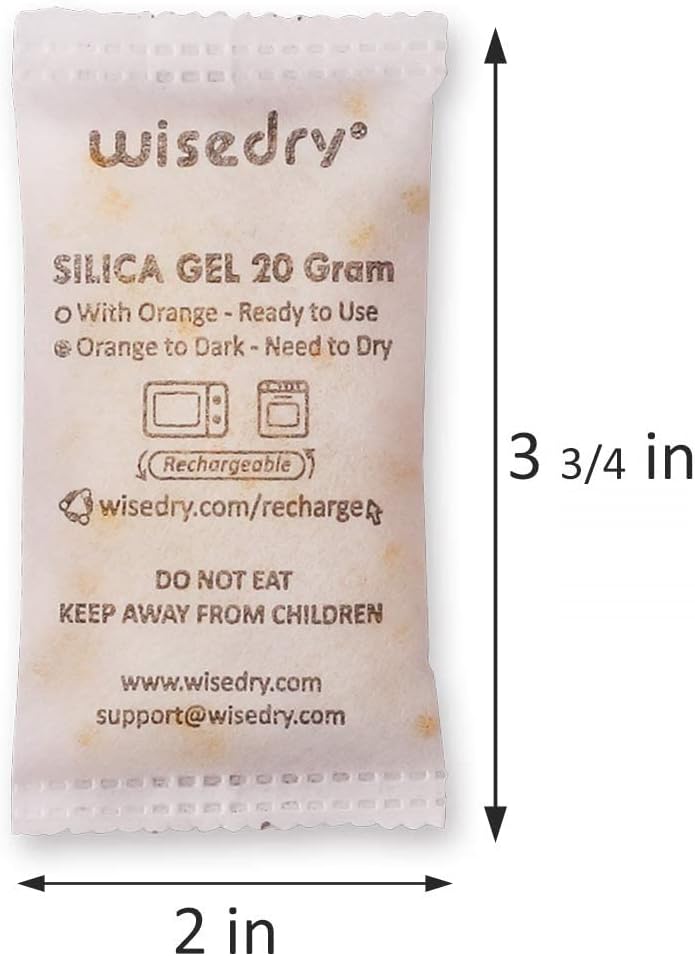
Wisedry products do not all use the same recharge method. Open the Wisedry recharge hub before heating, especially if you are using 20g, 50g, 112g silica gel sachets, loose beads, flower drying crystals, or a larger 500g packet.
Common Mistakes To Avoid
Mistake 1: Using One Large Pack In A Crowded Corner
A larger pack is convenient, but it still needs air exposure. If it sits under a stack of contents, it may be easy to forget and harder for air to reach.
Mistake 2: Scattering Small Packets Without A System
Multiple packets are useful only if you can find and check them. Put them in visible zones and avoid hiding them where they may be thrown away with packing material.
Mistake 3: Adding Packets Instead Of Fixing The Container
If the lid is loose or the box is opened many times a day, extra packets may saturate faster. Improve the seal or reduce exposure where practical.
Mistake 4: Assuming Every Packet Needs Recharge At The Same Time
In a multi-packet setup, the packet near the opening may saturate sooner than one deeper inside the box. Check based on color, weight, or observed performance rather than a fixed calendar promise.
Mistake 5: Reusing A Heated Packet Before It Cools
After recharging, let the packet cool fully before returning it to a storage container. This is especially important when the container holds heat-sensitive items.
Which Setup Should You Start With?
Start with one larger desiccant pack if the container is small, simple, and easy to check.
Start with several smaller silica gel packets if the container is long, divided, crowded, or opened in different zones.
If both options seem reasonable, choose the one that makes inspection easiest. A slightly more distributed setup is not helpful if the packets disappear under contents and never get checked. A simple larger pack is not helpful if it sits where air cannot reach it.
For product options, use the Wisedry Shop to find reusable desiccants available for your region. If your container is unusual, your packets saturate very quickly, or you are not sure which Wisedry recharge guide applies, contact Wisedry Support.
FAQs
Is one large desiccant pack stronger than several small packets?
Not automatically. Total desiccant amount matters, but placement and airflow also matter. A larger pack is simpler to manage, while smaller packets can improve coverage in long or divided spaces.
Can I use both a large pack and small packets together?
Yes, in some containers. For example, a larger pack can sit in the main open area while small packets cover separate trays or corners. Keep every packet visible enough to check.
Should I put one packet in every corner?
Not always. Corners are useful only if the packet has air exposure and can be inspected. Do not hide packets under contents just to fill every corner.
Do more packets make a loose container airtight?
No. Extra packets may help for a time, but they do not fix a weak lid, loose gasket, open shelf, or frequent opening routine. Improve the container seal when possible.
How often should I check the packets?
Check more often when the container is opened frequently, the room is humid, or the packets are near the lid or opening. Use indicator color, weight change, or product-specific guidance instead of relying on a universal schedule.
If you access the box frequently, pack size is only one part of the decision. This guide to choosing desiccant for a container opened every day adds opening time, seal checks, placement, and recharge planning.
After deciding between one large pack and several small packs, use this guide to choose a practical desiccant pack size for a small container without folding, crushing, or hiding the packets.