
Quick answer
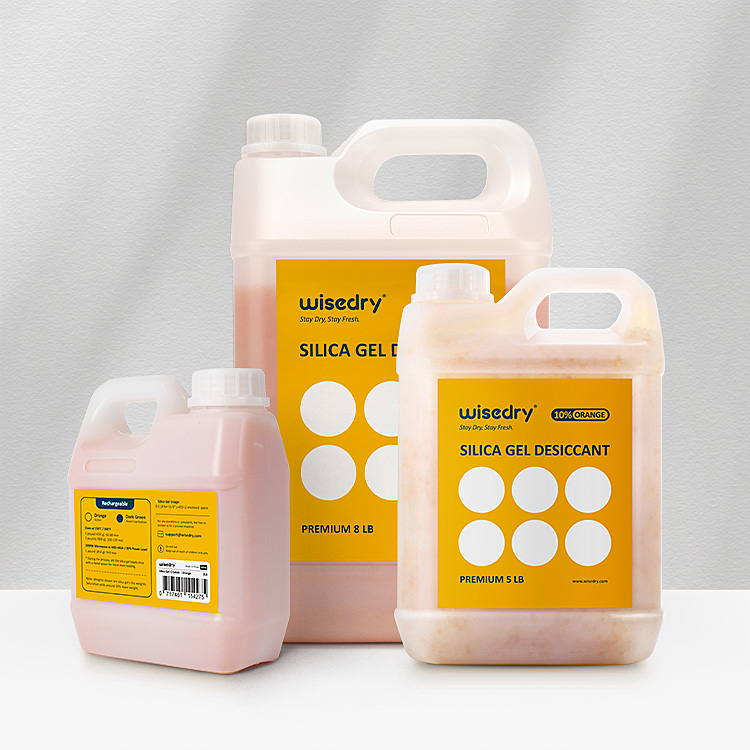
These instructions are for Wisedry loose orange indicating silica gel beads supplied with removable organza bags. Put the beads in the breathable bags, use them inside an enclosed storage space, and check them by color or weight. Recharge only the loose beads—not the organza bag—when the indicator has changed from orange to dark green or the product has gained about 32% of its dry weight.
If you have a paper sachet, a canister, flower-drying crystals, or a product with a different indicator color, do not copy the times below. Follow that product’s label or choose the matching guide in the Wisedry Recharge Hub.
Identify the product before you start
| What you have | What to do |
|---|---|
| Loose Wisedry orange-to-dark-green beads + removable organza bags | Use the setup, checking, oven, and microwave instructions on this page. |
| Beads sealed inside a paper or fabric sachet | Keep the sachet intact and use its product-specific recharge instructions. Do not cut it open to follow this loose-bead guide. |
| Flower-drying silica gel crystals | Use the flower-drying recharge guide. |
| Unknown brand, color, container, or label | Stop and follow the original packaging. Indicator colors and heat limits are not universal. |
Use Wisedry silica gel beads in five steps
- Confirm the format. Check that you have the loose Wisedry indicating beads described above and that the beads are orange before use.
- Load a breathable holder. One supplied organza bag holds up to about 0.5 lb (8 oz / 227 g) of beads. Close it securely so beads cannot spill.
- Place it in an enclosed space. A sealed container gives the desiccant a defined air volume to manage. Keep the bag visible, clear of hinges, and away from children and pets.
- Use amount as a starting estimate. The product reference is about 0.5 lb for an enclosed space up to 16 ft³ (453 L). Seal quality, opening frequency, humidity, and wet contents can change the amount or check interval; use the Amount Guide instead of treating one ratio as universal.
- Record a baseline. Note the dry color and, if useful, the dry weight. Check sooner after a new setup or whenever the container is opened frequently.
How to tell when the beads need recharging
Use the product indicator first. Orange means the beads are ready to absorb moisture; dark green means they are saturated and ready for reactivation. Color-change speed depends on the environment and does not by itself measure product quality.
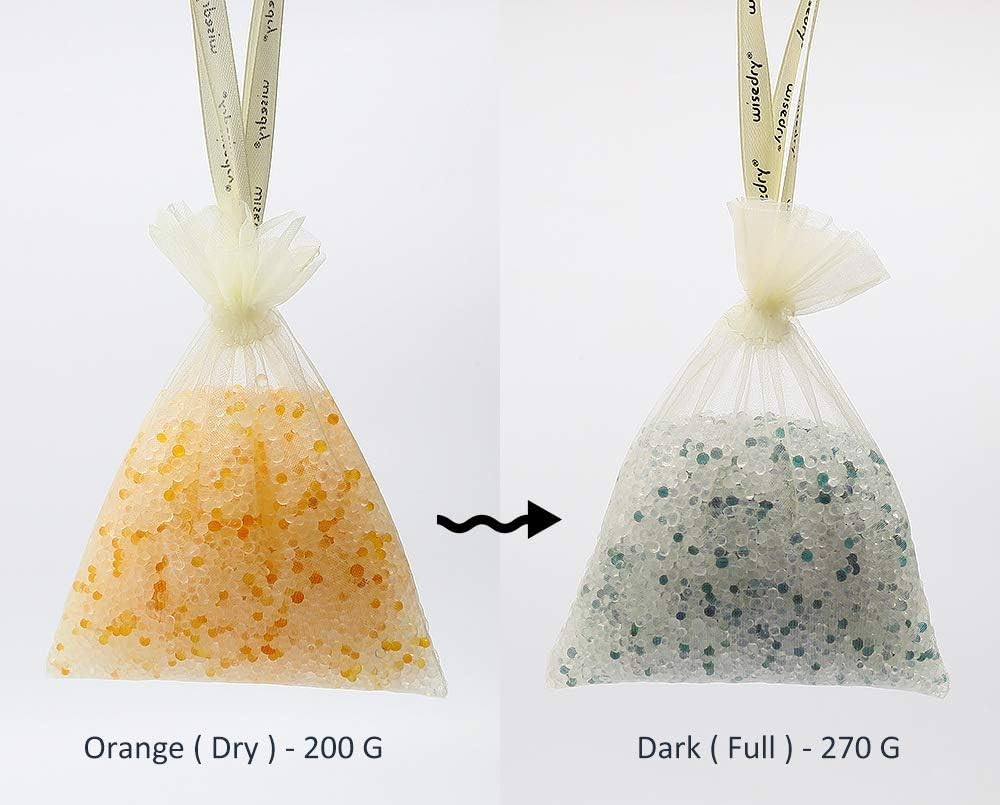
Weight is a useful second check. Fully saturated beads may gain about 32% over their original dry weight. For example, a dry 227 g (0.5 lb) load is near the product’s recharge point around 300–306 g. If repeated heating makes the indicator color unreliable, use the dry-weight baseline and the product label rather than guessing from color alone.
Before recharging
- Do not heat new, unused beads or beads that have not reached the product’s recharge indicator.
- Remove all loose beads from the organza bag. Do not put the organza bag in an oven or microwave.
- Do not add water, oil, fragrance, or cleaning products.
- Use heat-resistant equipment and keep the work area free of spills.
Oven method (recommended)
- Spread the loose beads in a shallow, heat-resistant metal tray.
- Heat at 150°C / 300°F. Use the table as a reference and check the beads rather than extending heat blindly.
| Original dry weight | Temperature | Reference time |
|---|---|---|
| 1 lb (450 g) | 150°C / 300°F | 60–80 minutes |
| 2 lb (900 g) | 150°C / 300°F | 100–120 minutes |
Reactivation is complete when the dark green beads have returned to orange. Remove the tray carefully, let the beads cool fully in a safe place, then return them to a breathable bag for use or seal them in an airtight container for storage.
Microwave method
Use this method only for the loose Wisedry beads covered by this page and only in microwave-safe, high-temperature-resistant cookware. Never microwave the organza bag, ordinary plastic, or non-heat-resistant glass.
- Place up to 200 g of loose beads in a suitable heat-resistant container.
- Heat at 80% power, using the product reference below. Pause and stir once with a suitable utensil for more even heating.
| Dry bead weight | Microwave output | Reference time |
|---|---|---|
| 200 g | 700 W | 14–16 minutes |
| 200 g | 1000 W | 11–13 minutes |
Stop when the dark green indicator has returned to orange. Let the container and beads cool fully before handling, bagging, reusing, or sealing them for storage. If your microwave’s output or controls do not match this table, use the oven method or contact support rather than improvising.
Safety notes
- Do not eat.
- Avoid spilling.
- Keep out of reach of children and pets.
- Silica gel beads will be hot after reactivation. Do not touch with your bare hands.
- If swallowed, seek immediate medical attention.
After recharging: cool, store, and verify
- Wait until the beads and container are fully cool.
- Confirm the indicator has returned to orange. If it has not, do not keep adding unplanned heat; recheck the product, weight, appliance settings, and instructions.
- Reuse the beads promptly or store them in an airtight container so they do not begin absorbing room moisture.
- Return them to the same storage setup and keep the next check date with your container notes.
Frequently asked questions
Can I heat the organza bag?
No. Remove the beads first. The oven and microwave instructions on this page apply to loose beads only.
Why did the beads change color quickly?
Fast color change can reflect humidity, air leakage, frequent opening, wet contents, or a small desiccant amount. Check the whole storage setup before assuming the beads are defective.
Can I use these times for any silica gel?
No. Product format, packaging, indicator chemistry, quantity, and appliance output matter. Use these values only for the Wisedry loose beads described here.
What if the color no longer changes clearly?
Repeated heating can reduce the usefulness of the indicator. Compare the current weight with the original dry-weight baseline and contact Wisedry Support if the result is unclear.
Choose the next step
Use the matching path instead of mixing instructions between products.
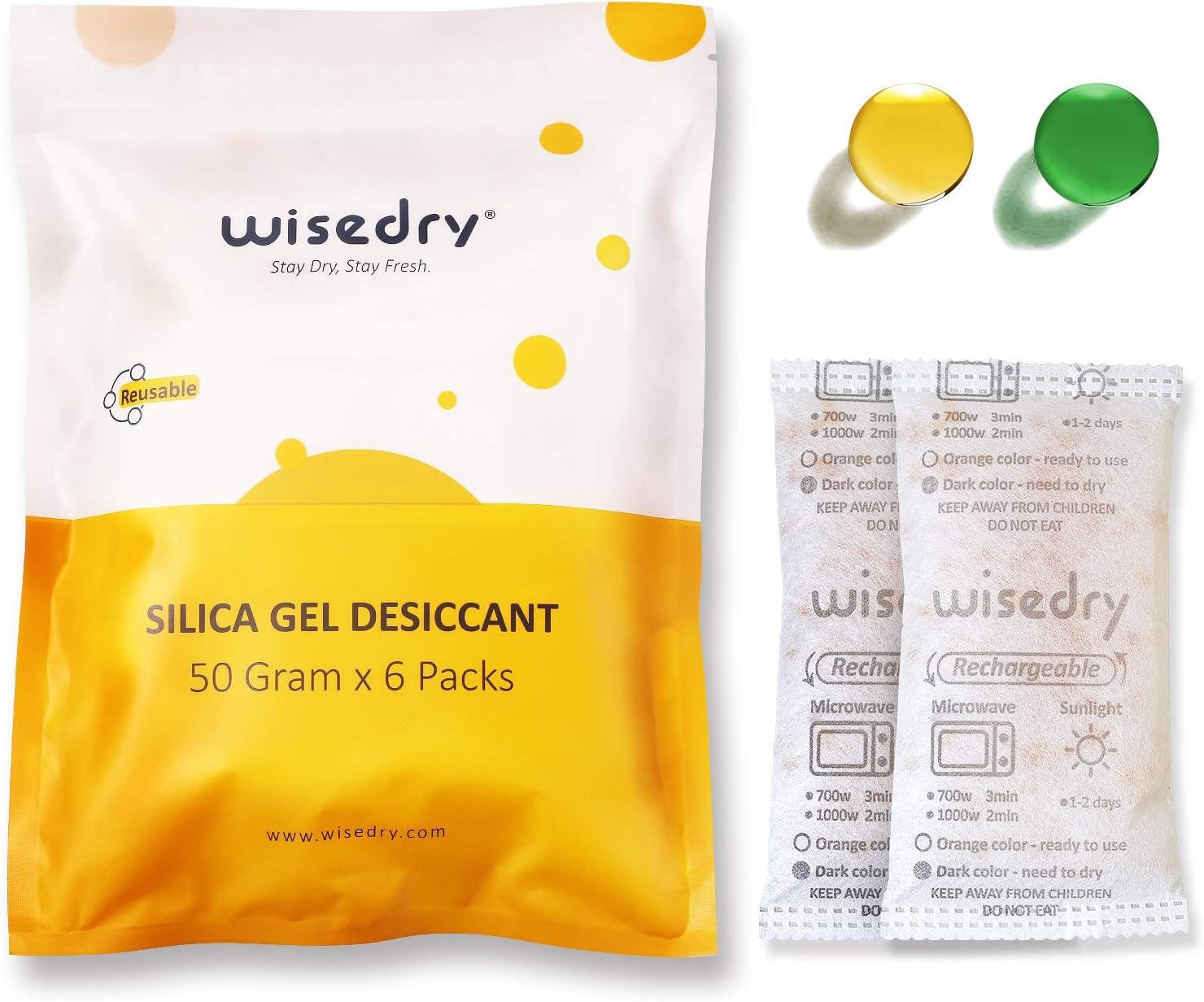
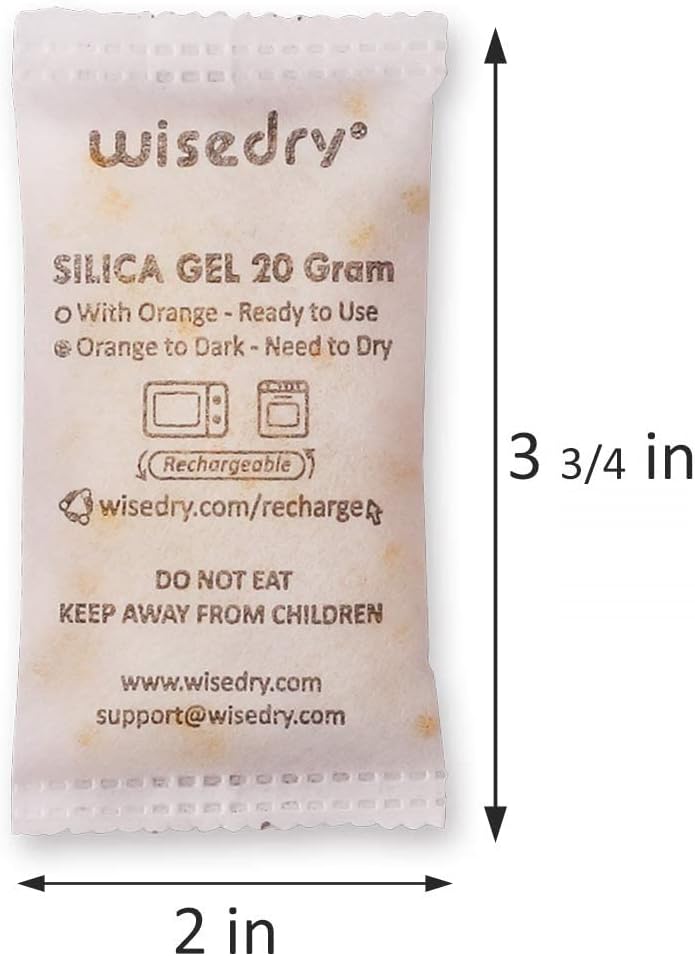
I have two of your 50 gram bags in our AED device. When inspected, most were orange along with approximately one out of thirty a dark green. After six minutes in a 900 w microwave at 70% I had approximately one out of eighty dark green.
Did I microwave them unnecessarily? Should I have waited another month or so?
Should they all be orange before I stop microwaving them?
Hi! The microwave method for reference for 50-gram packets is as follows: For 50g x 2 packs, microwave at 80% for 2 minutes per side. This applies to both 700W and 1000W microwaves. Feel free to adjust from there.
A. When inspecting a packet, if you notice orange beads remaining inside, you can leave them as they are. This indicates that the beads are not yet saturated and are still functional. You can wait until most of the orange beads turn dark green before microwaving them.
B. If you notice that only a very small number of beads are still green, it is fine to stop microwaving. This is because the packet may have already restored most of its moisture-absorbing power, and the residual heat is likely to turn the remaining green beads back to orange.
Are they safe to use in containers with food? In permeable packaging of course, like a tea filter inside the jar.
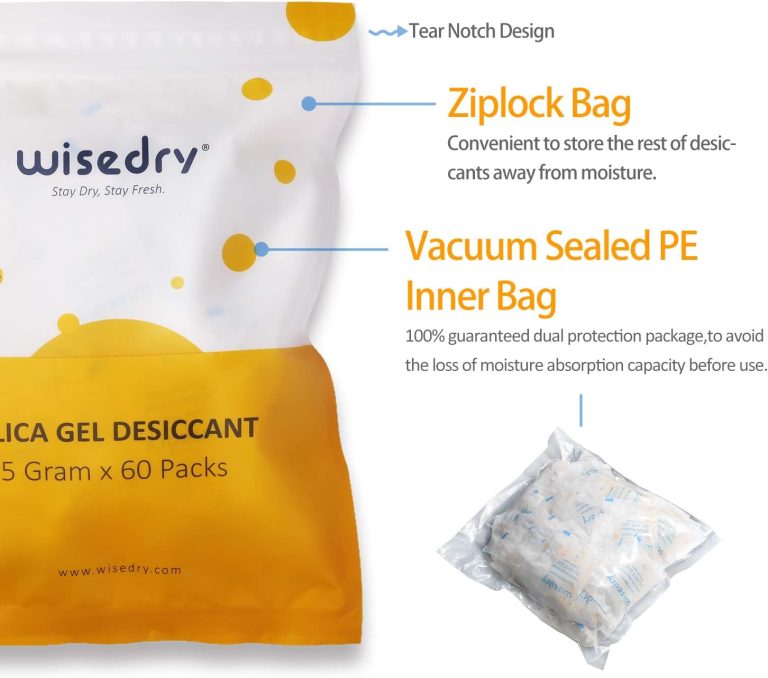
Yes, you can repack the silica gel beads into tea filter bags and use with food. Our silica gel desiccant is food-grade and FDA certified.
However, please note that the included organza bags (provided with the 5/8 LB packages) may allow some tiny bead fragments to pass through, so we don’t recommend using those organza bags directly with food to avoid accidental ingestion.
Hi, I’ve just put a dish load of beads that needed recharging in the microwave, but they have turned very dark orange and brown. What has happened here?
Hi, silica gel beads turning dark orange or brown is generally due to overheating.
If they were only slightly overheated, their color will return to normal after cooling down for a while.
If they were overheated excessively, their color-indicating function may be impaired. That being said, their dehumidifying function may still work normally. In this case, we recommend weighing them to check if they are saturated—saturated beads should weigh approximately 30% more than when they are dry.
Can I dry the silica gel in an oven that’s used for cooking? Is that harmful to my health?
Yes. Our silica gel can be recharged in a household oven. Heating removes the absorbed moisture and does not make the silica gel itself harmful.
After recharging, wash the tray thoroughly and allow the oven to cool and air out before using it for cooking again.
If you regularly recharge silica gel, we recommend using a dedicated tray for this purpose.
And always follow the instructions manual when recharging your silica gel to maintain the best performance and long service life.