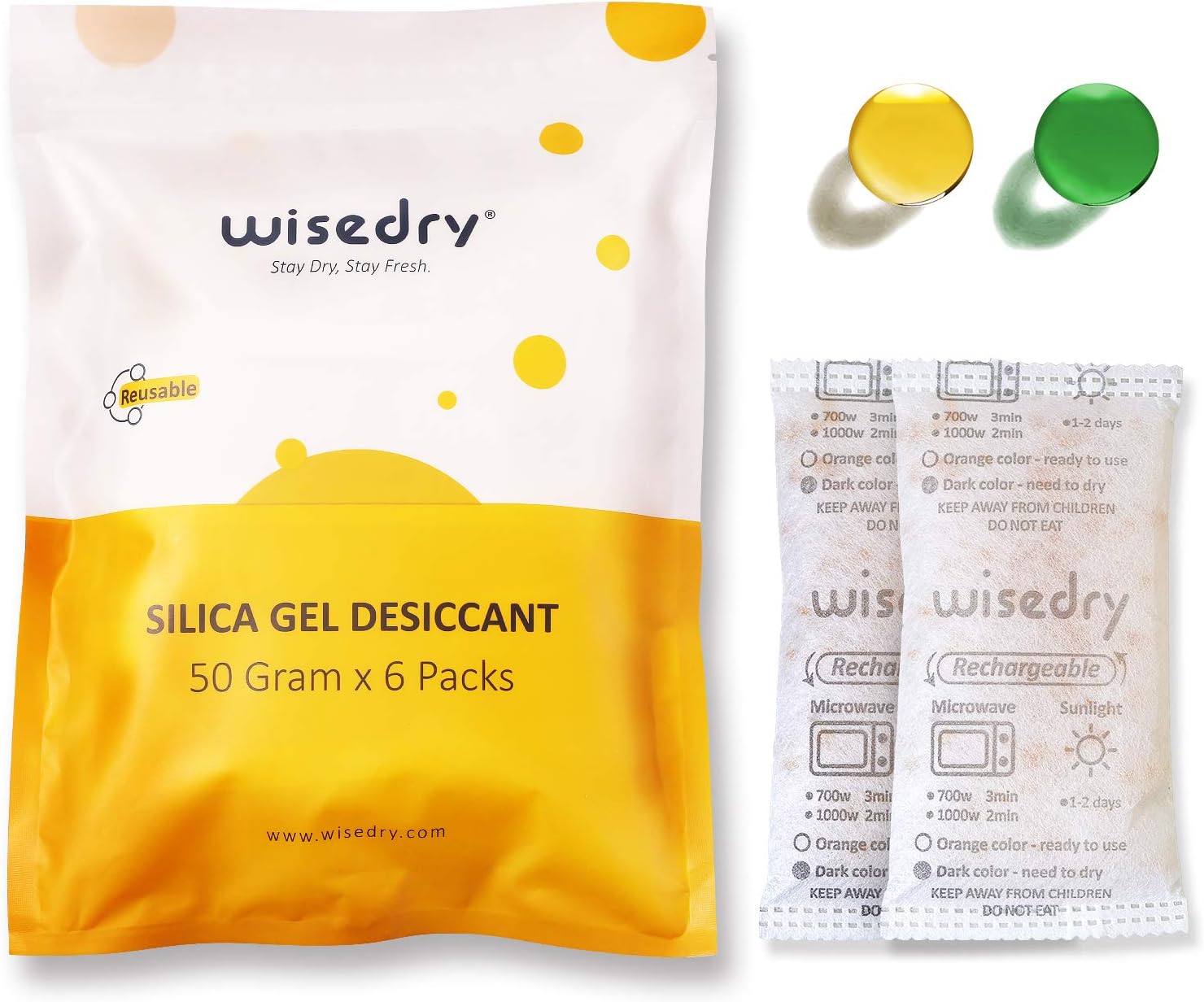
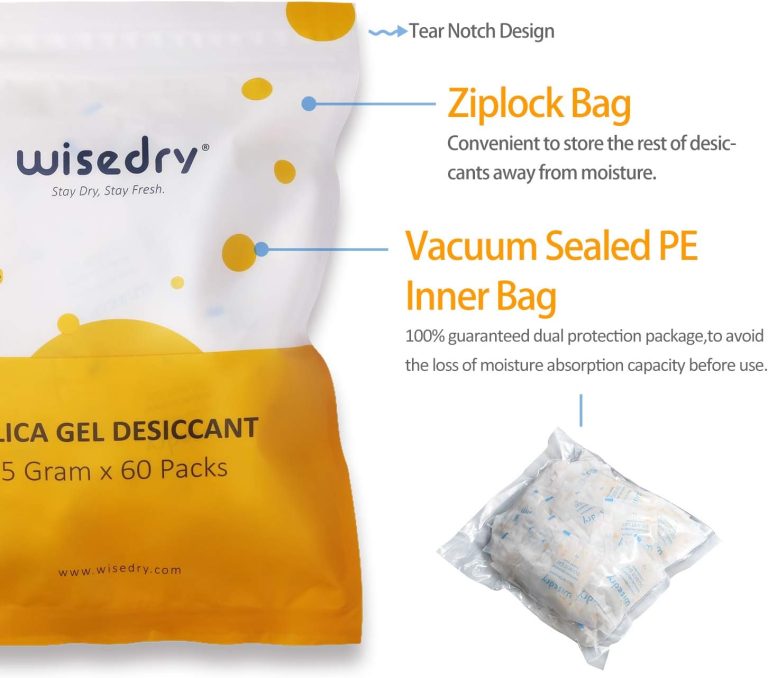
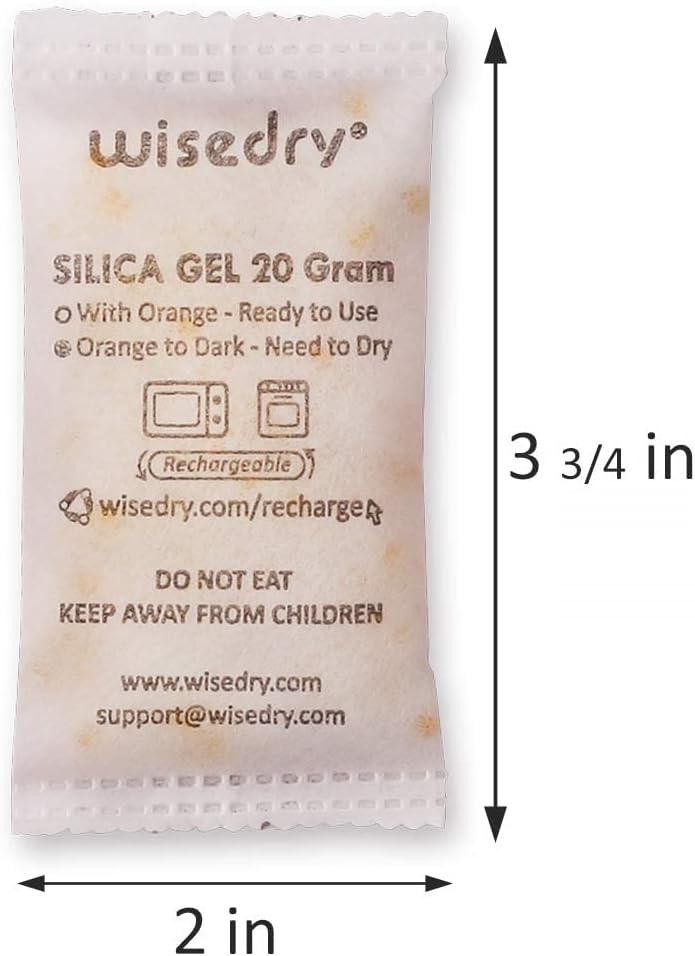
Super Dry vs Standard Silica Gel: The Short Answer
“Super Dry” is a product or marketing label, not a universal silica-gel grade. Do not assume it is stronger than standard silica gel from the name alone. Compare the material named on the label, moisture-capacity data under the same test conditions, packet construction, indicator, recharge instructions, and intended use.
Choose standard rechargeable silica gel when you need a familiar, reusable option for a closed storage container. Choose a product sold as Super Dry only when its datasheet gives a measurable advantage that matters for your humidity, shipping time, or packaging setup.
What “Super Dry” Can—and Cannot—Tell You
The words “Super Dry” do not identify one chemical composition, one adsorption capacity, or one recharge method across all suppliers. One product may be silica gel in a high-barrier packet; another may use a different desiccant blend or be designed for one-way shipping. The name by itself cannot answer whether the product is reusable, suitable beside a particular item, or better at low humidity.
The first line to check is the material. If both products contain silica gel, the useful differences are usually in tested capacity, bead or pore characteristics, packet permeability, indicator design, package size, and the conditions used for the test. If the “Super Dry” product contains calcium chloride, clay, or molecular sieve, it is a different material comparison—not simply premium versus ordinary silica gel.
A Five-Point Comparison That Works
1. Material
Different desiccants behave differently as humidity changes. Look for silica gel, clay, calcium chloride, molecular sieve, or a stated blend.
2. Capacity data
A larger percentage is meaningful only when the test conditions match. Look for capacity at a stated temperature and relative humidity—not an unsupported “more powerful” claim.
3. Recharge method
Reusable media can still be packaged in a sachet with product-specific limits. Confirm the exact time, temperature, appliance, cooling, and reuse instructions.
4. Packet design
The wrapper controls vapor access and keeps media contained. Check the seams, permeability, dimensions, and contact requirements.
5. Application
A shipping carton and a repeatedly opened storage box have different moisture loads. Compare container volume, seal quality, opening frequency, duration, ambient humidity, and available space.
When Standard Rechargeable Silica Gel Is the Better Fit
- You are controlling moisture in a closed storage box, camera case, tool case, filament box, document box, or similar enclosed space.
- You want to monitor the product and recharge it according to its own instructions.
- You can select the amount by container volume and real operating conditions rather than by packet name.
- You value a repeatable check–recharge–cool–return routine.
For sizing, start with the Wisedry Silica Gel Amount Guide. For the practical maintenance cycle, use the Wisedry recharge guide. The product label remains the final instruction for a specific sachet.
When a Specialty Product May Be Worth Comparing
A specialty desiccant may be useful for long shipping routes, unusually high moisture loads, very low target humidity, or packaging systems designed around a particular technical specification. In those cases, compare datasheets line by line. Ask the supplier for capacity at the same temperature and relative humidity, test method, package permeability, expected service conditions, and disposal or regeneration instructions.
If those details are missing, “Super Dry” is not enough evidence to change products. A clearly specified standard silica-gel setup is easier to size, monitor, and maintain than an undefined higher-performance claim.
Do Not Compare Percentages From Different Test Conditions
Silica-gel capacity changes with relative humidity and temperature. A capacity measured at high relative humidity cannot be fairly compared with another product measured at a lower value. The same rule applies to test duration, starting moisture content, and whether the number refers to the loose media or the finished packet.
A Type A silica-gel technical sheet, for example, reports different minimum adsorption values at different relative-humidity conditions. That is why a useful comparison keeps the test method and conditions aligned instead of copying the largest percentage from each product page.
Silica Gel vs Other Desiccant Materials
Silica gel is a porous form of silicon dioxide that holds water vapor on its internal surface. Other desiccants can be the right tool, but they solve different operating problems:
- Calcium chloride: often chosen where high moisture pickup matters, but it can form liquid brine and therefore needs secure containment.
- Clay: a solid desiccant used in many packaging applications; compare its performance at your temperature and humidity rather than assuming it is interchangeable with silica gel.
- Molecular sieve: used where very low humidity or selective adsorption is required; regeneration and handling requirements differ from ordinary reusable silica-gel packets.
For a closer material comparison, read Clay Desiccant vs Silica Gel and Calcium Chloride vs Silica Gel.
A Simple Buying Decision
- Write down the container volume, seal type, opening frequency, storage duration, and ambient conditions.
- Confirm the desiccant material in each candidate.
- Compare capacity only at matching test conditions.
- Confirm whether the finished packet—not just the loose media—can be recharged, and follow that product’s instructions.
- Choose a packet size and shape that can sit where air reaches it without being crushed or blocking the lid.
- Plan how you will check saturation and what you will do when the product reaches its limit.
If you cannot resolve a product-label difference from the datasheet, send the label photo, container dimensions, seal details, opening frequency, and intended storage duration to Wisedry Support.
Frequently Asked Questions
Is Super Dry silica gel always better than standard silica gel?
No. “Super Dry” is not a universal grade. It is better only if comparable test data shows an advantage that fits your application.
Can both products be recharged?
Not necessarily. Silica-gel media can often be regenerated, but the finished packet, indicator, and wrapper may have product-specific limits. Follow the instructions for the exact product.
What matters more: the product name or the packet amount?
The material specification, usable capacity, packet design, and amount matched to the container matter more than a marketing label.
Can I compare two capacity percentages directly?
Only if the temperature, relative humidity, test duration, and measurement basis are comparable. Otherwise the larger number may be misleading.
Sources and Product Boundaries
- Type A Silica Gel Technical Data Sheet — composition, surface-area context, storage condition, and humidity-specific adsorption data.
- Silica Gel Desiccant Regeneration — example technical regeneration guidance for loose silica gel.
Technical references explain the material; they do not override the instructions printed for a specific Wisedry packet. Do not apply a loose-media heating procedure to a finished sachet unless that sachet’s guide permits it.
Choose the Next Step
Calculate the amount, review the recharge guide, or ask Wisedry Support about a label you cannot compare.