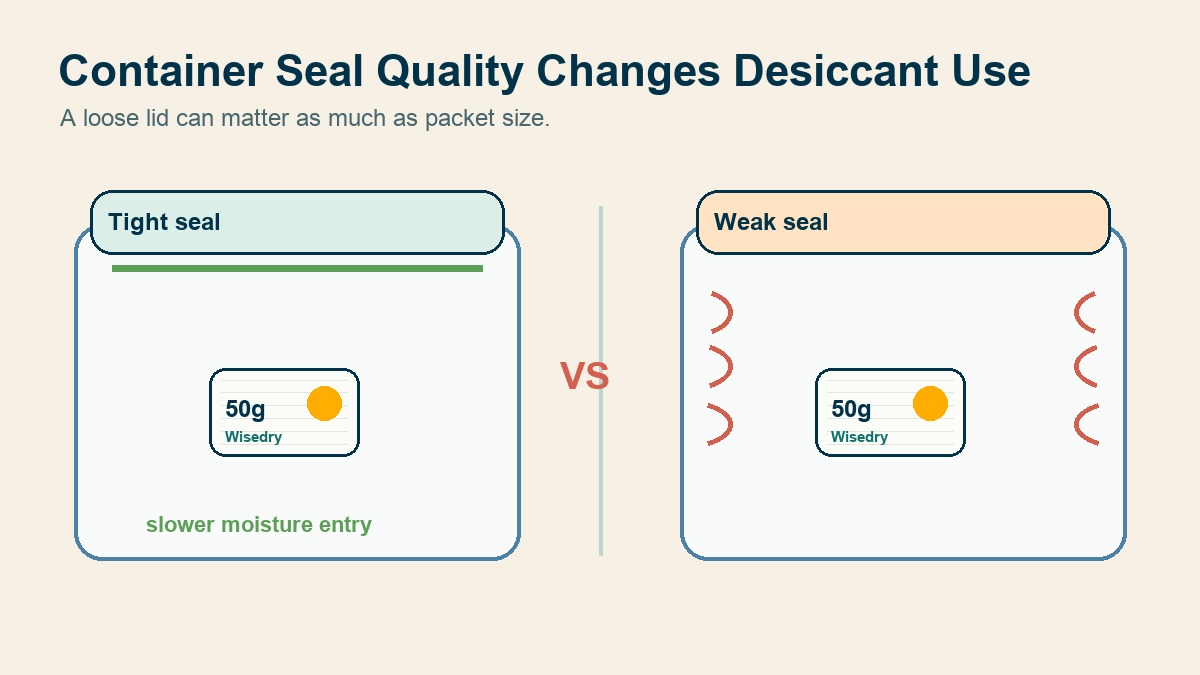
Two containers can be the same size and still need different silica gel routines. One has a tight lid, dry contents, and opens once a month. The other has a loose lid, a warped edge, damp contents, or gets opened every day. The second setup brings in more moisture, so the desiccant may saturate faster even when the packet size looks reasonable.
Quick answer: container seal quality changes how much desiccant you need because it controls how quickly new moisture enters the enclosed space. Start with the Wisedry silica gel amount guide, then adjust based on lid fit, gasket condition, opening frequency, stored-item dryness, packet placement, and indicator behavior.
This guide does not promise a fixed humidity result or a universal gram amount. It helps you decide whether the container needs a better seal, a different packet placement, a more frequent check routine, or more active desiccant.
Seal Quality Comes Before Packet Count
Silica gel works inside the conditions you give it. A good sealed container slows the entry of humid air. A weak container keeps letting new moisture in, so even active packets may change color, gain weight, or lose effectiveness faster than expected.
If a packet saturates quickly, it is tempting to add more silica gel immediately. Sometimes that helps. But if the lid is loose, the gasket is pinched, or the box is opened many times a day, extra packets may only saturate faster. First confirm that the container is doing its job.
A practical order is:
- Estimate the starting amount from container size.
- Check whether the lid or seal is weak.
- Make sure stored items are dry before closing the container.
- Place packets where air can reach them.
- Check indicator color, packet weight, or performance clues after real use.
- Add, split, recharge, or rotate packets only after the setup has been checked.
What Counts As A Weak Seal?
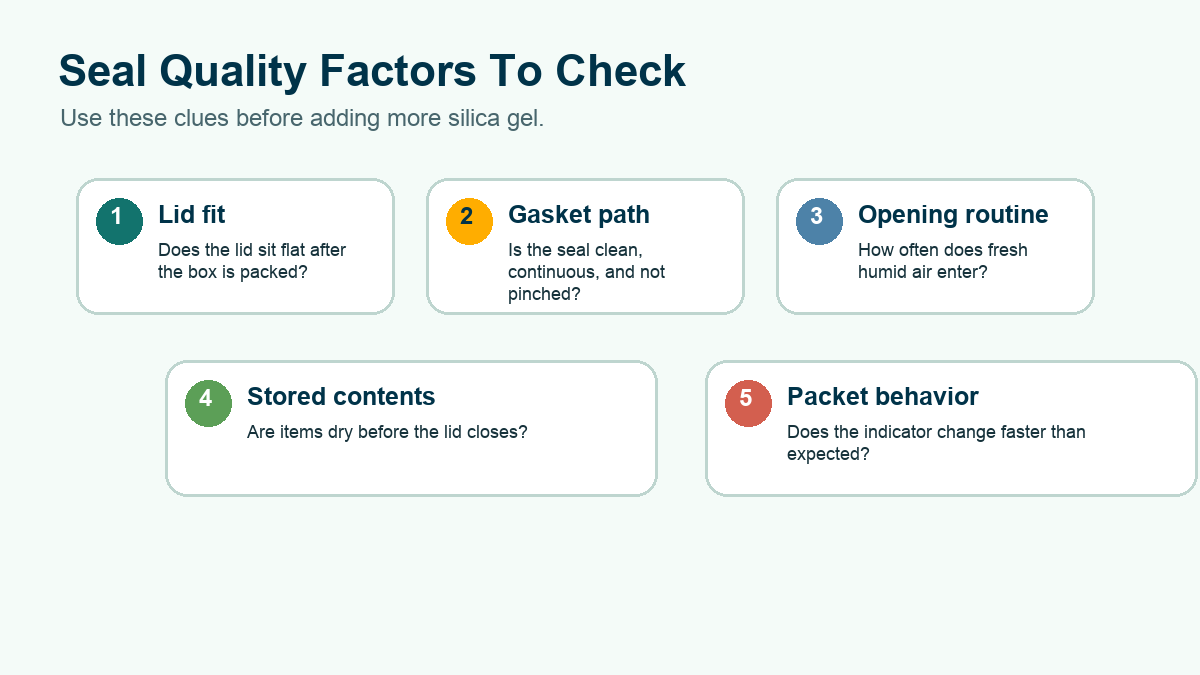
A weak seal does not always look broken. Many everyday storage containers let in moisture because of small fit issues or user habits.
Common weak-seal clues include:
- The lid does not sit flat after the box is packed.
- A latch closes on one side but leaves a gap on another side.
- A gasket is dirty, twisted, missing, cracked, or compressed unevenly.
- The container wall is warped from age, stacking pressure, or heat.
- Contents press against the lid and keep it from closing fully.
- The container is fabric, cardboard, or an open shelf rather than a sealed box.
- The box is opened so often that fresh humid air enters repeatedly.
If you are unsure, use Wisedry’s practical guide on how to check a container seal without special tools. A few simple checks can explain why the same amount of silica gel behaves differently in two similar-looking containers.
How A Loose Seal Changes The Desiccant Setup
A loose or frequently opened container can change four parts of your desiccant routine.
You May Need To Check More Often
The first change is usually checking frequency. If humid air enters often, indicator color or packet weight can change sooner than it would in a tightly sealed box. Do not assume a calendar schedule from a different container will work here.
Check sooner when:
- The room is humid.
- The container is opened daily.
- The lid is loose or the gasket is questionable.
- The packet sits near the opening.
- Stored contents were not fully dry when packed.
You May Need Better Placement
A weak seal can create zones where moisture enters near a gap, hinge, latch, lid edge, or opening side. If one packet is buried at the far end, it may not tell you what is happening near the problem area.
In a simple small box, one visible packet may be enough. In a long, divided, or weakly sealed box, several smaller packets can make checking easier because you can place them near different zones. If you are choosing between one larger pack and several smaller packets, use the Wisedry guide on one large desiccant pack or several small packs after you understand the seal.
You May Need To Fix The Container Before Adding More
More desiccant cannot turn an open shelf, fabric cube, loose tote, or frequently opened box into a controlled storage container. If the goal is longer-lasting moisture control, improving the enclosure may matter more than increasing packet count.
Low-risk fixes include:
- Remove contents that block the lid.
- Clean dust or grit from the gasket area.
- Close every latch fully.
- Avoid stacking weight that bends the lid.
- Use a smaller sealed inner box for sensitive items.
- Move the container away from damp walls, bathrooms, laundry areas, or condensation-prone spots.
You May Need A Different Recharge Routine
If the packet saturates faster because the container leaks or opens often, recharge timing should follow the product’s actual indicator or condition instead of a fixed promise. Wisedry products do not all use the same recharge method, so use the Wisedry recharge hub before heating or reusing a packet.
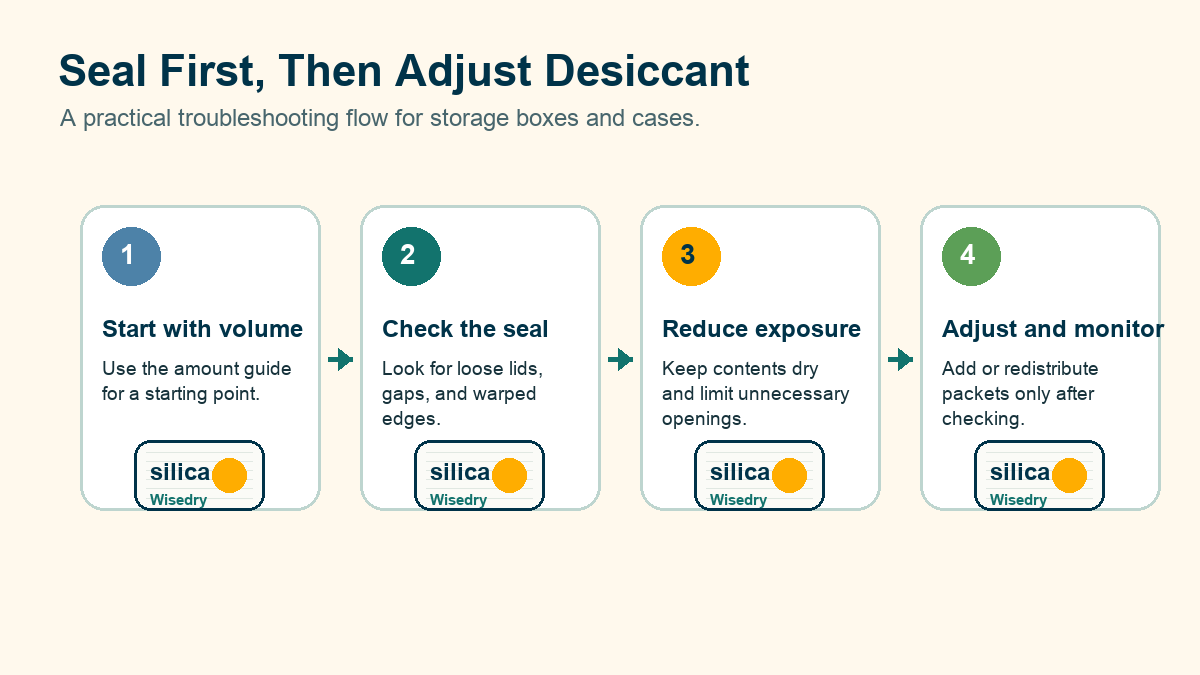
A Simple Seal-First Troubleshooting Flow
Use this flow when a desiccant packet changes color quickly, seems to saturate sooner than expected, or does not match the performance you saw in another container.
Step 1: Confirm The Container Size
Start with the inside space you are actually trying to protect. A half-empty box and an overpacked box with the same outer dimensions may behave differently because airflow and lid closure are different.
Use the amount guide as the starting point, then treat everything below as adjustment logic.
Step 2: Inspect The Lid And Closure
Close the container the way you normally use it. Do not test it empty if real contents push against the lid. Look for lid lift, bowed plastic, uneven latch pressure, a pinched gasket, or a corner that never fully closes.
Step 3: Check Opening Habits
A box that opens twice a year is not the same as a box that opens every morning. If the container is opened frequently, expect to check the packet more often and consider a setup that makes inspection quick.
Step 4: Check The Contents
Silica gel is not a shortcut for packing damp items. If clothing, tools, camera accessories, paper, craft materials, or parts go in wet or cold from condensation, the desiccant has to handle that moisture too.
Let items dry before closing the container whenever practical.
Step 5: Adjust Packet Placement
Packets need air exposure. Avoid hiding them under dense fabric, sealing them inside a non-breathable bag, pressing them under tools, or placing them where they will be forgotten. For more placement examples, read Wisedry’s guide on where not to place a desiccant pack in a storage box.
Step 6: Recheck After Real Use
After a few normal use cycles, check the packet again. If the indicator changes quickly even after improving closure and placement, the container may need a different storage location, a tighter inner container, more frequent recharge, or a different packet distribution.
Examples By Storage Setup
Plastic Storage Bin
A plastic bin with a loose snap lid may need more frequent packet checks than a bin with a tight gasket. If the lid bows upward because the bin is overfilled, remove some contents before adding more silica gel.
Camera Dry Box
A sealed camera dry box usually benefits from predictable placement and a visible indicator. A soft camera bag or frequently opened case behaves differently because new room air enters often. Avoid claiming the packet protects equipment by itself; treat silica gel as one part of a careful storage routine.
Toolbox Or Parts Case
Metal tools and small parts often sit in cases that open frequently. If the latch area has gaps or the case is stored in a humid garage, check packets sooner and keep them away from sharp edges, pressure points, and greasy surfaces.
Closet Storage Container
Seasonal clothing, shoes, and craft supplies may be packed tightly. If fabric blocks airflow or the lid is not fully closed, several visible packets in different zones may be easier to monitor than one hidden packet.
Document Box Or Small Safe
A small box with a clear single compartment may work well with one visible packet, but seal quality still matters. If papers feel exposed to damp air or the indicator changes quickly, check the closure and storage location before adding more packets.
When More Desiccant Helps
More desiccant can help when the container is reasonably closed but the starting amount was too low, the room is humid, the contents are slightly moisture-sensitive, or the box is opened more often than expected.
It is more likely to help after you have already confirmed:
- The lid closes fully.
- Packets are not buried.
- Stored items are dry.
- The packet has been recharged correctly.
- The container is not sitting in an unusually damp location.
If those conditions are not true, adding more packets may hide the real issue for a short time without improving the routine.
For sealed storage setups, product options, and regional purchase paths, visit the Wisedry Shop.
Common Mistakes To Avoid
Mistake 1: Copying A Packet Amount From A Different Container
Even if two containers look similar, seal quality, contents, location, and opening habits can be different. Use the copied amount only as a rough comparison.
Mistake 2: Treating A Fast Color Change As A Bad Packet
A fast indicator change can mean the packet is doing its job in a damp or leaky setup. Check the container before blaming the packet.
Mistake 3: Burying The Packet Under Stored Items
If air cannot reach the packet, the setup is harder to monitor. Keep packets visible and breathable.
Mistake 4: Recharging Without Checking Product Instructions
Different Wisedry products have different recharge methods. Use the correct guide before heating, cooling, and returning a packet to storage.
Mistake 5: Expecting Desiccant To Fix An Open Space
Silica gel works best in an enclosed space. A drawer, open shelf, fabric cube, or loosely covered bin may need a different storage strategy.
FAQs
Does a better seal mean I can always use less silica gel?
Not always. A better seal usually slows new moisture entry, but container volume, room humidity, stored contents, packet placement, and opening frequency still matter.
Should I add more silica gel if the lid is loose?
First improve the lid or use a more sealed inner container if practical. More silica gel may help temporarily, but it does not fix a container that keeps admitting humid air.
Why does the same packet last longer in one box than another?
The tighter box may admit less moisture, open less often, or contain drier items. The packet’s behavior reflects the whole setup, not only the packet size.
Can several small packets compensate for a weak seal?
They can improve coverage and make checking different zones easier, but they do not make a weak container airtight. Use several packets for distribution, not as a substitute for a better enclosure.
How often should I check desiccant in a weakly sealed container?
Check sooner than you would in a tight container, especially after humid days or frequent openings. Use indicator color, weight change, or product-specific guidance rather than a universal schedule.
Bottom Line
Container seal quality can change desiccant use as much as packet size. Start with container volume, then check the lid, contents, opening routine, placement, and indicator behavior. If the container is weak, fix the enclosure or adjust the routine before assuming the answer is simply more silica gel.
If your packets saturate very quickly even after checking the seal and recharge instructions, contact Wisedry Support with the container type, approximate size, packet type, opening frequency, and what the indicator is doing.
If you are still choosing a container, start from the airtight box checklist before adding silica gel; a box that passes those five checks needs less desiccant headroom in the first place.
If the containers are staying sealed for months, the board game and card storage moisture routine is a worked example: a packet per box, indicators checked on a seasonal cadence, and capacity spread across the bin.