Color-indicating silica gel is useful because it gives you a visible clue about moisture. But the color does not always change across every bead, dot, or part of a packet at the same time. One side may look more saturated than the other. A few beads may darken first. A packet may show mixed colors even though it is still doing useful work.
Uneven color usually means moisture is reaching the silica gel unevenly, the packet has mixed bead types, or the indicator is only showing part of the packet’s condition. It does not automatically mean the packet is defective.
Quick Answer
Silica gel changes color unevenly because moisture reaches some parts of the packet first, airflow is not the same on every side, some beads are indicators while others are not, and different products use different color systems. Treat uneven color as a signal to check the packet, the container, and the product instructions before deciding whether to recharge or replace it.
If most of the visible indicator has reached the wet color, or if moisture returns in the storage space, use the broader guide on how to tell if a silica gel packet is saturated.
Why The Color Changes In Patches
Silica gel absorbs moisture from the air around it. In a real container, moisture rarely reaches every bead equally.
Common reasons for patchy color include:
- One side of the packet faces the lid gap, zipper, vent, or damp item.
- The packet is pressed against a wall, fabric, paper, or another object.
- Airflow reaches the outside beads faster than the middle beads.
- The packet is too large or too tightly packed for moisture to move evenly inside.
- The container is opened often, so humid air enters from one direction.
- The packet has indicator beads mixed with non-indicating beads.
This is why a packet can show a darker area near one edge while the rest still looks dry. The darker area may simply be the part doing the first work.
Check Which Indicator System You Have
Do not compare every silica gel product by the same color rule. Indicator systems differ.
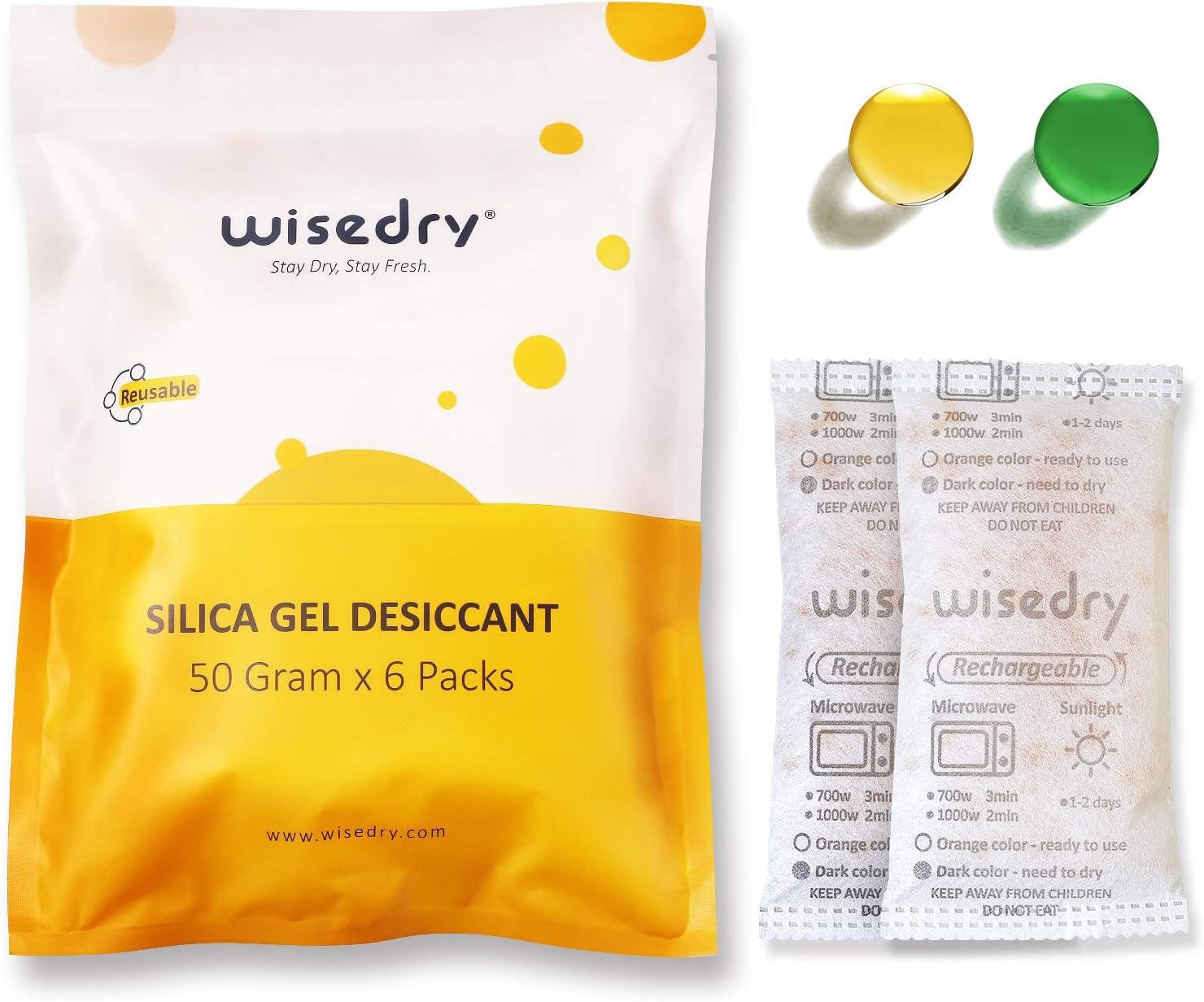
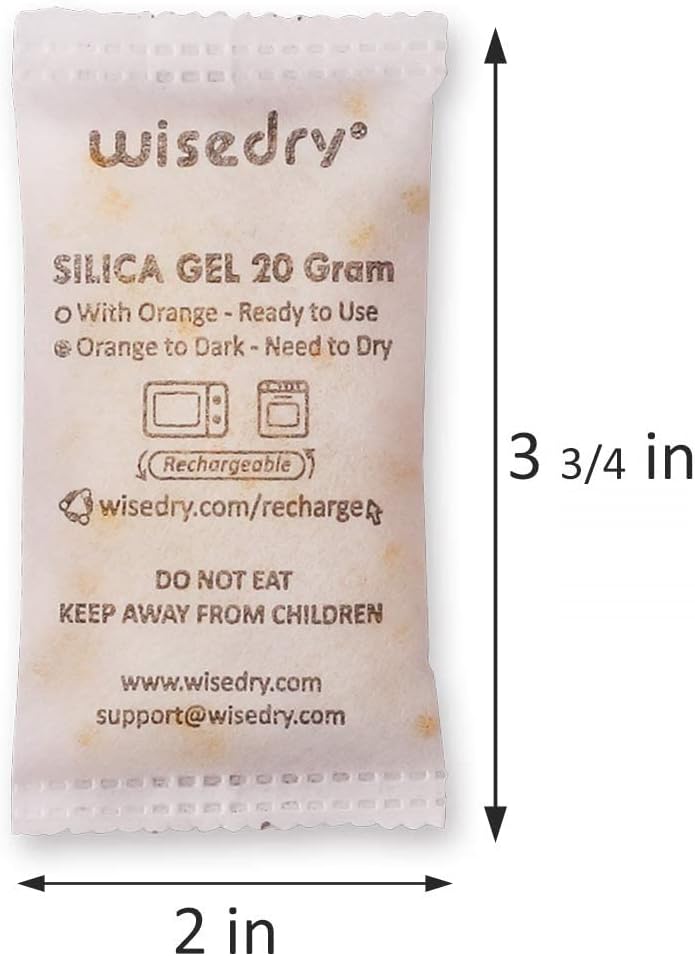
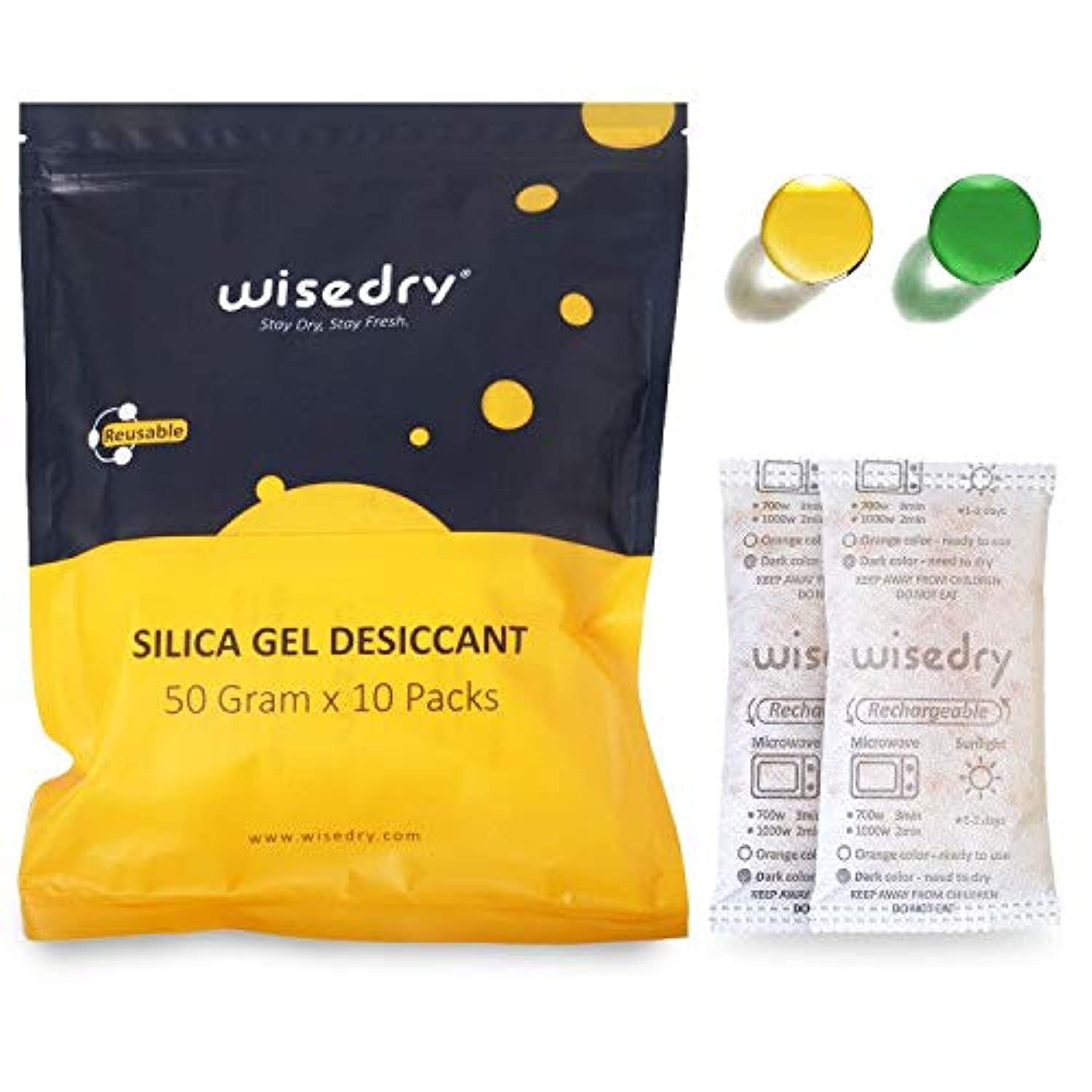
For Wisedry see-through and indicating packets, orange beads mean the packet is ready to absorb moisture. Dark green beads mean the indicating beads are saturated and the packet should be reactivated before reuse. White beads do not change color, so a packet can naturally contain both color-changing and non-color-changing beads.
For Wisedry ColorDot products, follow the ColorDot indicator, not the color pattern of every bead in the packet. The Wisedry ColorDot desiccant instructions explain the product-specific blue-to-pink indicator and weight-check approach.
For see-through packets, use the Wisedry see-through desiccant packet instructions for product-specific details.
What Uneven Color Can Mean
Uneven color can point to several different conditions. The right response depends on the pattern.
A Few Beads Changed Color First
This is common when the packet has just started absorbing moisture. A few indicator beads may be closer to the moisture source or easier to see through the packet window.
What to do:
- Keep the packet in the container if the storage space still feels dry.
- Check again later instead of recharging immediately.
- Make sure the packet is not blocked by paper, fabric, or a wall.
One Side Is Darker Than The Other
One-sided color change usually means moisture or airflow is entering from one direction. This often happens in bags, safes, camera cases, cars, and storage boxes that are opened on one side.
What to do:
- Move the packet closer to the moisture source but keep airflow around it.
- Avoid burying the packet under stored items.
- Check the container seal, lid, zipper, or gasket.
- Add more desiccant if the space is larger than the packet can reasonably handle.
The silica gel amount guide can help you decide whether the container needs more capacity.
The Outside Looks Saturated But The Middle Looks Dry
The outer area may see moisture first. The center may lag behind, especially in a thicker packet or a crowded storage setup.
What to do:
- Recharge if most visible indicator areas have reached the wet color.
- Reposition the packet after recharge so both sides have airflow.
- Use multiple smaller packets instead of one large packet when the space has corners or separated compartments.
The Packet Still Looks Mixed After Recharging
After recharging, indicator color may not look perfectly uniform right away. The packet also needs to cool before reuse, and different beads may settle or become visible at different angles.
What to do:
- Follow the correct product recharge guide.
- Let the packet cool fully before judging it or putting it back with stored items.
- Spread packets in a single layer while cooling.
- Do not keep heating only because one tiny area looks different.
For medium-size Wisedry packets, follow the guide to recharge Wisedry 20g, 50g, and 112g silica gel packets. For general handling, see the Wisedry recharge hub and the guide to cool silica gel after recharging.
When Uneven Color Means You Should Recharge
Recharge the packet when the indicator shows saturation according to that product’s instructions, or when storage conditions suggest the packet no longer has enough capacity.
Good recharge clues include:
- Most visible Wisedry indicating beads have changed from orange to dark green.
- A ColorDot indicator has reached its recharge color.
- The packet gained noticeable weight compared with its dry condition.
- The container becomes humid again even with the packet inside.
- Stored items feel damp, soft, or fog-prone after time in the container.
Do not recharge only because one bead looks different. A single bead or small patch is a clue, not a complete diagnosis.
When To Reposition Or Add Desiccant Instead
Sometimes the packet is active, but the setup is making it work unevenly.
Try repositioning or adding capacity when:
- The packet sits at the bottom of a tall container while moisture enters near the lid.
- The packet is under papers, fabric, tools, or camera dividers.
- The container is opened often.
- The space has multiple compartments.
- One packet is expected to protect a large box, bag, or safe.
Place the packet where air can reach it, not where it will be crushed or hidden. In a larger space, two or three smaller packets can sometimes cover the area more evenly than one packet in a corner.
When To Replace The Packet
Uneven color alone is not a reason to throw away a reusable silica gel packet. Replace it when the physical packet is no longer in good condition.
Replace the packet if:
- The pouch is torn, leaking beads, scorched, melted, or brittle.
- The packet was soaked with liquid water.
- It touched oil, cleaner, fragrance, soil, or food residue.
- It gives off an unusual odor after normal handling.
- The indicator no longer makes sense after correct recharge and cooling.
Desiccant is meant to help keep already-dry items dry. It is not a repair method for items that are wet, moldy, rusted, contaminated, or already damaged.
Simple Troubleshooting Routine
Use this routine when the color looks uneven:
- Identify the product and its indicator rule.
- Look at the overall visible indicator, not one bead.
- Check whether the packet is blocked, buried, or facing one moisture entry point.
- Check the container seal and opening frequency.
- Recharge only when the indicator, weight, or storage symptoms point to saturation.
- Let the packet cool fully after recharging.
- Replace the packet if the pouch is damaged or contaminated.
If you need new reusable packets or a different size for the container, you can shop reusable silica gel packets. If you are unsure which Wisedry product you have, ask Wisedry support.
FAQs
Is uneven color normal in silica gel packets?
Yes, it can be normal. Moisture reaches different areas at different speeds, and some packets contain both indicating and non-indicating beads.
Does one dark bead mean the whole packet is saturated?
Not by itself. Look at the overall indicator pattern, the product instructions, packet weight, and whether the storage space is staying dry.
Why are some beads white while others change color?
Some packets contain non-indicating silica gel beads that do not change color. The color-changing beads are indicators, not necessarily every bead in the packet.
Should I shake the packet to make the color even?
Do not rely on shaking as the main fix. It may move beads around visually, but it does not solve a poor seal, blocked airflow, or saturation.
Can uneven color happen after recharging?
Yes. Color may not look perfectly uniform immediately after heating and cooling. Follow the product recharge instructions, let the packet cool, and judge the overall condition before reuse.
Does uneven color mean the packet is defective?
Usually no. Uneven color often reflects moisture path, airflow, mixed bead types, or indicator placement. Replace the packet only if it is damaged, contaminated, or no longer behaves correctly after proper recharge and cooling.