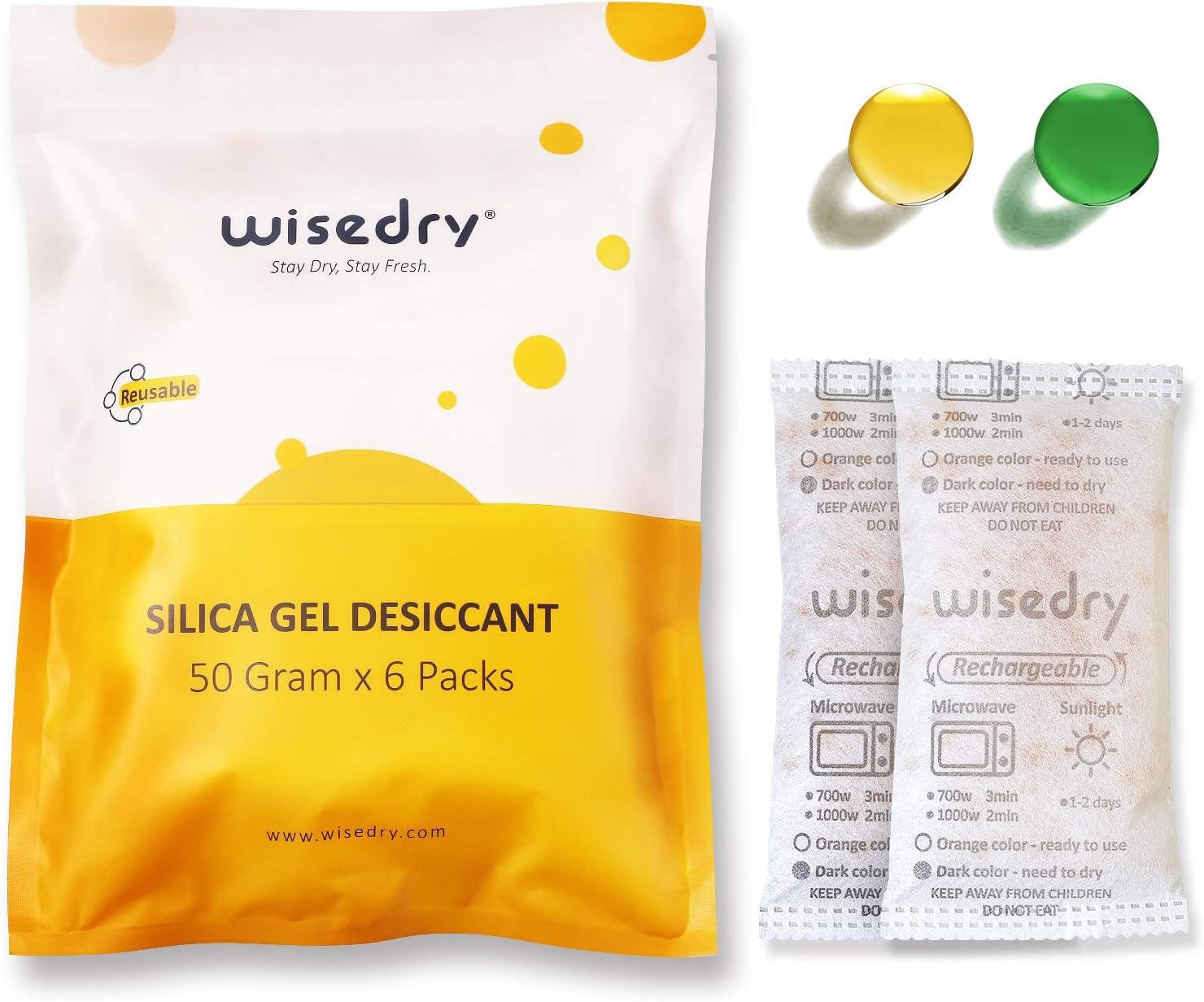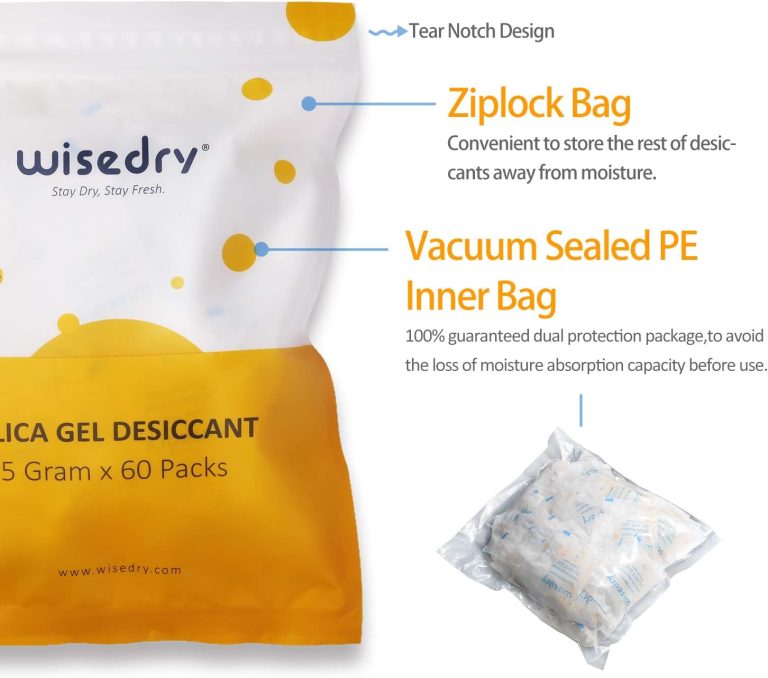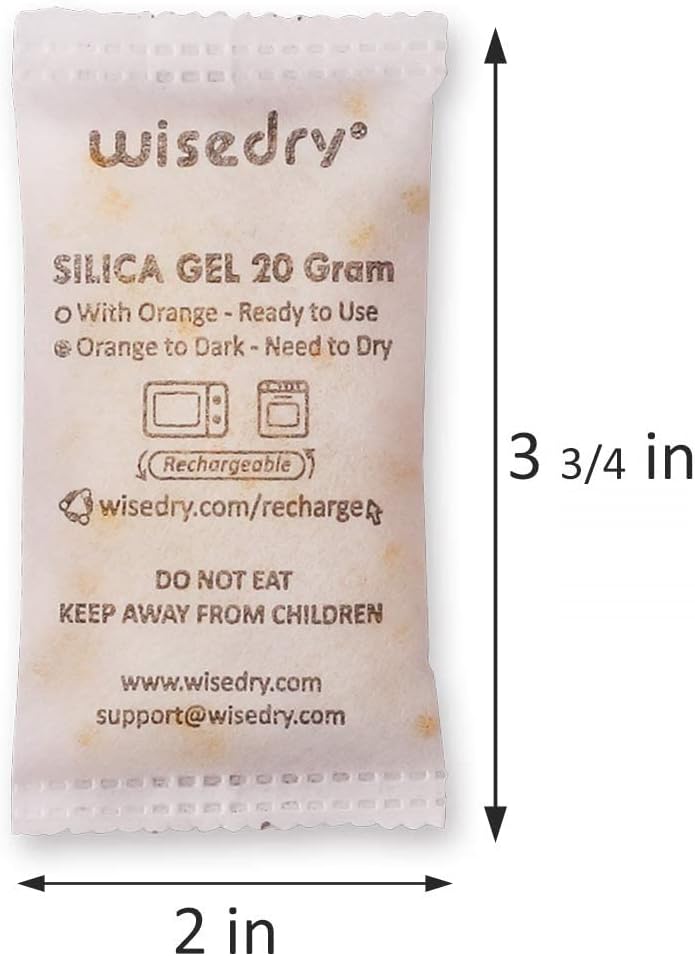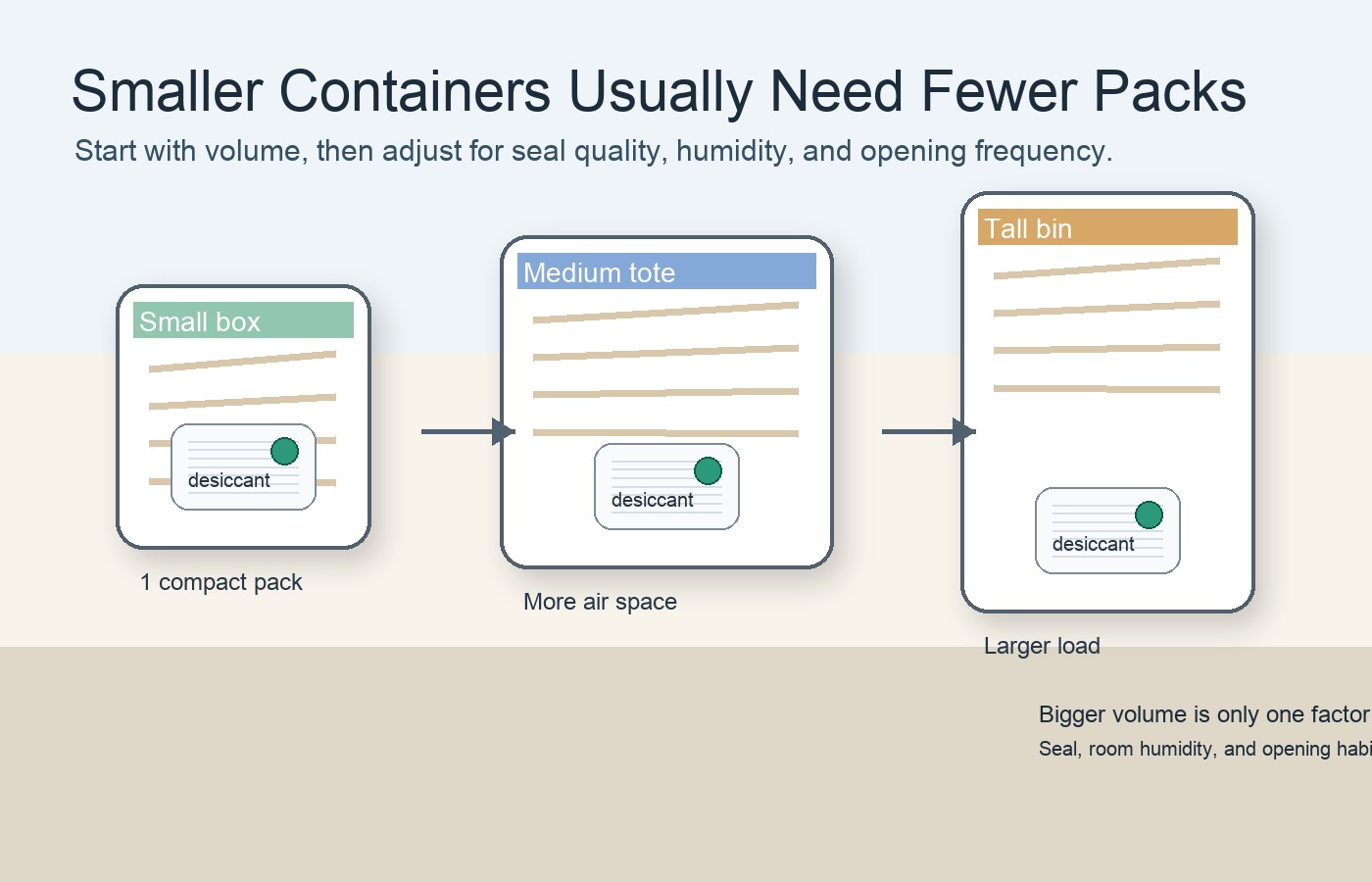
When people size desiccant for storage, they often focus on the item they want to protect: a lens, a stack of papers, a spool of filament, a box of craft supplies, or a handful of metal parts. The container matters just as much. A small sealed container usually has less air space and less total moisture load than a large bin, so it often needs fewer desiccant packs to manage the enclosed air.
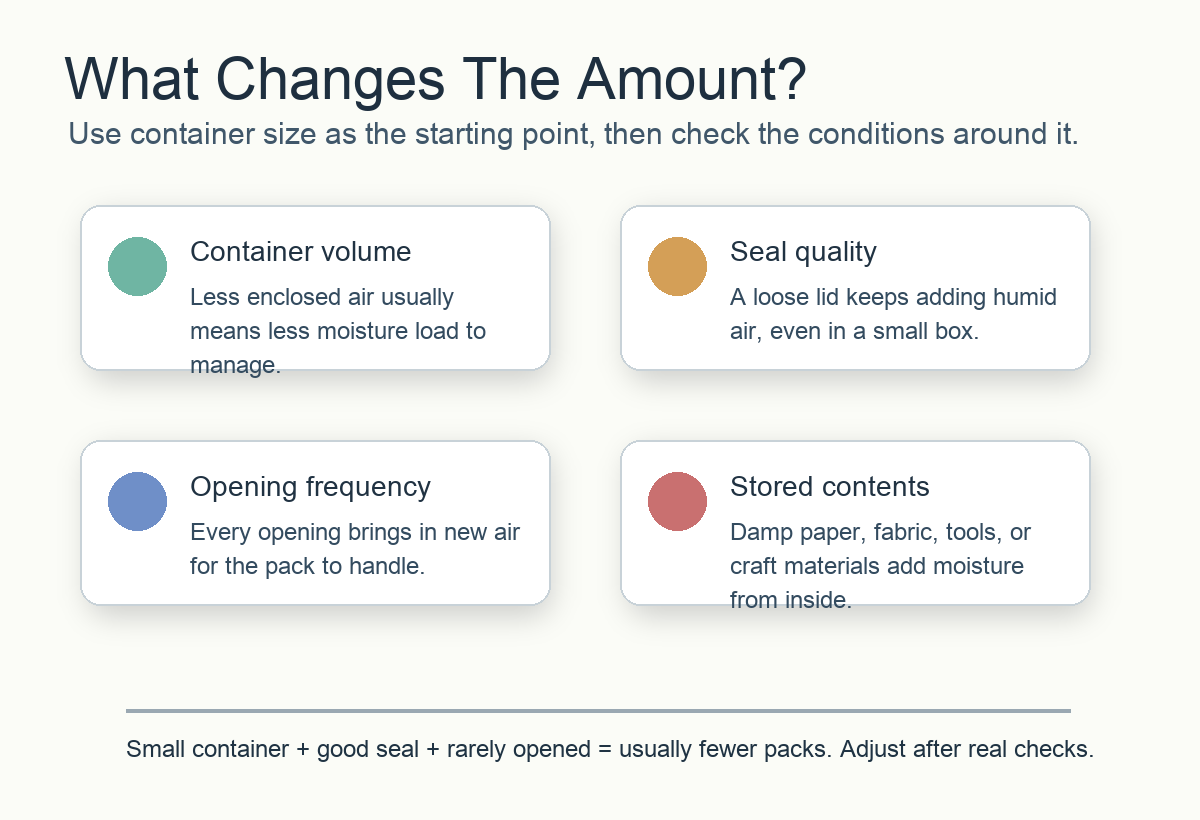
That does not mean every small box needs the same amount. A tiny container with a weak lid, damp contents, or daily opening can challenge a desiccant pack more than a larger container that stays clean, dry, and closed. Use container size as the starting point, then adjust for seal quality, humidity, opening frequency, placement, and what goes inside.
Quick Answer
Smaller containers usually need fewer desiccant packs because there is less enclosed air and less interior surface area for moisture to manage. A compact sealed case may work with one appropriately sized pack, while a larger tote or frequently opened bin may need more desiccant spread across the space.
Before adding extra packs, check the container seal, keep damp items out, place the pack where air can reach it, and monitor the pack’s saturation signal after real use. For a sizing starting point, use the Wisedry packet size and gram guide.
Why Container Size Changes The Amount
Desiccant works inside an enclosed space. The larger that space is, the more air, surface area, and stored material may be contributing moisture. A small box has a smaller air volume, so one well-placed pack may have less work to do than the same pack sitting in a large storage tote.
Container size also affects distribution. In a compact case, the pack is usually close to the stored item. In a larger bin, one pack may sit in a corner while air and contents in the opposite corner are farther away. That is why larger containers may need more desiccant or better spread, while smaller containers often need fewer packs placed thoughtfully.
The safest way to think about it is simple: size is the baseline, not the whole answer.
The Four Factors That Can Override Size
1. Seal Quality
A small container with a poor seal can keep admitting humid air. In that case, adding more desiccant may help for a while, but it does not fix the source of moisture. Check the lid, latch, gasket, hinge, and corners before assuming the pack is too small.
If you are unsure whether the lid is tight enough, use the Wisedry guide on checking a container seal without special tools.
2. Opening Frequency
Every time a container opens, new air enters. A small box used every day can load a desiccant pack faster than a larger box that stays closed for weeks. This is common with camera cases, small tool kits, craft supply boxes, filament sample boxes, and desk storage.
If the container is opened often, check the pack more often and avoid leaving the lid open while sorting items.
3. Stored Contents
The items inside the box can add moisture. Paper, fabric, flowers, craft materials, outdoor tools, handled camera accessories, and items moved from a humid room can all change the workload. A small container is not automatically easy for a desiccant pack if the contents go in damp.
Let items dry as much as practical before closing them inside a small sealed space.
4. Placement
One pack in the right spot can work better than several packs hidden where air cannot reach them. Avoid burying the pack under fabric, closing it inside another pouch, pressing it behind dense contents, or putting it where it will be crushed.
The pack should sit inside the same enclosed air space as the item you want to store.
A Practical Small-Container Setup
Start with the smallest clean container that comfortably fits the item and a desiccant pack. A tight fit can reduce unnecessary air space, but the pack still needs room around it so air can reach the pouch or bead container.
For small safes, document boxes, and compact storage boxes, the Wisedry guide on how much silica gel for a small safe or document box gives a useful adjacent example: container size matters, but seal, opening habits, humidity, and placement still decide whether the setup behaves well.
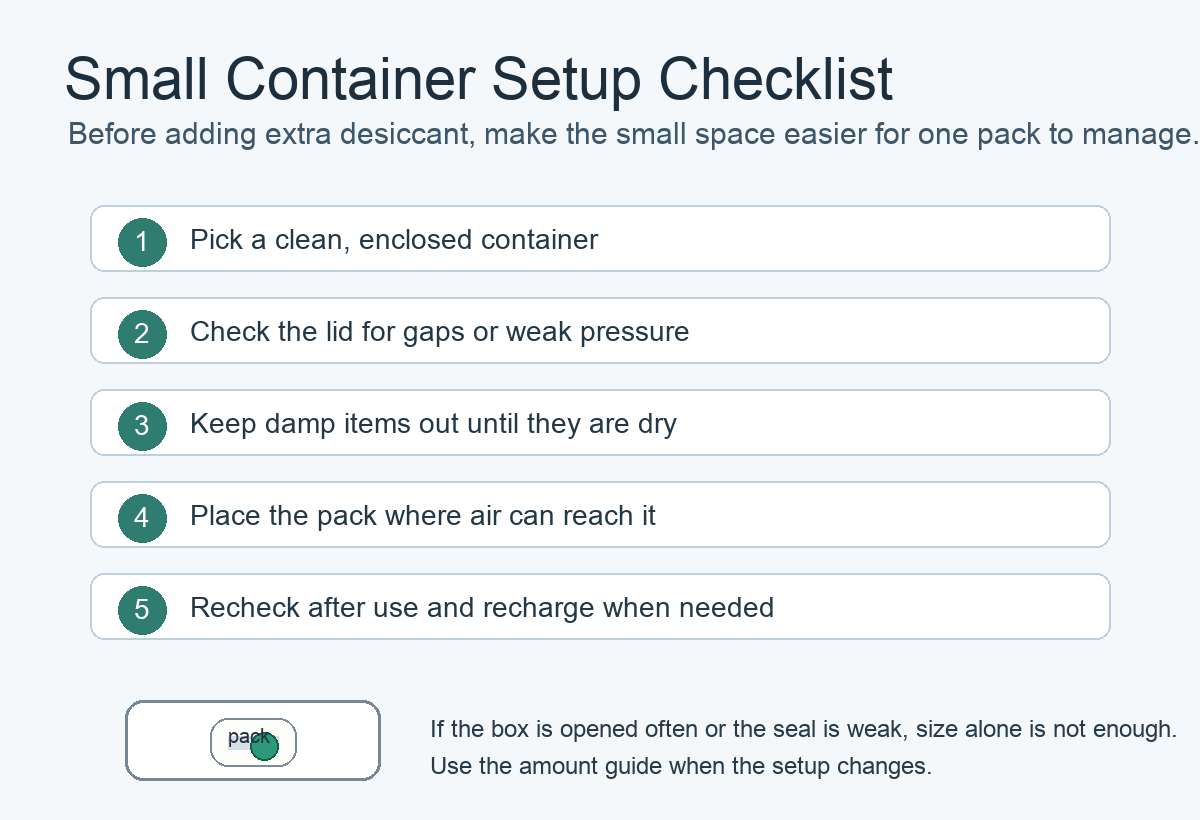
Use this simple workflow:
- Choose a clean container that closes firmly.
- Keep damp contents out until they are dry enough for storage.
- Put the desiccant pack where it shares air with the stored item.
- Close the lid promptly after each use.
- Check the indicator, weight feel, or product-specific signal after real storage time.
- Recharge or replace only when the product guidance and condition checks point that way.
This routine works better than guessing from container size alone.
When One Pack May Be Enough
One appropriately sized pack may be enough when the container is small, reasonably sealed, not opened often, and holding clean, dry items. Examples include a small document box that stays closed, a compact lens case used occasionally, or a small parts case stored indoors.
Even then, monitor the pack. If the indicator changes faster than expected or the packet feels noticeably different after a short period, use the Wisedry saturation checklist before changing the setup.
When A Small Container May Need More Attention
A small container may need more frequent checks, better sealing, or more desiccant if:
- The lid does not close evenly.
- The box is opened daily.
- The container sits in a humid room, garage, car, or seasonal storage area.
- The stored items were handled, washed, dried incompletely, or moved from a damp place.
- The pack is buried or blocked.
- The pack reaches its used signal faster than it used to.
Humid seasons can also change the workload. If the same setup seems to saturate faster during hot or humid weather, compare it with the Wisedry guide on why silica gel saturates faster in summer.
Do Not Use Extra Packs To Hide A Setup Problem
Adding more desiccant can be useful when the container is larger, the space is divided, or the stored materials carry more moisture. But extra packs should not be the first response to a weak lid, wet contents, or a container that is left open.
Fix the setup first:
- Improve the seal.
- Reduce unnecessary opening time.
- Move damp items out.
- Place the pack where air can reach it.
- Keep ready-to-use packs organized and sealed until needed.
If you manage several small boxes, the Wisedry guide on keeping silica gel packets organized in a storage cabinet can help separate ready, needs-recharge, cooling, and review packs.
A Good Rule For Small Containers
Use the smallest clean, well-sealed container that fits the item and the pack without crushing either one. Start with an amount that matches the container size guide, then adjust only after observing the actual setup.
If the pack lasts as expected, the container stays dry, and the stored item is clean and stable, avoid overcomplicating the setup. If the pack reaches its used signal too quickly, check seal, opening frequency, contents, and placement before adding more.
For a practical starting point, open the Wisedry desiccant amount guide. If you are building several small sealed-storage setups, you can also shop Wisedry reusable desiccants.
FAQ
Do Smaller Containers Always Need Less Desiccant?
No. They usually need less because the enclosed air space is smaller, but seal quality, humidity, opening frequency, stored contents, and placement can change the result.
Is One Desiccant Pack Enough For A Small Box?
Sometimes, if the box closes well, stays mostly closed, and contains dry items. Use the Wisedry amount guide as a starting point, then monitor the pack after real use.
Should I Fill Empty Space With More Desiccant?
Not automatically. Empty air space matters, but the better first step is often choosing a better-fitting container, improving the seal, and placing one pack where air can reach it.
Why Does My Small Container Saturate Desiccant Quickly?
Common reasons include a loose lid, frequent opening, humid storage location, damp contents, poor placement, or a pack that needs the correct recharge process.
Can I Use Several Small Packs Instead Of One Larger Pack?
You can, especially if the container has separate compartments or airflow is blocked. Keep each pack in the same enclosed air space as the item it is meant to help manage.
Bottom Line
Smaller containers usually need fewer desiccant packs because there is less enclosed space to manage. But the best setup still depends on the seal, humidity, opening habits, stored contents, and where the pack sits. Start with container size, make the setup tight and clean, then adjust based on what the pack shows after real use.