
Quick answer
Wisedry flower drying crystals: dry flowers, then recharge the crystals
Use Wisedry flower drying silica gel crystals to preserve fresh flowers in an airtight container. When most crystals shift from orange to dark green, recharge them with controlled heat before the next drying project.
| Need | Best next step | What to check |
|---|---|---|
| Dry fresh flowers | Trim dry, insect-free flowers, cover them with crystals, seal the container, and wait about 7-10 days. | Use flowers of the same type together for a more consistent drying rate. |
| Recharge used crystals | Wait until most crystals are dark green, then heat until most return to orange. | Avoid overheating crystals that are still mostly orange. |
| Oven method | Spread crystals thinly, heat at 250°F (120°C), and check/stir every 30-60 minutes. | Best for steadier temperature control and even heating. |
| Microwave method | Use a microwave-safe container, medium-high power, and check/stir every 2-4 minutes. | Never use metal. Let crystals cool before reuse or storage. |
Safety note: hot silica gel, baking sheets, and containers can burn skin. Keep hot crystals away from children, pets, and heat-sensitive surfaces until fully cooled.
Flower Drying Crystals FAQ
When should I recharge Wisedry flower drying crystals?
Recharge them when most crystals have changed from orange to dark green. If many crystals are still orange, keep using them and avoid unnecessary overheating.
Can I recharge flower drying silica gel in the microwave?
Yes. Use only a microwave-safe container, never metal, heat on medium-high power, and check/stir every 2-4 minutes because microwave output varies.
How long does flower drying usually take?
Most flowers dry in about 7-10 days. Humid seasons, thicker petals, or mixed flower types may add 1-3 days or require a separate container.
Can I dry different flowers in the same container?
You can, but the page recommends keeping flowers of the same type together because they usually dry at a more consistent rate.
What if a few crystals are still green after heating?
Stir the crystals while they are still hot and let residual heat continue drying the remaining green pieces. A few scattered green crystals do not usually prevent reuse.
Should crystals cool before I reuse or store them?
Yes. Let recharged crystals cool fully before using them with flowers or sealing them in storage. Hot crystals and containers can cause burns or damage surfaces.
Choose Your Next Wisedry Step
Move from flower drying instructions to the right crystals, amount guide, or support path.
 Shop flower drying crystalsChoose color-indicating silica gel crystals for drying and preserving flowers.Shop now
 Calculate crystal amountEstimate how much silica gel to use for containers, boxes, and larger flower projects.Open guide
 Recharge hubCompare recharge guidance for Wisedry crystals, packets, beads, and desiccants.Open hub
1. How to Dry Your Flowers
Needed supplies
- Flowers
- Scissors/pruner
- A small cup
- An airtight container
- A fine brush
- Wisedry flower drying silica gel
Step 1
Prepare the flowers to be preserved. Trim their stems and ensure they are free of insects and not wet.

* After drying, you may dry and reattach the stems using floral wires or tape.
Step 2
In an airtight container, spread a layer of crystals deep enough to hold the flowers. Insert the flowers upright into the crystals.


* Flat-faced flowers, such as gerbera daisies, can be placed face down. Long flowers, like larkspurs, can be laid sideways.
Step 3
Gently pour some crystals around the flower base using a cup in order to support the fragile petals, which helps maintain the shape. Then fully cover the flower heads with crystals.


* Make sure crystals are filled between the petals for thorough drying.
Step 4
Seal the container, store it in a cool, dry place, and be careful not to tilt the contents when moving. In 7-10 days, check the dryness level of the petals.

* Drying time will vary depending on the types of flowers. For best results, place flowers of the same type in one container, as they share a more consistent drying rate.
Step 5
When drying is completed, gently pour out some crystals to expose the flowers. Remove each flower, gently shake off the crystals, and clean any leftover crystals using a fine brush. Store the dried flowers in an airtight container with a thin layer of crystals at the bottom and seal it for future use.

Tips
- Flowers suitable for preservation using Wisedry flower drying silica gel include Rose, Ranunculus, Baby’s Breath, Gerbera, Stock Flowers, Carnation, Sunflower, Hydrangea, Tweedia, Orchid, Peony, Daisy, Eustoma, Lily, Anemone, Zinnia, Freesia, Strawflowers, Eucalyptus Cinerea, Pansy, Queen Anne’s Lace, Lily of the Valley, Primroses, Grasses, Bachelor Button, Foliage, Chrysanthemum, and more.
- Flowers that are not easily dried using silica gel include daffodils, crocuses, irises, tulips, and other flowers with high moisture levels in their petals.
- The standard method will dry most flowers in 7-10 days. During humid seasons, it may take an additional 1-3 days.
- White flowers may become beige after drying. Red flowers will become a little darker.
- Dried flowers fade quickly in sunlight or extreme heat. Please keep them in a cool space away from windows.
You can follow us on Instagram to learn more about flower drying! (@wisedry_)
CAUTION
- To avoid causing discomfort, we make low-dust silica gel crystals. If you are sensitive to dust, please wear a mask & gloves.
- Wisedry flower drying silica gel is non-toxic, but it may absorb pesticides from flowers. Do not use the drying container directly for food preparation without cleaning.
- Do not reactivate if orange crystals are still present, or overheating may impair absorption ability.
- Silica gel will be hot after reactivation. Do not touch it with your bare hands.
- Keep out of reach of children and pets.
- Do not eat. If swallowed, seek immediate medical attention.
2. Recharge Your Crystals
Welcome!
With use, Wisedry silica gel absorbs moisture from fresh flowers and loses its drying power. To make it active again, you’ll need to remove the absorbed moisture by heating it.
Check Saturation by Color
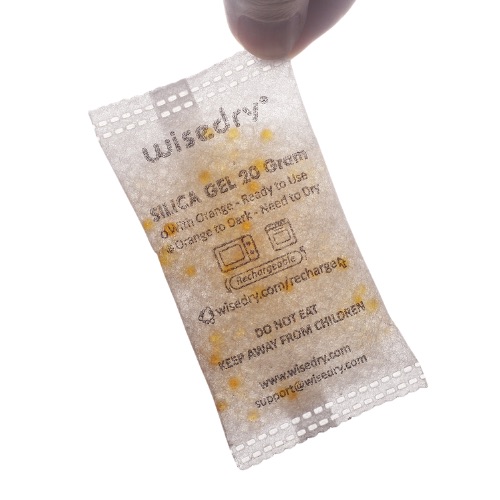
Wisedry flower drying silica gel changes color to indicate its saturation level, shifting from orange to dark green. As more silica gel turns green, its drying capacity diminishes. When most of the silica gel is green, it’s time to reactivate or “recharge” it through heating.

Now let’s see how to reactivate it to restore its moisture-absorbing power.
1. Oven Method (Recommended)
* Please read through the steps first to make sure you don’t miss anything important.
Pro Tip: An oven provides more precise temperature control and more even heating, which can effectively extend the life of the silica gel.
How:
Step 1. Spread the silica gel evenly across the baking sheet and avoid creating a thick layer.
Step 2. Set the temperature to 250℉ (120℃).
Step 3. Periodically open the oven to check the color of the silica gel.
Checking is the key:
Baking time varies depending on the amount of silica gel and how saturated it is, typically taking 1-3 hours. We recommend checking every 30-60 minutes and stirring the gel with a spoon to:
- See if the silica gel at the bottom has returned to orange.
- Ensure more even heating.
Example:
To help you achieve optimal results, here is an example setting for reactivating 500g for your reference:
| Saturated Weight | Temperature | Time |
|---|---|---|
| 660g (500g originally) | 120℃/250℉ | 60-90 min (30+30+30 min recommended) |
Completion: When most of the green silica gel is back to orange, the reactivation or “recharge” is complete.
Kindly Note:
Since the orange silica gel is small and dispersed, it’s impossible to see if every single one has reverted to orange, and this won’t affect its usability.
When it is done, stir the silica gel well while it’s still hot, and the residual heat will dry any remaining green silica gel. Allow it to cool before reusing it for flower drying or storing it in an airtight container.
Important:
- The silica gel and baking sheet will be hot after heating, so handle them with care.
- If you are sensitive to dust, we recommend wearing a mask during the process.
- Wash the baking sheet after use.
2. Microwave Method
* Please read through the steps before starting to make sure you don’t miss anything important.
Pro Tip: While we recommend using an oven to reactivate Wisedry silica gel, a microwave can also do the job safely if you follow these instructions.
How:
Step 1. Place the silica gel in a microwave-safe container.
Important: Use only microwave-safe containers (such as ceramic, glass, or microwave-safe plastic). Never use metal! A shallow container will promote more even heating.
Step 2. Microwave on medium-high (75% power).
Step 3. Periodically, open the microwave to check the color of the silica gel.
Checking is the Key:
Microwaving time varies depending on the amount of silica gel and how saturated it is, typically taking 5-20 minutes. We recommend checking every 2-4 minutes and stirring the gel with a spoon to:
- See if the silica gel at the bottom has returned to orange.
- Ensure more even heating.
Example:
To help you achieve optimal results, here is an example setting for reactivating 500g for your reference:
| Saturated Weight | Microwave Output | Mode | Time |
|---|---|---|---|
| 660g (500g originally) | 700W | Mid-High/70% PL | 6-9 min |
| 1000W | Mid-High/70% PL | 4-7 min |
Completion: When most of the green silica gel is back to orange, the reactivation or “recharge” is complete.
Kindly Note:
Since the orange silica gel is small and dispersed, it’s impossible to see if every single one has reverted to orange, and this won’t affect its usability.
When it is done, stir the silica gel well while it’s still hot, and the residual heat will dry any remaining green silica gel. Allow it to cool before reusing it for flower drying or storing it in an airtight container.
Important:
- The silica gel and baking sheet will be hot after heating, so handle them with care.
- If you are sensitive to dust, we recommend wearing a mask during the process.
- Wash the baking sheet after use.
Happy Drying!
Recharging silica gel is a process that you’ll get better at with practice. Feel free to adjust the time as needed. With proper care, your silica gel will help you create beautiful dried flowers time and time again!
Not sure when to uncover the bloom? Use our flower dryness check guide to compare petal texture, shape, and thicker areas instead of relying only on a fixed timer.
Planning another flower project? Use our post-project silica gel reuse checklist to recover, sort, recharge, cool, label, and store the crystals before the next batch.
Do the crystals form loose lumps after a flower batch? Use the flower-drying silica gel clumping checklist to inspect the moisture pattern, remove dry debris, isolate uncertain material, and choose the correct recharge step.


Can I leave a sealed container of flowers with the silica gel outside overnight on my back porch to dry ? (Or is it best to bring containers in the house )? It doesn’t go below freezing. Day time is a typical day of sun , cloudiness or rain 55- 72 degrees.
The containers are protected by the elements under an outside roof.
Thank you
Given that you mentioned there might be rain outside, I would suggest bringing the container indoors as a better option. However, if your container is properly sealed, it should make little difference where it dries, as long as it is placed in a dry and cool location. So, leaving it on the back porch could also work.
Can i dry flowers in the oven using the silica gel? If so, at what temperature and time is recommended for Zinnias?
We do not recommend drying flowers in the oven. The drying process is too fast, making it difficult to keep the flowers in their optimal state, and they can easily get damaged by the heat. That’s why we don’t suggest this method.
We really appreciate your idea, though. You can try testing with flowers that aren’t too important to see how it goes.
Hi I bought the Wisedry silica gel to preserve my nieces wedding bouquet. Sadly only 2 flowers came out in perfect condition. Every other flower lost their petals. The boxes were not moved at any time during the drying process. I left them for 16 days. The flowers included Dahlias, orchids, small roses and 1 tulip. Where did i go wrong?
I am so incredibly sorry to hear this happened. Looking closely at your process and the specific flowers you used, there are some reasons why this might happen:
1. Flowers like tulips and orchids have very fragile petal connection. The hollow, vertical structure of tulips require very delicate handling. 16 days of drying might have made them more fragile. 7-10 days of drying is generally enough for most flowers, especially the thin ones. And burying them too deep, which puts more weight onto the flowers, might also lead to damage after drying and make it hard to take out the flowers.
2. After flowers are dried, they are paper-like thin and very brittle. So when taking them out of the silica gel, whether pouring out the silica or digging out the flowers, we should be very careful.
Again, I am so sorry for this outcome, but I hope this helps explain what happened.
Qué precauciones son necesarias para manipular el gel de sílice ?
Guantes, mascarilla?
Normally you don’t have to wear masks or gloves. Our silcia gel is nontoxic, safe to touch and treated for minimal dust.
Wear a mask ONLY if: You have a very sensitive nose, allergies, or asthma. When you pour the fine silica sand from a high distance, it can kick up a tiny bit of physical dust. It’s not toxic, but it might make you sneeze if you’re prone to allergies.
Wear gloves ONLY if: You have extremely dry skin, or if you plan to mix and touch the loose gel with your bare hands for a long time. Because it loves to absorb moisture, it might leave your hands feeling a bit dry or chalky afterward (nothing a little hand lotion can’t fix!).
Can you leave flowers in the Silica gel too long? Or once they have dried does it not matter if they are left in the silica gel beads too long? In otherwords can they be over dried? Thanks
Hi. We don’t recommend leaving your flowers for too long in silica gel. Flowers over dried may be more brittle and fragile and have more silica indents on the petals.
Generally, 7-10 days is enough to dry most flowers. For thick flowers, 10-14 days will do. If you dry a lot of flowers at once, it may also need more time.
The key is you can check your flowers during the process: Use a makeup brush to gently brush away the silica and reveal some parts of the flowers and feel it. If they feel dry and crispy, they are ready to be removed from the silica. When you remove them, whether pouring out the silica or digging our the flowers, please be very careful as dried flowers are fragile. Use our flower drying container kit if you need a safer way to remove your flowers keep track of your project.