
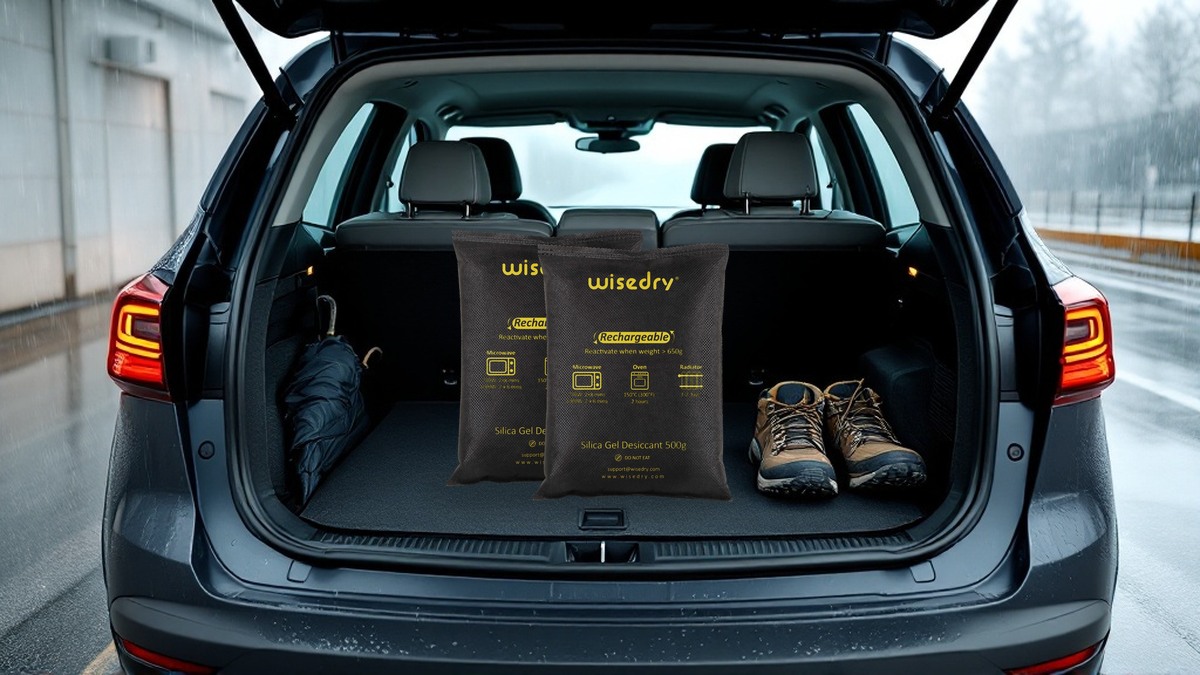
Quick answer: a rechargeable car dehumidifier bag can support moisture control while a vehicle is parked, but it cannot guarantee a fog-free windscreen and it is not an instant demister. Start with a dry, identified bag, place it securely where air can reach it, record three comparable mornings, and use your vehicle’s approved demist or defrost process whenever visibility is not clear before driving.
Important boundary: treat a bag as a parked-car moisture-management tool. Do not leave an unsecured bag where it can obstruct the windscreen, controls, pedals, airbags, or normal driving. Active water entry, soaked carpets, standing water, or persistent fog needs source-first attention rather than simply adding more bags.
First, identify the windscreen-fog pattern
Windscreen fog is an outcome, not a diagnosis. Before changing the number of bags, record when the fog appears and what else is wet. This keeps a normal bag trial separate from a leak, soaked interior, or an immediate visibility problem.
| What you observe | What it means for the next step | Do not assume |
|---|---|---|
| A light film appears after the car sits overnight, especially after wet trips | A controlled parked-car bag trial is reasonable after removing obvious wet items | One clearer morning proves a permanent fix |
| Mats, carpet, spare-wheel area, seals, or trim are visibly wet | Dry the interior and investigate the moisture source first | More desiccant can compensate for continuing water entry |
| Visibility is unclear while driving or immediately before moving | Use the vehicle’s approved demist/defrost procedure and do not drive until visibility is clear | A passive bag replaces active glass clearing |
| The bag reaches its recharge signal unusually quickly | Recharge according to the exact product guide, then check wet load, placement, and water entry | Fast saturation automatically means the bag is defective |
A six-step parked-car setup
- Match the exact product. Confirm the bag is intended to be rechargeable and note its indicator or weight-based recharge rule. Do not borrow heating settings from another packet size or format.
- Start from a known dry state. If the bag’s signal already indicates saturation, follow its product-specific recharge instructions before beginning the comparison.
- Remove avoidable wet load. Take out wet coats, umbrellas, towels, and other removable items. Dry visibly wet mats or cargo surfaces rather than asking the bag to absorb an active water load.
- Choose a stable, breathable parked position. Keep the fabric surface open to cabin air. Follow the dedicated car bag placement guide, and secure or remove the bag before driving if it could move or obstruct anything.
- Change one variable. Keep the same bag, position, and check time for three mornings where practical. If weather or interior wetness changes sharply, record that instead of treating the mornings as equal.
- Read both the glass and the product. The windscreen pattern shows the cabin outcome; the bag’s indicator or documented weight rule shows whether the product itself needs service.
Use a three-morning windscreen log
This log is the original decision tool for this page. It does not promise a laboratory comparison. Its purpose is to stop one unusually dry or wet morning from becoming the whole conclusion.
| Field | What to record | Why it matters |
|---|---|---|
| Parked interval | Approximate time parked and whether the car was closed normally | A two-hour stop is not comparable with an overnight period |
| Wet-load note | Rain, wet footwear, damp mats, passengers, or wet cargo | A changed moisture load can overwhelm the comparison |
| Glass pattern | Clear, edge film, partial fog, or broad fog | A simple repeatable scale is more useful than “better” |
| Bag state | Indicator, documented weight check, condition, and position | Separates a cabin result from a saturated or displaced bag |
| Visibility action | Whether the approved demist/defrost process was needed before driving | The bag never removes the requirement for clear visibility |
Interpret the result without overclaiming
| Three-morning pattern | Next action |
|---|---|
| Fog is lighter under broadly similar conditions and the bag remains within its service state | Keep the setup, continue periodic checks, and avoid claiming a permanent cure |
| Fog is unchanged and the bag signal barely changes | Confirm product identity, start state, position, and airflow; use the car bag troubleshooting guide |
| Fog remains and the bag reaches its service signal quickly | Recharge it correctly, inspect wet load and water entry, then repeat only after conditions are controlled |
| Fog worsens, visible water appears, or interior materials stay wet | Stop treating bag quantity as the main variable and address the moisture source |
When to recharge or change the setup
Use the exact product signal, not a universal calendar. The car recharge-frequency guide explains how opening habits, wet weather, and the observed cycle change the check interval. After a wet spell, use the wet-weather check before assuming the same routine still applies.
If you have not yet selected or identified a bag, begin with the broader car dehumidifier bag setup guide. If the real question is whether a passive bag or powered device fits the job, use the car moisture absorber comparison.
Frequently asked questions
Will a car dehumidifier bag stop windscreen fog permanently?
No permanent result can be promised from a passive bag. It may reduce parked-car moisture under suitable conditions, but weather, wet occupants or cargo, water entry, ventilation, and the bag’s service state can all change the outcome.
Should I put the bag on the dashboard?
Only use a location that is stable, breathable, and compatible with the product instructions. Never leave an unsecured bag where it can block visibility, controls, vents, airbags, or normal driving. A dedicated placement guide is safer than treating the dashboard as a universal position.
How quickly should the windscreen improve?
Do not use one universal hour claim. Start with a known dry bag and compare several similar parked periods. A three-morning log is more reliable than judging one morning with different weather or wet load.
Does using two bags guarantee better results?
No. First confirm product state, placement, wet load, and water entry. If you are considering a second bag, use the one-versus-two bag guide rather than assuming quantity is the only variable.
What should I do before a long drive?
Inspect the bag’s condition and location, secure or remove it if it could move, and make sure the windscreen is fully clear using the vehicle’s approved controls before driving. See the pre-drive bag check.
Choose the next useful step
Need a product route? Visit the Wisedry Shop. If the bag is damaged, unidentified, or does not match the documented signal, contact Wisedry Support with the product label, bag condition, placement, recharge observations, and windscreen log.


