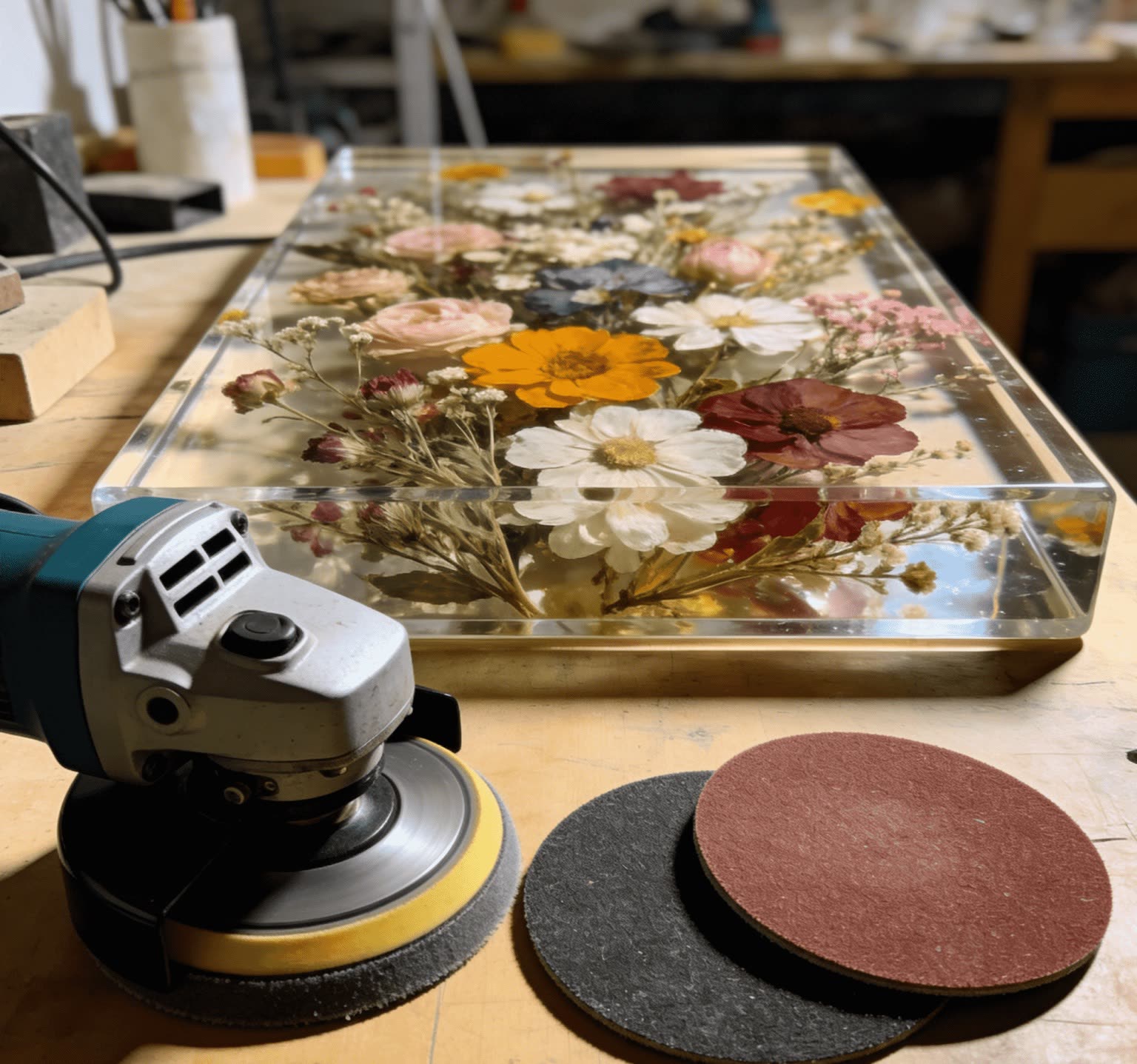
Quick answer
Use waterproof silicon carbide sandpaper for epoxy resin
For most epoxy resin art, use wet/dry waterproof sandpaper made with silicon carbide. Start around 400-600 grit for leveling, move through 800-1000 grit to remove scratches, then finish with 1500-3000 grit before polishing.
| Project stage | Best sandpaper or grit | What to watch |
|---|---|---|
| Leveling edges or high spots | 400-600 grit wet/dry sandpaper. | Use light pressure and avoid sanding uncured resin. |
| Removing visible sanding marks | 800-1000 grit, then rinse and inspect. | Do not skip too far between grits or deeper scratches can remain. |
| Restoring clarity before polish | 1500-2000 grit wet sanding. | Keep the surface clean so loose grit does not create new scratches. |
| Pre-polish for resin jewelry or flower art | 2500-3000 grit before polishing compound. | The surface may look matte until final polishing brings the shine back. |
Safety note: sand only fully cured resin, work with ventilation, and use dust protection when dry sanding. Wet sanding helps reduce dust, heat, and clogged paper.
Epoxy Resin Sandpaper FAQ
What grit sandpaper should I use for epoxy resin?
Use 400-600 grit for initial leveling, 800-1000 grit to smooth visible marks, 1500-2000 grit to refine clarity, and 2500-3000 grit before polishing.
Is wet sanding or dry sanding better for resin?
Dry sanding can help with early shaping, but wet sanding is usually better for resin finishing because it reduces dust, heat, and clogging while leaving a smoother surface.
Can I sand epoxy resin before it is fully cured?
No. Sanding soft or partially cured resin can create gummy residue, uneven scratches, and a damaged surface. Wait until the resin is fully cured according to the resin maker’s instructions.
Why does epoxy resin look cloudy after sanding?
Sanding makes the surface matte by creating fine scratches. Continue through finer grits and then polish; if deep scratches remain, step back to the previous grit and work forward again.
What material is best for resin sandpaper?
Silicon carbide wet/dry sandpaper is a strong choice for epoxy resin because it cuts cleanly on hard surfaces and works well with water during fine sanding.
Can I use regular wood sandpaper on epoxy?
Regular dry wood sandpaper can clog quickly and leave rougher marks. For most resin art, waterproof wet/dry sandpaper gives better control and a cleaner path to polishing.
Sanding epoxy resin is a key step in achieving smooth edges, clear surfaces, and professional-quality results. But using the wrong type of sandpaper can leave deep scratches, cloudiness, or uneven finishes.
So what type of sandpaper should you actually use on epoxy resin?
The answer depends on grit size, sanding method, and project stage.
Best Sandpaper Types for Epoxy Resin
1. Waterproof Sandpaper (Recommended)
Waterproof sandpaper—often labeled as wet/dry sandpaper—is the best choice for epoxy resin projects.
Why it works best:
- Designed for wet sanding
- Reduces dust and heat buildup
- Prevents clogging with resin particles
- Produces a smoother, more controlled finish
For most resin artists, waterproof sandpaper is essential.
2. Silicon Carbide Sandpaper (Best Material)
Look for sandpaper made with silicon carbide abrasive.
Benefits of silicon carbide:
- Sharp, uniform cutting action
- Excellent for hard surfaces like epoxy
- Leaves finer scratch patterns
- Ideal for polishing and finishing stages
Most high-quality wet/dry sandpapers use silicon carbide.
Recommended Sandpaper Grit Progression for Epoxy Resin
Choosing the right grit order is just as important as the sandpaper type.
Typical Grit Sequence
- 400–600 grit – Remove surface imperfections, level edges
- 800–1000 grit – Smooth sanding marks
- 1500–2000 grit – Refine surface clarity
- 2500–3000 grit – Pre-polish finish
Skipping grit levels can leave visible scratches that are difficult to remove later.
When to Use Dry Sanding vs Wet Sanding
Dry Sanding
- Best for initial shaping or heavy imperfections
- Faster material removal
- Produces dust (wear a mask)
Wet Sanding (Preferred for Resin)
- Creates smoother finishes
- Keeps the surface cool
- Prevents sandpaper clogging
- Reduces airborne dust
Most resin artists use dry sanding first, then switch to wet sanding for finishing.
How to Tell If You’re Using the Wrong Sandpaper
Signs your sandpaper isn’t suitable:
- Deep scratches that won’t disappear
- Cloudy surface even after polishing
- Sandpaper clogs quickly
- Resin surface overheats
Switching to finer grits or waterproof sandpaper usually fixes these issues.
Tips for Best Sanding Results
- Always sand fully cured resin (24–72 hours)
- Rinse sandpaper frequently during wet sanding
- Sand evenly using light pressure
- Wipe the surface clean between grit changes
Consistency matters more than force.
Final Thoughts
Using the correct sandpaper on epoxy resin makes a dramatic difference in the final result.
Waterproof, silicon carbide sandpaper combined with a proper grit progression ensures smooth surfaces, better clarity, and professional-quality finishes.
Whether you’re sanding dried flower resin art, jewelry, or decorative pieces, the right sandpaper is the foundation of a flawless epoxy project.