Moisture control is essential for preventing mold, corrosion, and damage to valuables—whether in your home, your closet, your garage, or your storage containers. Two of the most common desiccants are calcium chloride and silica gel, but they work in very different ways.
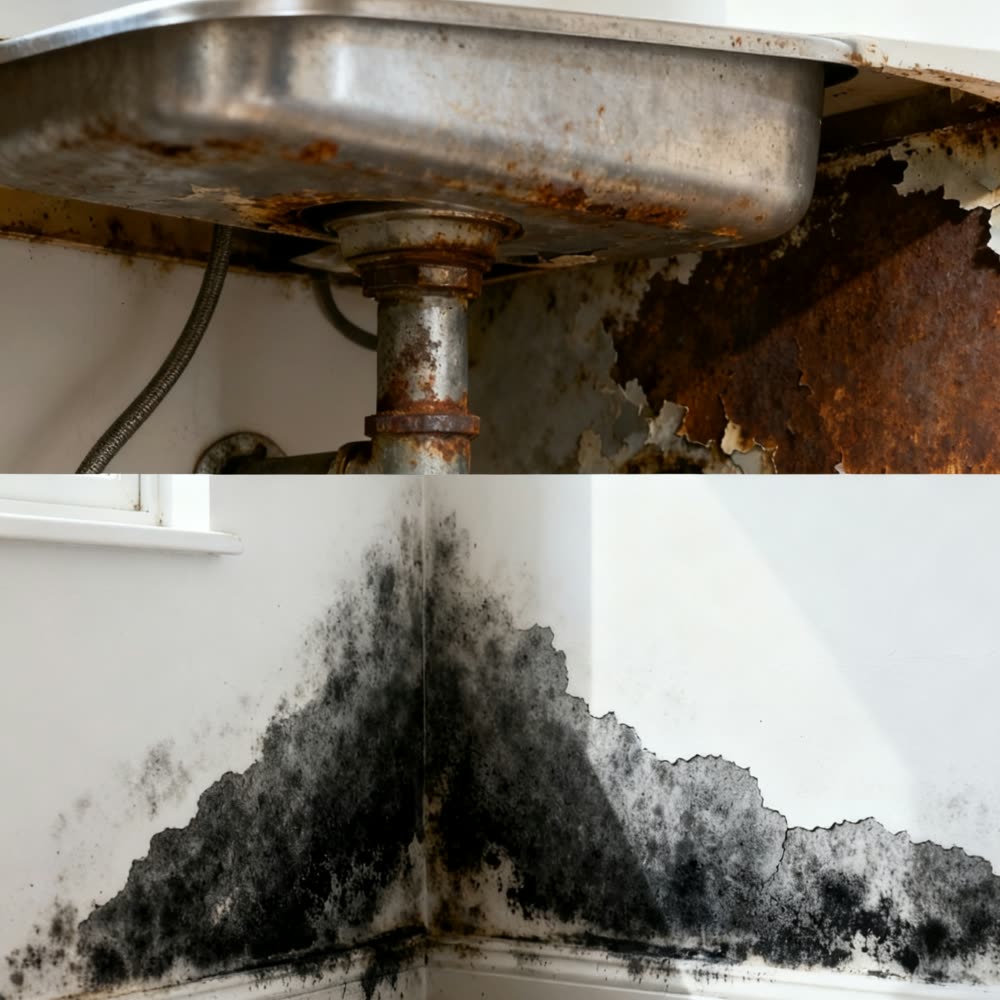
If you’re unsure which option fits your needs, this guide compares calcium chloride vs silica gel in terms of absorption performance, safety, longevity, and best-use scenarios.
Calcium Chloride Moisture Absorber vs Silica Gel: Fast Answer
Calcium chloride does absorb moisture, but it usually turns that moisture into liquid brine. That makes it useful for some damp rooms, closets, basements, garages, RVs, or container-style absorbers. Silica gel is usually better when you need a dry, reusable, non-leaking moisture absorber for enclosed items such as electronics, tools, documents, cameras, safes, packaging, collectibles, or flower drying.
| Use case | Better fit | Why |
|---|---|---|
| Damp basement, closet, garage, or larger open space | Calcium chloride moisture absorber | High water uptake can help in very humid spaces when the liquid brine is securely contained. |
| Electronics, cameras, tools, documents, ammo boxes, safes, or storage bins | Silica gel desiccant | It stays dry to the touch, can be recharged, and is easier to place near valuables without liquid leakage. |
| Flower drying, resin crafts, keepsakes, and small sealed containers | Color-indicating silica gel | It gives visible saturation feedback and can be recharged for repeated use. |
| Shipping or temporary bulk moisture control | Depends on containment and item sensitivity | Calcium chloride can suit high humidity loads, while silica gel is safer for leak-sensitive products and clean packaging. |
Calcium Chloride vs Silica Gel FAQ
Does calcium chloride absorb moisture?
Yes. Calcium chloride is highly hygroscopic, so it pulls water from humid air. In many consumer moisture absorbers, that water becomes liquid brine, which is why the absorber needs a sealed, spill-resistant container.
Is calcium chloride better than silica gel?
It depends on the job. Calcium chloride can be better for very damp open spaces where liquid collection is acceptable. Silica gel is usually better for enclosed valuables, reusable packets, and situations where leaking liquid would be a problem.
Is a calcium chloride dehumidifier safe?
It can be used safely when kept upright, contained, and away from surfaces or items that could be damaged by liquid brine. Do not place it loose beside electronics, documents, metals, or delicate stored goods.
Can silica gel replace calcium chloride?
For sealed boxes, safes, cameras, electronics, documents, tools, flowers, and product packaging, silica gel is often the more practical replacement. For a large damp room or closet, you may need larger capacity or a different moisture-control setup.
Which one is reusable?
Silica gel is commonly reusable after proper recharging. Calcium chloride moisture absorbers are usually single-use because the material dissolves into collected liquid.
Choose Your Next Wisedry Step
Turn this comparison into the right desiccant size, recharge plan, or product path.
 Choose packet amountEstimate the right silica gel amount for boxes, safes, storage bins, and cases.Open amount guide
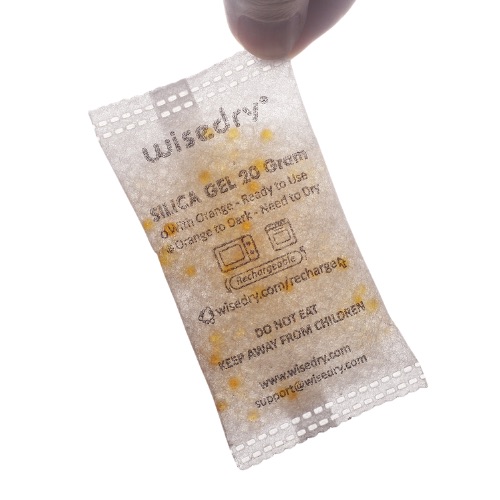 Recharge instructionsUse reusable silica gel correctly after it absorbs moisture.Recharge hub
 Shop WisedryChoose reusable desiccants for storage, valuables, and moisture control.Shop now
What Is Calcium Chloride?

Calcium chloride is a highly hygroscopic salt, meaning it aggressively attracts moisture from the air. It is commonly used in:
- Large room dehumidifiers
- Closet moisture absorbers
- Basement humidity control
- Damp garage or RV spaces
How It Works
Calcium chloride does not simply “absorb” moisture — it dissolves into liquid brine as it pulls water from the air.

Pros of Calcium Chloride
- Extremely strong moisture absorption
- Excellent for highly humid areas
- Affordable and widely available
- Works for large open spaces
Cons of Calcium Chloride
- Turns into liquid brine (can leak if spilled)
- Not suitable for safes, electronics, documents
- Not reusable
- Can damage metal surfaces if leaked
- Not a good option for enclosed containers
Because it creates liquid, calcium chloride must always be kept in a sealed, drip-proof container.
What Is Silica Gel?

Silica gel consists of porous amorphous silica that absorbs moisture into tiny internal pores. It stays dry to the touch and never liquefies.
Silica gel is used in:
- Electronics and camera storage
- Gun safes
- Ammunition boxes
- Document archives
- Flower drying
- Resin crafting
- Shoe boxes and clothing storage
- Home moisture control
Pros of Silica Gel
- Stays dry (no liquid leaks)
- Excellent for enclosed spaces
- Works well for long-term storage
- Reusable — can be reactivated in oven or microwave
- Non-toxic (avoid cobalt-chloride blue types)
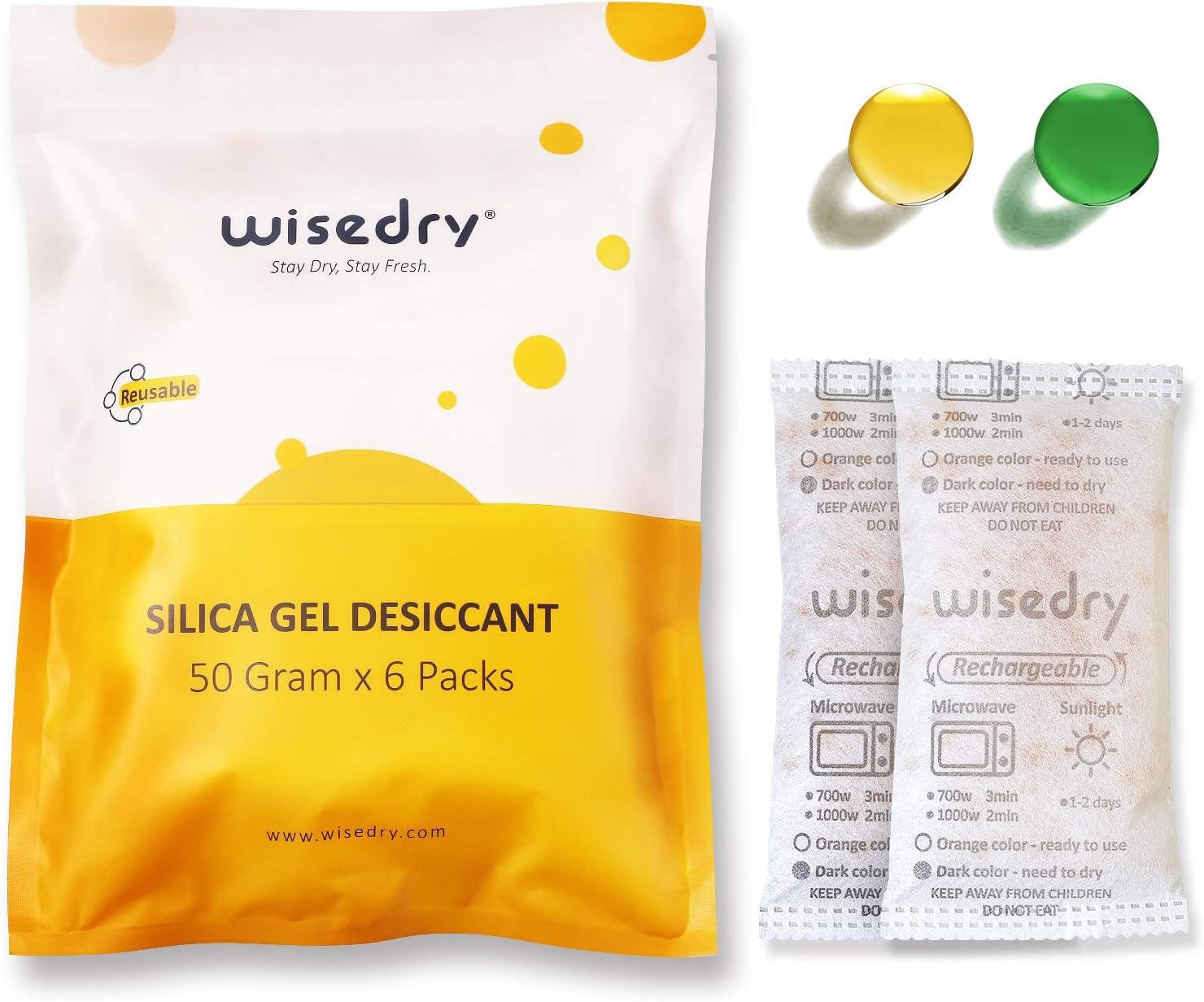
- Available in orange color-indicating versions
- Perfect for delicate items like photos, flowers, tools
Cons of Silica Gel
- Slightly more expensive than calcium chloride
- Less effective for large rooms or open spaces
- Requires reactivation after saturation
Silica gel is ideal for safe, clean, long-lasting moisture protection.
📊 Calcium Chloride vs. Silica Gel: How They Compare
| Feature / Performance | Calcium Chloride | Silica Gel |
|---|---|---|
| Absorption Strength | ★★★★★ | ★★★★☆ |
| Creates Liquid | Yes | No |
| Reusable | No | Yes |
| Long-Term Storage | Poor | Excellent |
| Best For | Rooms, closets, basements | Safes, electronics, documents, flowers |
| Mess-Free | No | Yes |
| Safety | Can irritate skin; liquid can corrode surfaces | Non-toxic (orange type) |
| Cost | Low | Moderate |
🏆 Which One Should You Choose?
Choose Calcium Chloride If You Need:
- Moisture control in large spaces
- Strong dehumidifying power
- A solution for high humidity areas
- Closet or room dehumidifiers
Calcium chloride is best for open environments, not enclosed containers.
Choose Silica Gel If You Need:
- Long-term protection
- Moisture control in small or sealed spaces
- Electronics or firearm storage
- Preservation of photos, collectibles, or documents
- Flower drying or resin crafting
- A reusable, clean option
Silica gel is the superior choice for storage, safes, crafting, and delicate items.
🎨 For Crafters and Flower Preservation
If you dry flowers or create resin crafts:
🌼 Only silica gel works — calcium chloride will destroy flowers.
Silica gel crystals keep petals intact, preserve shape, and maintain color.
🔥 Color-Indicating Silica Gel (Safer Option)
Choose orange indicating silica gel:
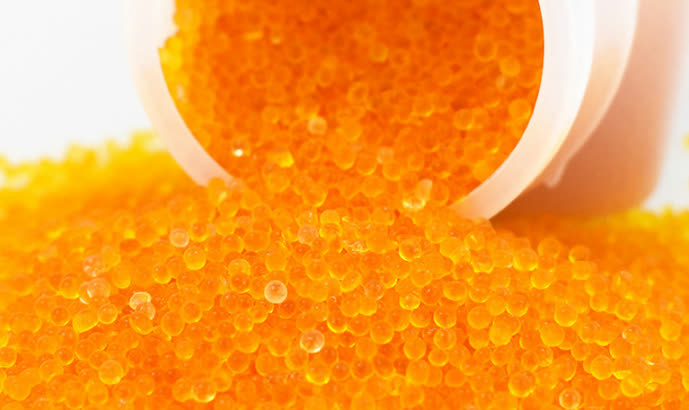
- Orange → Green = moisture-saturated
- Free of toxic cobalt chloride
Avoid blue indicating silica gel, as it contains harmful chemicals.
🧪 Final Thoughts
When comparing calcium chloride vs silica gel, the “best” option depends on your environment.
- For rooms, closets, and high-humidity areas → choose calcium chloride.
- For storage, valuables, electronics, flowers, and enclosed spaces → choose silica gel.
In most household and preservation situations, silica gel is the cleaner, safer, reusable, and more practical solution.
🔗 Shop High-Performance Silica Gel Desiccants
Looking for reusable silica gel packets for moisture control?