How Are Silica Gel Packets Made?
A silica gel packet combines two manufactured parts: porous silica gel and a vapor-permeable sachet. A common production route forms hydrated silica from a silicate solution, then ages, washes, dries, and sizes the material. A packing line meters the finished beads or granules into sachet material, seals the edges, prints the required label, and checks the packet before packing it in a moisture-barrier outer bag.
This page explains the manufacturing path. If you want the practical definition, uses, and storage limits instead, start with What Is a Silica Gel Packet?
The Short Version: Material First, Packet Second
- Form the silica network: a silicate feed is converted into hydrated silica under controlled conditions.
- Age and wash it: the wet gel is allowed to develop, then soluble reaction by-products are removed.
- Dry and activate it: water is removed while preserving the porous structure that provides internal surface area.
- Size the particles: the dry material is screened or formed into the bead or granule range specified for the product.
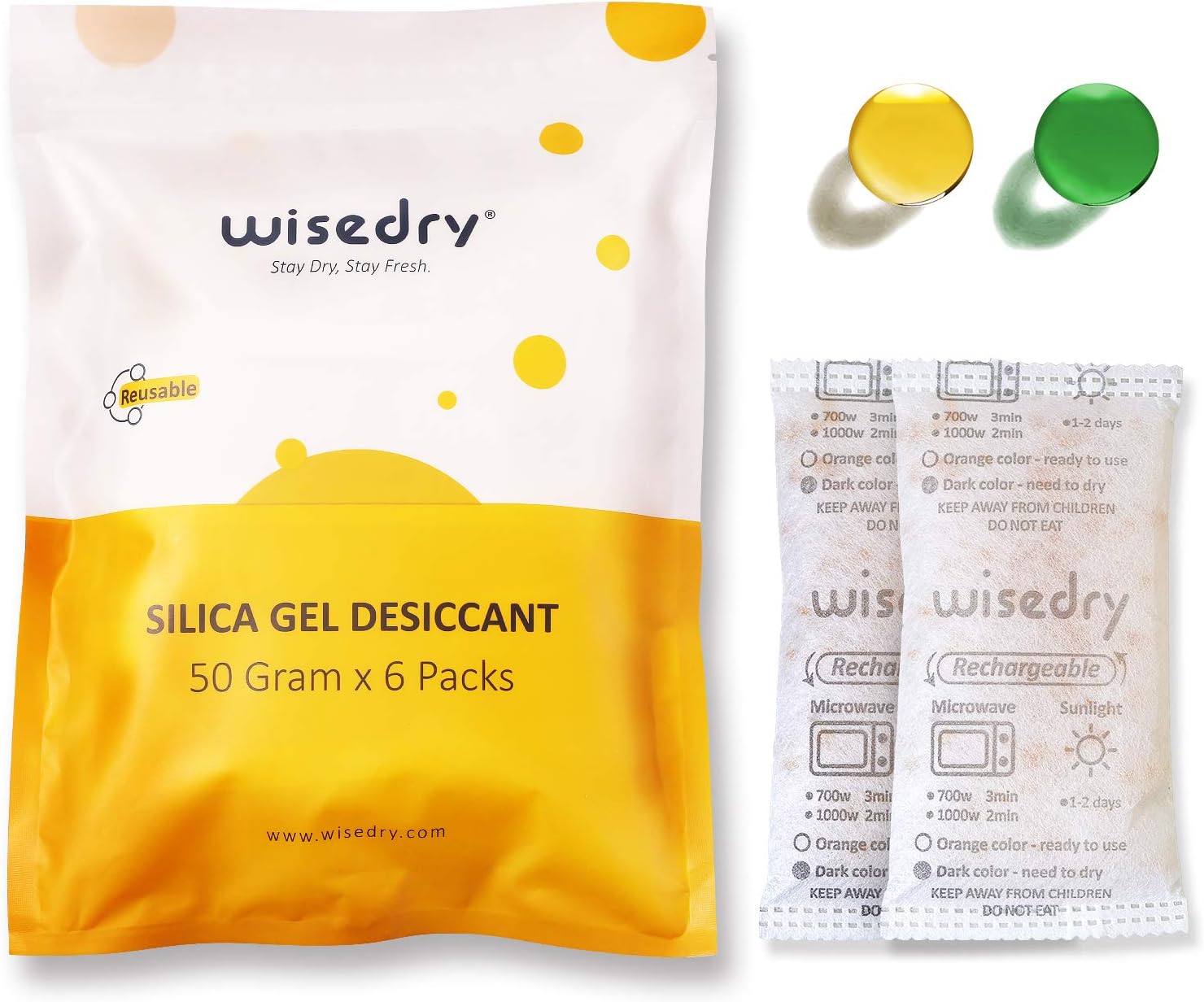
- Fill and seal the sachet: a measured quantity goes into a wrapper that admits water vapor while containing the particles.
- Inspect and protect the finished packets: fill weight, seams, labeling, and product performance are checked before packets are sealed against ambient humidity for storage and shipping.
The exact chemistry, drying method, particle shape, wrapper, indicator, and test limits vary by manufacturer and product grade. This is a process map, not a factory recipe or a substitute for the specification of a particular packet.
Step 1: Build a Porous Silica Network
Silica gel is not a soft gel inside the finished sachet. It is solid, amorphous silicon dioxide with a network of very small pores. One established manufacturing route starts with an aqueous sodium-silicate solution and adds acid under controlled conditions. The resulting silica particles link into a water-filled gel network.
Reaction conditions matter because they influence the pore structure, surface area, particle behavior, and final adsorption curve. That is why two products described simply as “silica gel” should not be assumed to have identical performance. For the material science behind those pores, read Silica Gel Structure: How Its Porous SiO₂ Network Adsorbs Water.
Step 2: Age, Wash, and Dry the Gel
The fresh wet gel is aged so its structure can develop. It is then washed to remove soluble salts and other reaction residues. After washing, the material is dried. Drying removes water from the pore network and leaves the internal surface available to adsorb water vapor again.
There is no single drying method for every silica grade. Published research on sodium-silicate-based mesoporous silica compares oven, microwave, and spray drying and shows that the drying route can change surface area, pore volume, pore size, density, and absorption behavior. A responsible product comparison therefore uses data measured under stated conditions rather than a generic capacity claim.
Step 3: Create the Required Bead or Granule Size
Once dry, silica can be screened, milled, or formed to reach a specified particle-size range. Particle size affects dust control, packing density, flow through filling equipment, and how the material fits inside the selected sachet. Round beads and irregular crystals may look different, but shape alone does not prove that one product has greater usable capacity.
Some products also use an indicator system so a visible color change helps users decide when to inspect or recharge the product. The indicator chemistry and color meaning are product-specific. Do not transfer a color rule or heating instruction from one packet to another. The silica gel crystals guide explains when loose material and finished packets serve different workflows.
Step 4: Choose a Sachet That Lets Water Vapor Reach the Gel
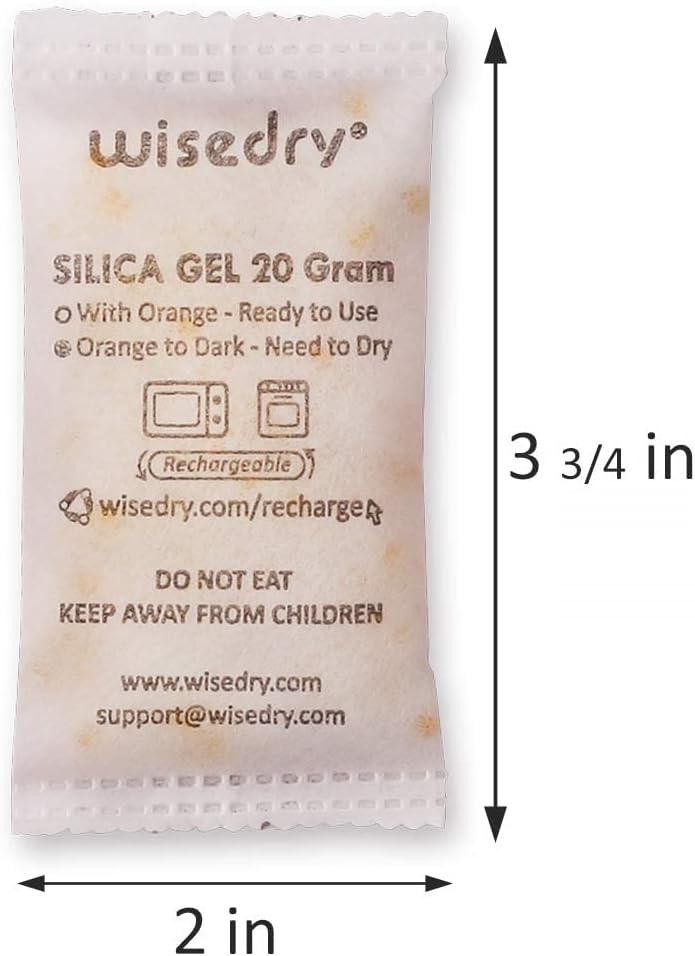
The wrapper is a working part of the product, not decoration. It must let water vapor move toward the desiccant while keeping particles and ordinary dust contained. Sachet materials and constructions vary with the application, required strength, sealing process, dust limit, printing, and any relevant packaging rules.
A packet that looks intact can still perform differently from another packet containing the same nominal amount of silica gel if the wrapper, dimensions, seam design, or test conditions differ. Compare the complete packet specification—not only the loose media inside it.
Step 5: Meter, Seal, Print, and Cut
On a packet line, the desiccant is metered by weight or volume into formed sachet material. The line closes the longitudinal and end seams, prints or applies the required identification, and cuts the web into individual packets. Controls must keep loose particles out of the seal area because contamination at a seam can weaken the closure.
The finished packet should identify the product clearly enough for the intended use and handling route. Generic phrases such as “Do Not Eat” are warnings, not a full technical specification; buyers still need the named desiccant, packet amount, relevant instructions, and supplier documentation.
Step 6: Check the Finished Packet
Useful quality checks focus on measurable properties of the finished product:
- Material identity and condition: the specified desiccant and indicator, when used.
- Fill amount: packet weight stays within the product tolerance.
- Particle and dust control: the media matches the stated range and the wrapper contains it.
- Seal integrity: seams are closed, clean, and able to withstand normal handling.
- Adsorption data: capacity is reported with temperature, relative humidity, duration, and test basis.
- Label and traceability: product and batch information match the intended packet.
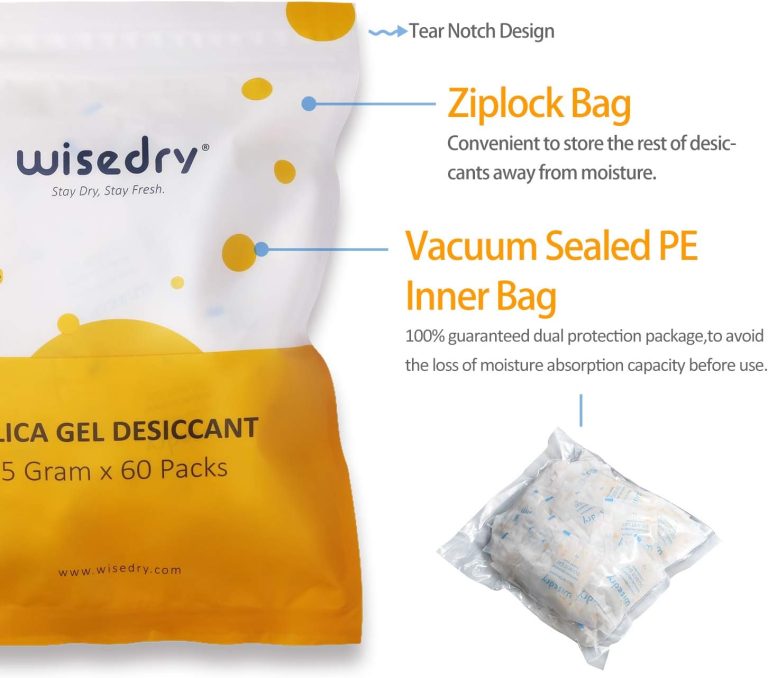
After production, packets need protective outer packaging because an unprotected desiccant starts taking up ambient moisture before the customer uses it. Keep unused packets in a well-sealed package and follow the exact product instructions after opening.
What the Manufacturing Process Does Not Tell You
- It does not tell you how much desiccant your container needs. Use volume, seal quality, opening frequency, humidity, and the product data with the Wisedry Amount Guide.
- It does not prove that every silica gel packet is rechargeable. Only recharge a finished packet when its instructions explicitly allow it.
- It does not make a torn or leaking sachet acceptable. Replace a packet with a damaged wrapper or seam.
- It does not make the packet suitable for every application. Match the material, wrapper, size, instructions, and documented test conditions to the use case.
Frequently Asked Questions
Is silica gel a liquid before it goes into the packet?
The manufacturing process includes a water-filled gel stage, but the finished packet contains dried solid beads or granules—not a liquid gel.
Why is the packet wrapper breathable?
Water vapor must reach the porous silica inside. The wrapper therefore balances vapor access with particle containment and seam strength.
Are all silica gel packets made the same way?
No. Manufacturers can use different silica grades, particle shapes, indicators, wrappers, fill amounts, sealing processes, and test methods. Compare the finished product specification.
Why are unused packets sealed in an outer bag?
Silica gel begins adsorbing moisture when exposed to humid air. Barrier packaging helps preserve useful capacity until the packets are placed in their intended container.
Sources and Scope
- International Nuclear Information System record for Sarawade et al. — sodium-silicate and sulfuric-acid wet-gel preparation plus the effect of drying methods on mesoporous silica properties.
- Materials (2019): Desiccant Films Made of LDPE with Dispersed Silica Gel — peer-reviewed context for silica gel, water-vapor adsorption, permeability, and desiccant sachets.
These sources support the material and packaging principles. The exact Wisedry packet construction, fill tolerance, and recharge method remain product-specific; follow the label and guide for the exact item you own.
Use the Packet, Not Just the Manufacturing Story
Start with the practical silica gel packet guide, calculate a starting amount with the Amount Guide, or ask Wisedry Support when a packet label or instruction is unclear.