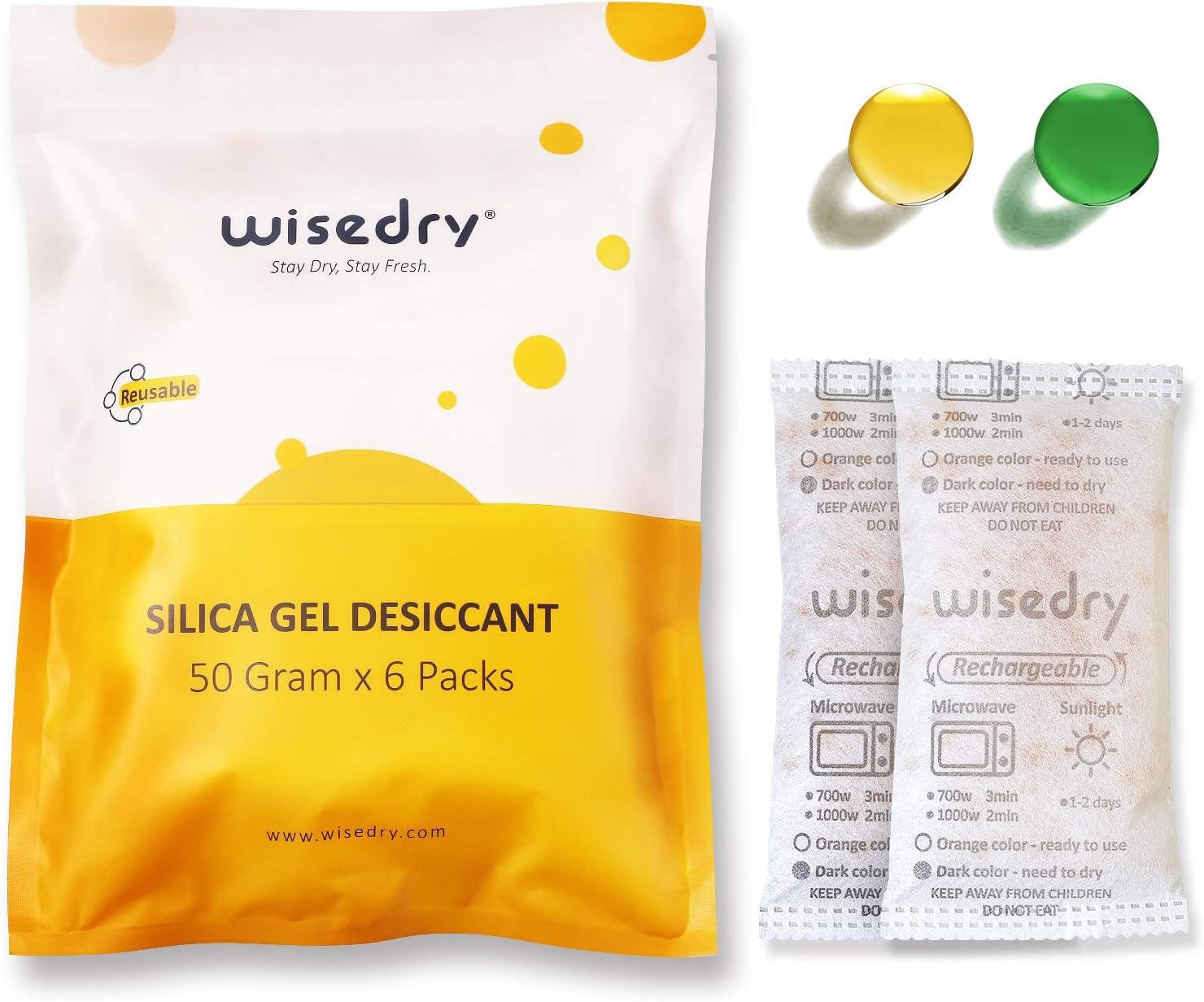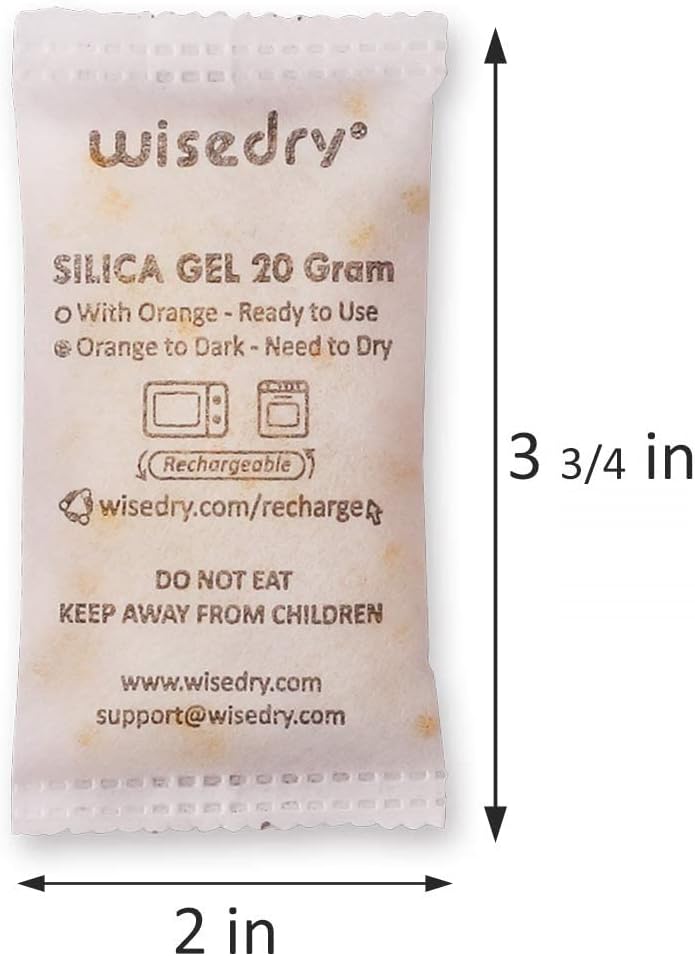
Silica gel packets do not expire like food. They lose useful moisture capacity when they become saturated, and a packet should be replaced when it is torn, leaking, contaminated, or not designed for recharging. An unopened packet can remain useful for a long time only if its outer packaging still keeps humid air out.
There is no honest universal answer such as “six months” or “two years.” A packet in a tightly sealed box may work far longer than one in a car, open drawer, humid room, or container that is opened every day. Check the packet and the storage setup rather than relying on age alone.
Track Exposure, Not the Purchase Date
The useful-life clock changes when a packet is exposed to humid air, not simply when it was bought. A packet kept inside intact moisture-resistant outer packaging is in a different condition from one that has been sitting in an open drawer, even if both were purchased on the same day.
- Record the opened date. Note when the outer package was first unsealed.
- Record the placed or recharged date. This separates time in storage from time exposed to room air.
- Record the next check—not a guaranteed expiry date. Move the check earlier after a humid spell, a seal problem, wet contents, or more frequent opening.
This three-date record helps you compare real storage cycles without inventing a universal lifespan. Use the recharge-date label guide for a reusable format, or follow the storage-box checkup routine when your conditions are still unknown.
Use This Four-Outcome Check
Keep using it
Keep the packet in service when it is intact, its indicator still shows the active state described in its product instructions, and the enclosed space remains stable.
Recharge it
Recharge only a reusable packet whose instructions provide a reactivation method. Recharge when its indicator shows saturation or when the packet has clearly taken up moisture and the storage setup itself is still sound.
Replace it
Replace a packet that is torn, leaking beads, contaminated by oil or dirt, heat-damaged, or of unknown construction. Do not assume every small packet found in product packaging can be heated or reused.
Fix the setup first
If moisture returns quickly, inspect the container seal, damp contents, opening frequency, and packet amount. A fresh or recharged packet will saturate quickly when new moisture keeps entering.
What “Expired” Usually Means
Searchers often use “expired” for several different conditions. A saturated packet has used most of its available capacity but may be reusable. A damaged packet has a physical problem and should be replaced. A packet stored in leaky packaging may have absorbed room moisture before use. A packet that is too small may be working normally but lack enough capacity for the space.
These are different decisions, so age by itself is a weak test. If you are unsure which condition applies, start with the Wisedry saturation checklist.
How Long Do Silica Gel Packets Last?
Useful life depends on humidity, air leakage, packet capacity, container volume, opening frequency, and whether the stored items began dry. In a sealed container with dry contents, a packet may remain useful for months or longer. In a frequently opened container or humid vehicle, it may need attention much sooner.
Avoid writing a future replacement date as if it were guaranteed. A better routine is to record when the packet was placed or recharged, check the product indicator if it has one, and shorten the next check interval when conditions change.
Does Silica Gel Expire If the Packet Is Unopened?
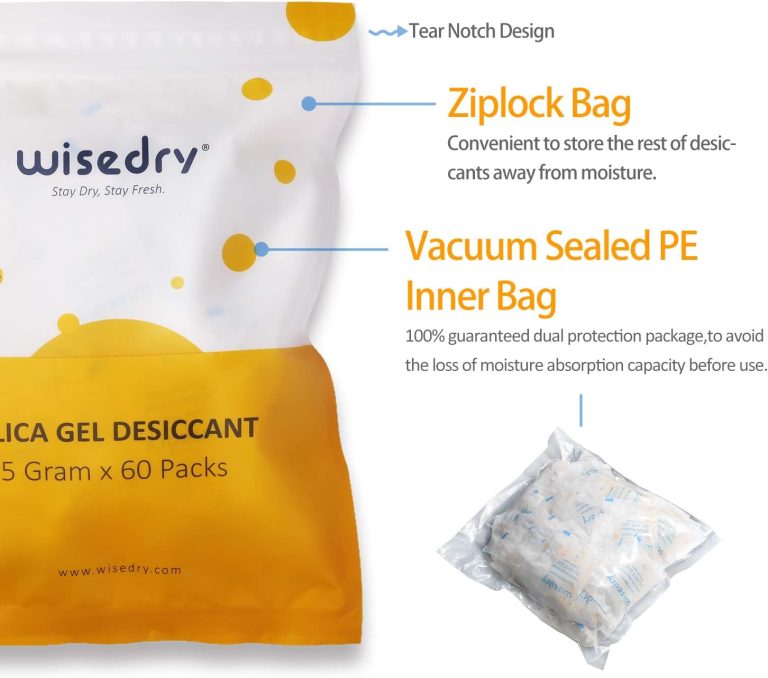
Not in the food-expiration sense. The key question is whether the outer package is still moisture-resistant. A factory-sealed pouch or airtight container can keep unused packets ready much longer than a paper envelope, open bag, or damaged package. Once the storage seal is broken, the packets begin interacting with room air.
Before using an older unopened packet, check that the outer package is intact and then inspect the packet itself. If its indicator already shows the saturated state described by the manufacturer, follow the product instructions before use.
How to Tell Whether It Is Still Working
- Read the product indicator correctly. Indicator colors are product-specific; follow the Wisedry instructions for the exact packet or bead type.
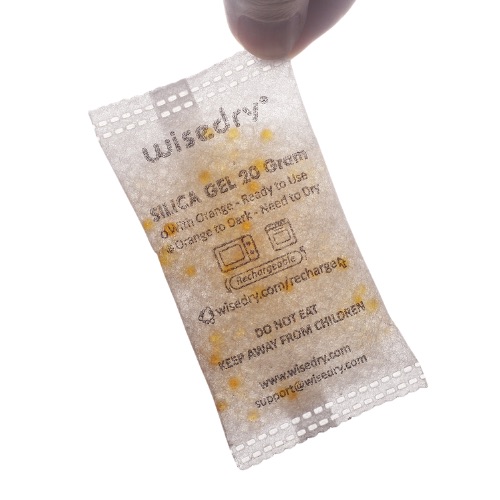
- Inspect the packet. Replace it if the wrapper is torn, leaking, stained, or heat-damaged.
- Check the container. A loose lid, worn gasket, or repeated opening can make a good packet saturate quickly.
- Check the contents. Wet items add a large moisture load and should be dried before enclosed storage.
- Watch what happens after service. If moisture returns soon after a correct recharge, reassess seal quality and packet amount instead of repeating the same recharge indefinitely.
Recharge or Replace?
Recharge when the packet is explicitly reusable, remains intact and clean, and has a product-specific recharge method. Replace when it is damaged, contaminated, unknown, or not intended for reactivation. Use the Wisedry recharge hub for product-specific instructions, then let the packet cool according to those instructions before returning it to storage.
If the packet repeatedly saturates too quickly, use the Wisedry Amount Guide and review the container seal before buying more packs. More desiccant cannot compensate for an active leak or wet contents.
Silica Gel Expiry FAQ
Do silica gel packets expire?
Silica gel does not expire like food, but a packet can become saturated, damaged, contaminated, or exposed to humid air before use. The right action depends on condition and product instructions, not age alone.
How long do silica gel packets last?
There is no fixed universal duration. A packet may last months or longer in a sealed container and much less time in a humid, leaky, or frequently opened space.
Do unopened silica gel packets expire?
They can remain useful for a long time when the outer packaging keeps moisture out. If that packaging is open, torn, or moisture-permeable, the packets may absorb room humidity before use.
Can every silica gel packet be recharged?
No. Recharge only products that are identified as reusable and follow their own instructions. Replace unknown, disposable, torn, leaking, or contaminated packets.
Why did my packet saturate so quickly?
Common causes include a poor seal, damp contents, frequent opening, high humidity, or too little desiccant for the space. Diagnose those conditions before assuming the packet is defective.
Choose the Right Next Step
Check saturation, follow the recharge guide, or ask Wisedry Support when the packet type or condition is unclear. If replacement is the right decision, shop reusable Wisedry desiccants.