Drone and action camera cases are small, dense, and easy to close before everything inside is fully dry. A reusable desiccant pack can help manage moisture inside the closed case, but placement matters. If the packet is crushed under a camera, buried under damp straps, blocking the seal, or sitting near contacts and moving parts, it creates a handling problem instead of a cleaner storage routine.
Use desiccant as storage support after the gear is dry. Do not use it as a rescue method for wet electronics, soaked foam, battery issues, or a case that was left open in rain.
Quick Answer
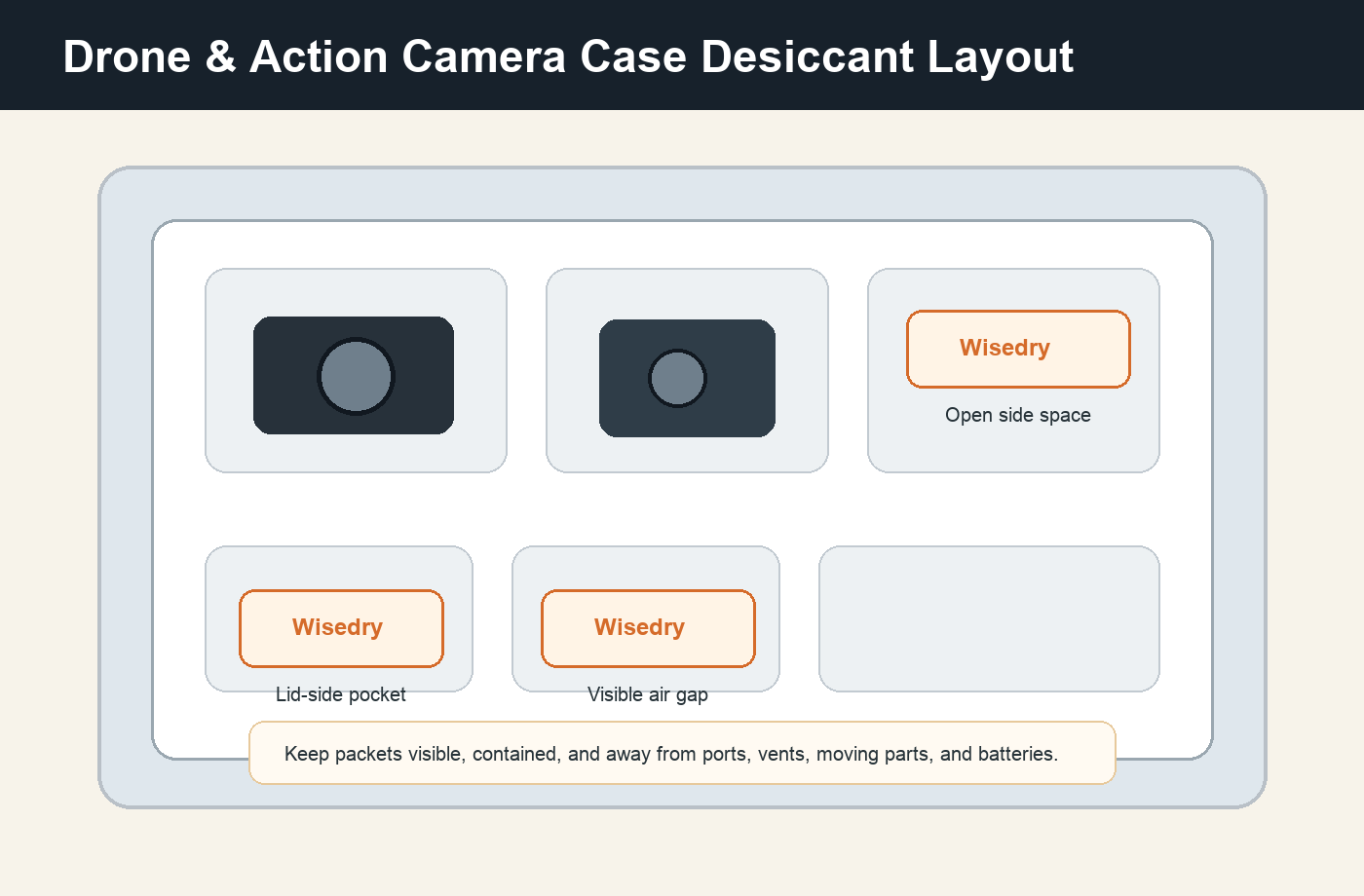
Put desiccant packs in an open, visible area of the case where air can reach them and where they cannot press against ports, contacts, vents, gimbals, moving parts, or batteries. Good locations include a side mesh pocket, a clear corner of the foam tray, a lid-side pocket, or an accessory compartment that shares air with the rest of the case.
Avoid loose beads, crushed packets, and any placement that blocks the lid seal or latch. After field use, dry the gear and case materials first, then return active desiccant to the closed case.
Shop Wisedry reusable silica gel packets
What Desiccant Can And Cannot Do In A Gear Case
A desiccant pack helps with the air inside a closed case. It can absorb moisture that enters during normal handling, storage, and short openings. That makes it useful for camera accessories, drone controllers, small mounts, lens covers, cables, and cases that sit between trips.
It cannot make a wet device safe to power on. It cannot repair water damage, fix condensation inside a camera, dry soaked foam quickly, or replace manufacturer instructions for batteries and electronics. If a drone, action camera, controller, or battery has been exposed to water, follow the device maker’s guidance before storage or use.
The practical goal is simple: close the case only after the contents are dry enough for storage, then keep active desiccant in a place where it can be checked and recharged.
Best Placement Zones
Look for a spot with three traits:
- It shares the same closed air space as the gear.
- Air can move around the packet.
- The packet stays visible and easy to remove for checking.
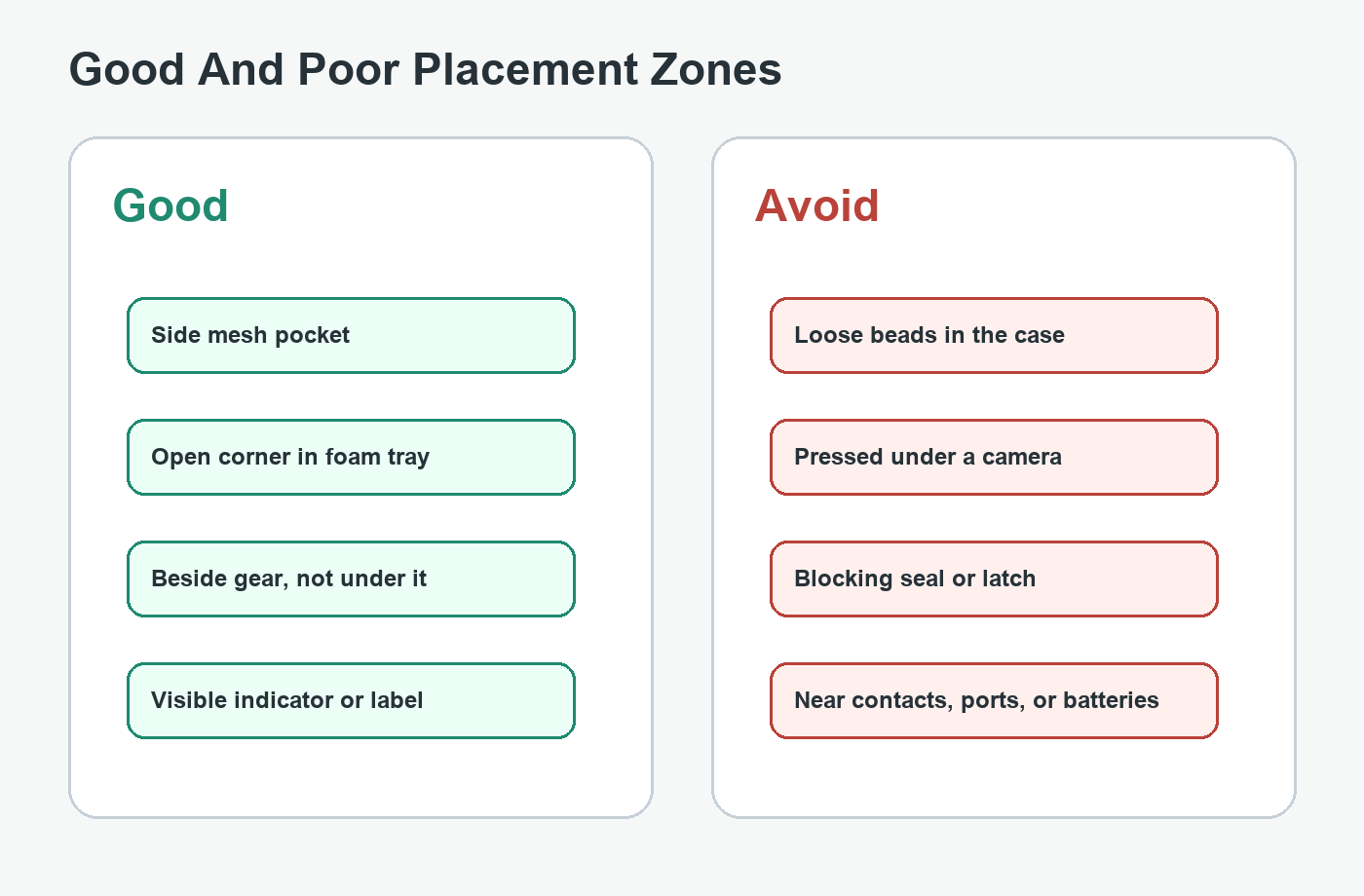
Good placement zones usually include:
- A side mesh pocket inside the case.
- A clear corner in the foam tray.
- A lid-side compartment that does not touch screens or lenses.
- A shallow accessory pocket away from charging contacts.
- An open space beside mounts, straps, cables, or lens covers.
For broader small-gear storage placement rules, the Wisedry guide on where to put silica gel in a camera bag, lens case, or safe gives useful adjacent examples.
Places To Avoid
Do not place packets where they can interfere with the case or the equipment.
Avoid:
- Loose silica gel beads in the case.
- Packets pressed directly under a camera, drone body, controller, or lens.
- Packets wedged into the lid seal, latch path, hinge area, or zipper path.
- Packets touching battery contacts, charging terminals, ports, microphones, speakers, vents, fans, or gimbals.
- Desiccant under foam that gets compressed every time the case closes.
- Any packet that could slide into a moving part or tight opening.
Packets and pouches are usually better than loose beads for compact gear cases because they are easier to remove, recharge, and inspect. If you use loose beads, keep them inside a sealed breathable holder that cannot open accidentally.
How Many Packs Should You Use?
Start with the case size and how often it is opened. A small single-camera action case may need only one small packet if the case seals well and the gear goes in dry. A larger drone case with a controller, mounts, spare props, cables, and foam compartments may need more capacity or several smaller packets spread across the case.
Use more active desiccant when:
- The case is large or divided into several compartments.
- The seal is only average.
- Foam, straps, mounts, or bags sometimes go in slightly damp.
- The case is opened often during travel or field work.
- You store the case in a humid room, garage, vehicle, or workshop.
Use the Wisedry silica gel amount guide as a sizing starting point, then adjust based on indicator color, weight change, and real use.
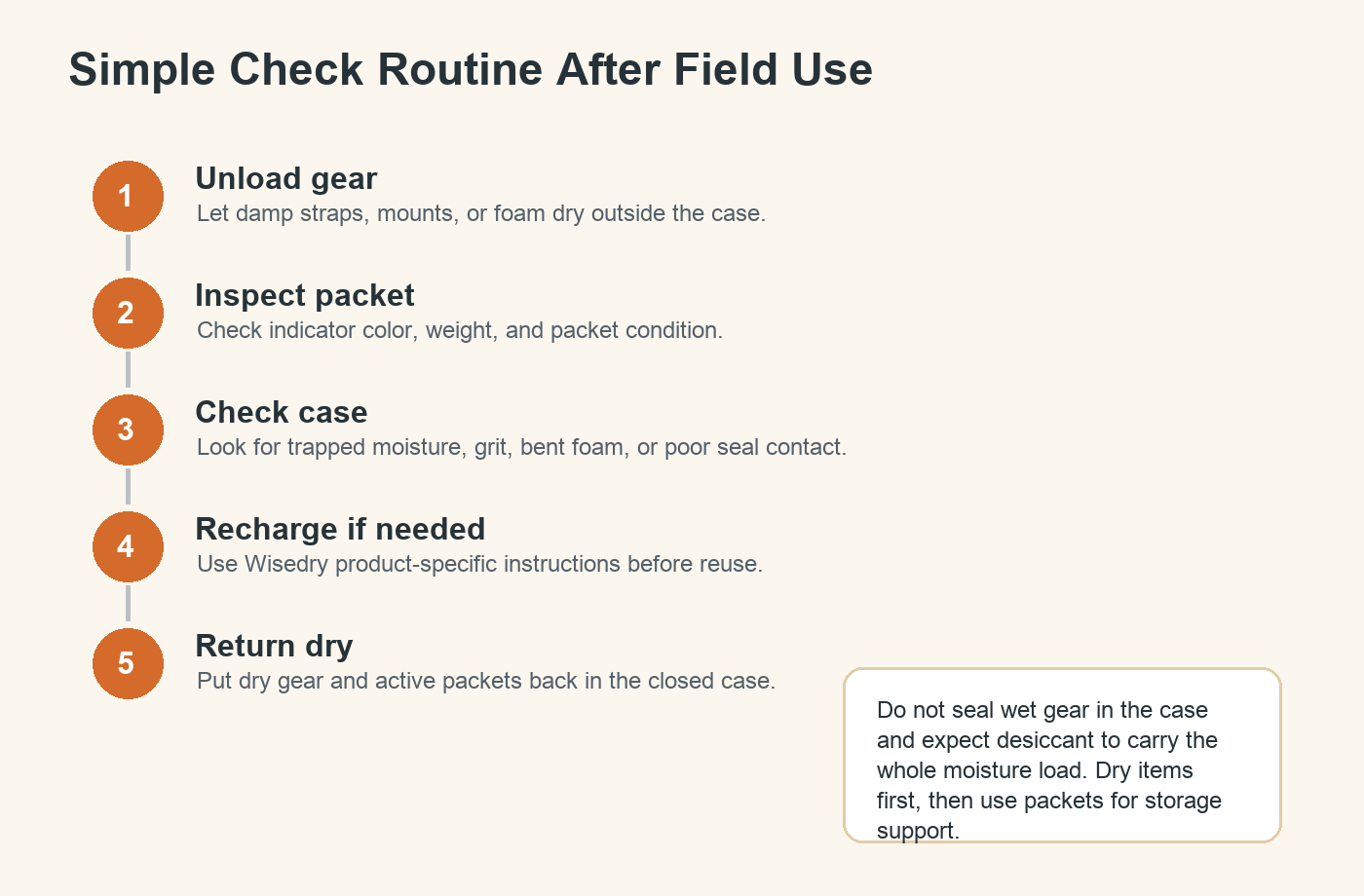
A Simple Post-Use Routine
After filming, flying, hiking, beach use, snow use, or humid travel, do not close the case and forget it. The case can trap moisture from straps, foam, mounts, cables, dust, and fingerprints.
Use this routine:
- Remove gear, straps, mounts, and foam inserts that feel damp.
- Let damp items dry outside the case before storage.
- Wipe grit, droplets, or moisture from the case interior.
- Check whether the desiccant indicator shows saturation or whether the packet feels unusually heavy.
- Recharge or replace saturated desiccant using the product-specific instructions.
- Return dry gear and active desiccant to the case.
- Close the case fully and keep the packet visible for the next check.
When To Check Or Recharge The Packet
Check the packet soon after a new setup, then adjust the interval from what you see. A case that stays closed on a shelf may need less frequent checks than a field case opened every weekend.
Check sooner when:
- The indicator color changes toward its saturated state.
- The packet feels heavier than usual.
- The case was used in rain, fog, snow, sea air, or a humid room.
- Foam, straps, or mounts were put away before they were fully dry.
- The case smells damp or the interior feels clammy.
- The case was stored in a hot vehicle, garage, or other changing environment.
If you use Wisedry packets, start with the Wisedry recharge hub and follow the specific instructions for that product size and material. For a broader timing framework, use the guide on how often to check desiccant in a camera bag or safe.
Common Mistakes
Closing The Case With Damp Accessories
Desiccant should not carry the whole moisture load from wet straps, foam, mounts, towels, or protective wraps. Dry those items separately before storage.
Blocking The Seal
Even a small packet can interfere with the lid if it sits in the seal groove or latch path. If the case does not close normally, move the packet.
Hiding The Packet Under Foam
A hidden packet is easy to forget. It may also have poor airflow and be harder to remove for recharging. Keep it visible.
Putting Desiccant Near Batteries Or Contacts
Do not pack desiccant against batteries, charging contacts, ports, or terminals. This article is not battery storage guidance. Follow the device maker’s battery instructions and keep packets in a separate open space inside the case.
Using Loose Beads Around Small Gear
Loose beads can spill into foam slots, ports, hinges, or accessories. Use a packet, pouch, or sealed breathable holder instead.
FAQ
Can I put silica gel in a drone case?
Yes, as a storage support step after the case and gear are dry. Place the packet in an open, visible area of the case and keep it away from batteries, contacts, ports, vents, gimbals, and moving parts.
Can silica gel dry a wet action camera?
Do not rely on silica gel to fix a wet camera or water-exposed electronics. Follow the device maker’s instructions. Desiccant is better used for routine storage support inside a closed case after the gear is dry.
Is loose silica gel safe in a camera case?
Loose beads are not ideal for compact gear cases because they can spill into small spaces. Use sealed packets, breathable pouches, or a closed breathable holder.
How often should I recharge desiccant in a drone case?
Recharge when the indicator shows saturation, the packet feels heavier, the case was used in humid conditions, or the case interior feels damp. Timing depends on packet size, case seal, room humidity, and how often the case is opened.
Should the packet touch the camera or drone?
No. Give the packet air access without pressing it against gear. Put it in a side pocket, open foam corner, or accessory space where it can be checked easily.
Next Steps
Set up the case so desiccant is visible, contained, and easy to check. Dry the gear and accessories before closing the case, then use active packets to support the storage environment.
For related Wisedry guidance, use the silica gel amount guide, review Wisedry recharge instructions, shop reusable silica gel packets, or contact Wisedry support if a packet looks damaged or behaves unusually after correct recharge.