
Why Storage Containers Still Feel Damp With Desiccant Inside

If a storage container feels damp with desiccant inside, check wet contents, lid gaps, packet saturation, airflow, opening frequency, and pack amount.
Read Wisedry guides on silica gel safety, flower drying, moisture control, car dehumidifier bags, resin art, and product instructions.
If a storage container feels damp with desiccant inside, check wet contents, lid gaps, packet saturation, airflow, opening frequency, and pack amount.

Prepare rechargeable desiccant packs for seasonal storage: recharge fully, cool completely, check the indicator, label the date, and seal them away dry.

Use silica gel for craft supply storage with simple placement, labeling, and checkup steps that keep paper, yarn, and adhesives dry in closed boxes.

Use silica gel in holiday decoration storage with a simple dry-pack, placement, sealing, labeling, and checkup routine for seasonal containers.

Estimate silica gel for a small bouquet using container volume, flower shape, base depth, and full petal coverage instead of one fixed weight.

Flower-drying silica gel may clump after taking on moisture. Learn what to check, how to separate a routine batch, and when to recharge or contact Support.

Yes, flower-drying silica gel can often be reused. Learn how to inspect, separate, recharge, cool, label, and store crystals before your next project.
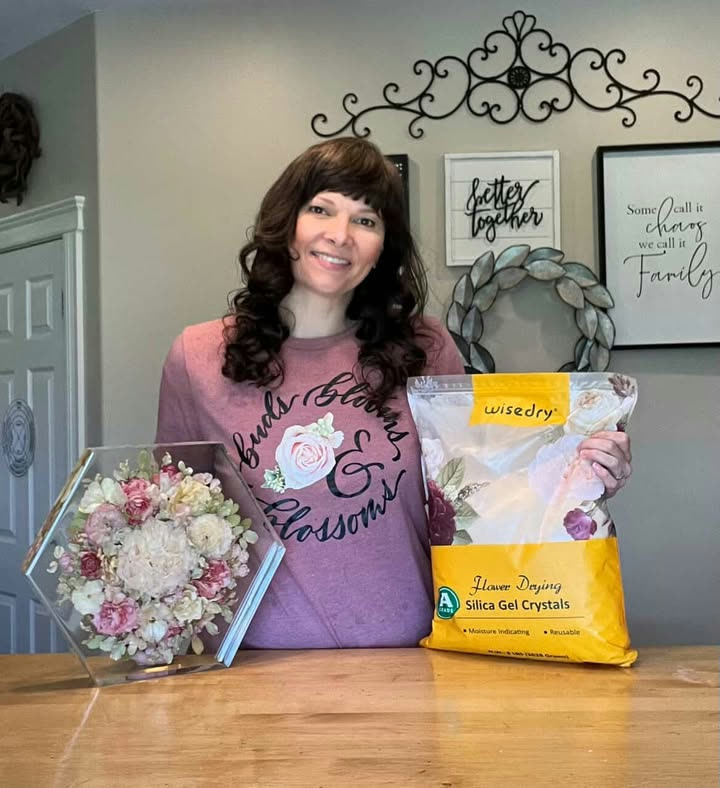
Learn how to check whether flowers are dry in silica gel using texture, petal structure, flower type, and a careful test—without relying on a fixed time.

Learn how to separate petals, stems, and visible debris from reusable flower-drying silica gel before recharging, cooling, and dry storage safely.

Set up a clean tray before removing flowers from silica gel. Organize dry tools, support fragile blooms, contain crystals, and separate debris.