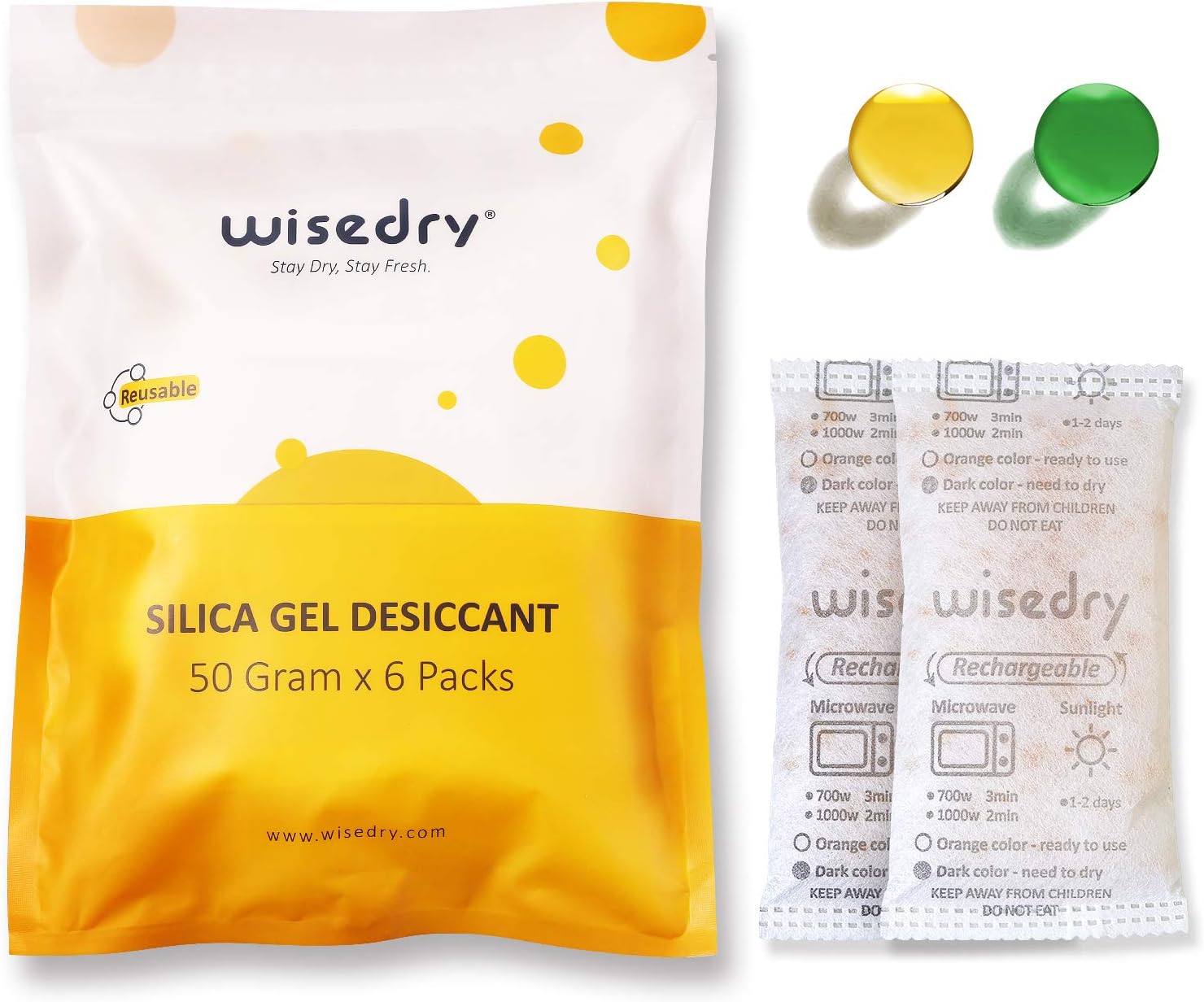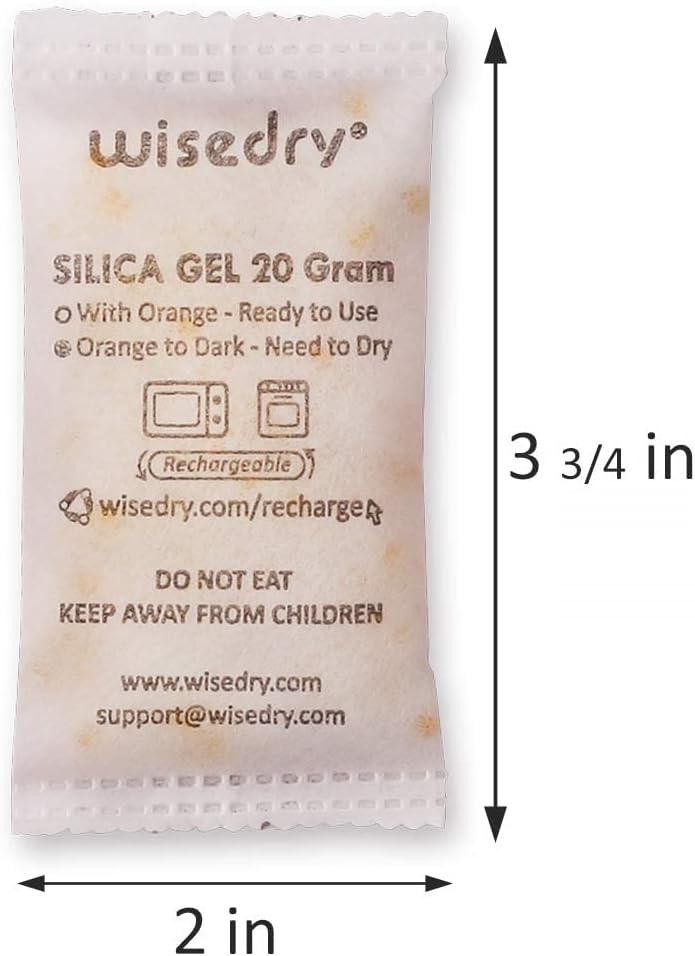
Quick answer: Recharge the pack first, let it cool fully at room temperature, confirm the indicating beads show a dry reading, write the recharge date on the pack or label, and then store it sealed in a clean container away from dust and direct sunlight. A pack that goes into seasonal storage dry, cool, and labeled is ready to work the moment the next season starts.
Seasonal gear does not get a second chance at moisture control. Holiday decorations come out of the attic already dusty; camping boxes sit in garages that swing from humid nights to hot afternoons. When a rechargeable desiccant pack goes into storage saturated, unlabeled, or still warm, it starts the off-season already behind. The routine below takes a few minutes per pack and keeps every pack ready for its next deployment.
Why Preparation Before Storage Matters
A rechargeable silica gel pack does not pause during storage — it keeps reacting with whatever air surrounds it. Three states cause most off-season problems:
- Stored saturated. A pack that never got recharged holds its trapped moisture for months. In a closed tote it can keep the local air damp, and the beads may stay dark until mid-season.
- Stored warm. Beads fresh out of an oven or microwave hold heat for longer than they feel warm to the touch. Sealed warm, they release residual moisture into the sealed air as they cool, then re-absorb it.
- Stored unlabeled. Without a recharge date, nobody remembers whether the pack is dry or half-spent. It gets skipped during checks, or it gets reused on faith.
Preparing the pack correctly removes all three failure modes before the lid closes.
Step 1: Recharge The Pack Fully
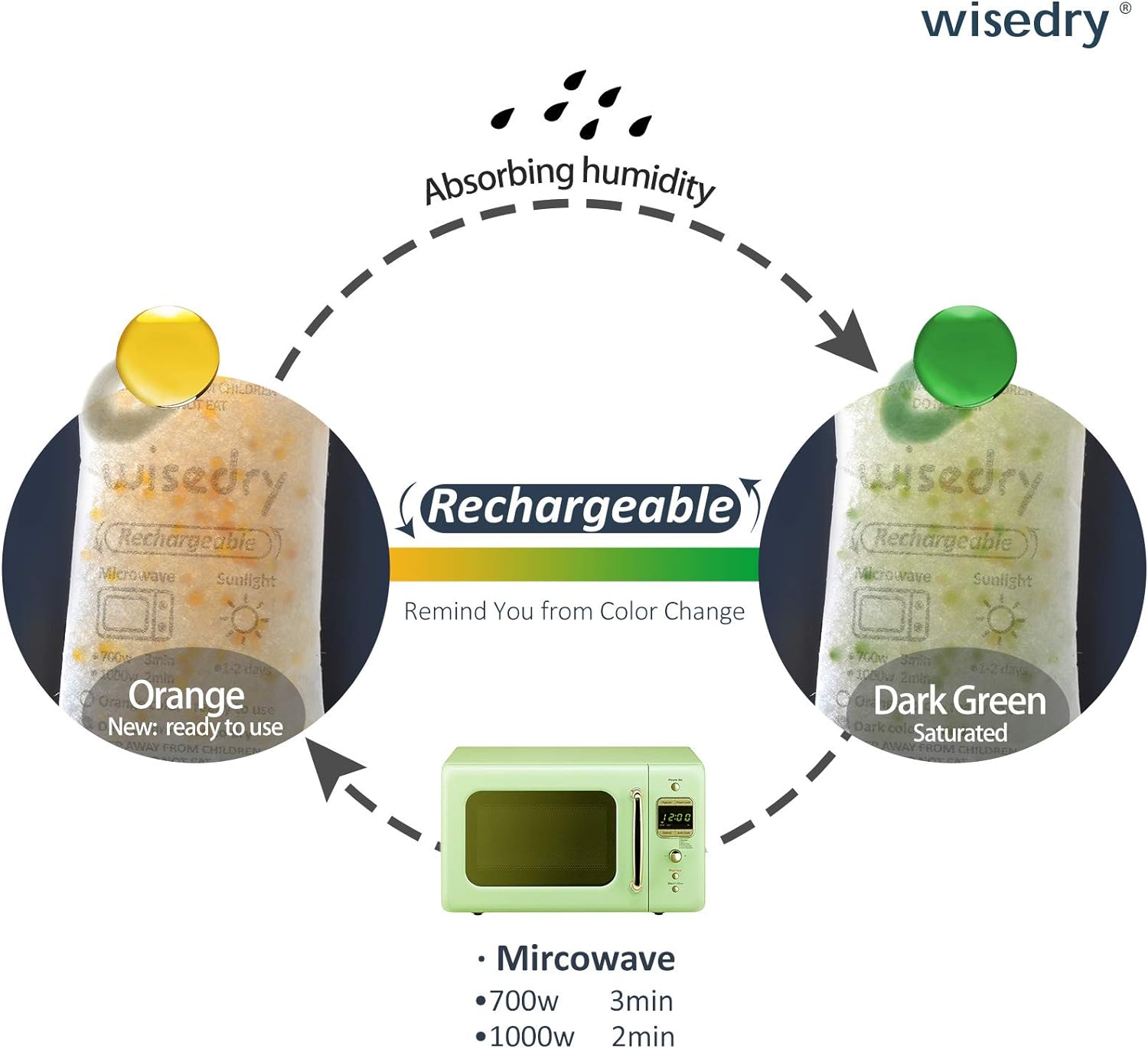
Follow the recharge instructions for your pack size — Wisedry’s recharge guide covers microwave and oven times for the medium sachets, and larger car and 500-gram bags have their own steps. The goal for storage is a complete recharge, not a quick top-up:
- Recharge until the indicating beads return to their dry color across the whole pack, not just the window side.
- Do not end early because most of the pack looks dry; mixed-color beads mean mixed moisture content.
- If the pack smells musty or the beads never return to the dry color, replace it instead of storing it.
Step 2: Cool It Completely Before It Goes Anywhere
Let the pack rest at room temperature until it feels the same temperature as anything else on the shelf — typically 30 to 60 minutes depending on pack size. Two reasons this step is non-negotiable:
- Sealed warm packs re-absorb their own released moisture. As warm beads cool inside a closed bag or box, the air around them warms, holds more vapor, and then condenses back into the beads.
- Heat softens seal films and nearby plastics. A hot pack pressed against a tote lid or a plastic wrap surface can leave impressions or stick.
If you plan to box several packs together, cool them in a single layer so the pack-to-pack contact does not trap heat.
Step 3: Check The Indicator And The Condition
Before anything gets boxed, give the pack a 30-second inspection:
- Indicator color should read dry uniformly. A pack with an indicator window that still shows a wet reading needs another recharge cycle, not storage.
- Fabric and seams should be intact with no frayed edges, pinholes, or opened corners. A damaged sachet should not go into long storage; replace it before the season starts.
- Beads visible through the window should be loose and free-flowing, not caked or clumped into a solid block. Hard clumping that survives a recharge is a replacement sign.
Step 4: Label The Recharge Date
Write the recharge date directly on the pack’s fabric with a permanent marker, or on a piece of masking tape if you do not want to mark the pack. The date answers the question nobody can answer in spring: “when was this last dried?”
A dated pack also makes rotation obvious. If you keep several packs for different containers, the date tells you which one to reach for first and which one to send for a top-up recharge. Wisedry’s guide to writing recharge dates on storage labels shows a simple format that survives a full season in a tote.
Step 5: Seal It For The Off-Season
Storage decides whether the recharge lasts weeks or the whole off-season:
- Sealed container or heavy-duty zip bag with as much air pressed out as practical. The drier the air inside, the slower the pack drifts back toward saturation.
- Away from direct sunlight, which heats the pack daily and accelerates indicator fading on some models.
- Off the garage floor if storage is in a shed or garage — floors collect the coolest, dampest air in the room.
- Not with open liquids or wet gear. A pack sealed in the same box as a damp tent liner or a bottle of camp soap will spend its reserve on someone else’s moisture.
For packs that will wait many months, a sealed tote with a gasketed lid is more reliable than a loose-lidded bin, because lid gaps slowly exchange air with the room.
A Five-Minute Pre-Storage Checklist
Run this before any pack disappears into a seasonal box:
- Recharged until the indicator reads fully dry.
- Cooled to room temperature, no warmth when pressed to the wrist.
- Indicator checked and fabric, seams, and beads inspected.
- Recharge date written on the pack or label.
- Sealed in a zip bag or gasketed tote, off the floor, away from sun.
If any step fails, fix it now — it takes minutes today and saves a soaked first weekend next season.
Common Mistakes That Undo A Good Recharge
- Bagging the pack while it is still warm. The most common mistake, and the most avoidable.
- Storing the pack loose in the same tote as the gear it protects. Loose packs near fabric items get dusty, and dust slightly blocks airflow through the fabric when the pack works next season.
- Trusting memory instead of the label. Two identical-looking packs, one recharged in June and one in August, behave differently by spring.
- Skipping the recharge because the indicator “looks mostly fine.” Partial dryness is exactly what shows up weeks later as beads that saturate early.
- Sealing damp gear and the pack in the same box. The pack absorbs everyone’s moisture, then needs a recharge before it can protect anything.
FAQs
How long will a fully recharged pack stay ready in sealed storage?
A fully recharged, cooled, and sealed pack typically holds a useful dry reserve for months in a gasketed container. Exact duration depends on how airtight the container is, how often it gets opened, and how humid the storage room is. Check the indicator at the start of each season and top up with a recharge if the beads have drifted from the dry color.
Should I store desiccant packs inside the seasonal box with my gear?
Yes — that is exactly where they belong. A prepared, labeled pack inside the gear box protects the contents all season. Just make sure the pack went in dry, cool, and sealed per the steps above; a saturated pack sealed in the gear box keeps the local air damp instead of dry.
Can I stack multiple recharged packs in one storage bag?
Yes, as long as they are all fully cooled first. Stack packs flat so air can move around them when the bag is opened, and keep the indicator windows visible if you can — it makes the seasonal check faster.
Do I need to recharge a pack again right before using it next season?
Check the indicator first. If the beads still read dry, the pack is ready to work as-is. If they show partial wetting after a long off-season, one recharge cycle brings the reserve back before the pack goes into service.
What is the difference between storing packs unused and storing them recharged?
Storing unused packets means keeping factory-sealed stock dry until opened — the concern is the original packaging staying intact. Storing rechargeable packs after a recharge is about protecting the dry state you just created: seal, cool, label, and keep them away from moisture sources. Both belong in sealed storage; only the rechargeable pack needs the recharge-date label.
My pack reads wet after storage even though I sealed it. What happened?
Most often the seal was imperfect — a zip bag not fully closed, a tote lid resting on a pack edge, or a gasket with a gap. It can also mean the pack was warm when sealed, so it released and re-absorbed its own moisture, or the off-season was unusually humid and the container exchanged air slowly. Recharge it, check the container seal, and label the new date.
Next Steps
- Recharge guide: the Wisedry recharge guide shows the microwave and oven steps for medium sachets — use it for Step 1.
- Amount planning: the Wisedry Amount Guide helps you size how many packs each seasonal container needs.
- Gear up for the season: shop Wisedry rechargeable silica gel desiccants for packs sized to storage bins, gear boxes, and totes.
- Still deciding: the guide to how many times rechargeable silica gel can be reused explains what a pack can handle across seasons, where not to place a desiccant pack covers placement mistakes that waste a good recharge, and the desiccant rotation log guide shows how to track packs across seasons.
Sources and editorial notes: recharge steps, indicator behavior, and cooling guidance are aligned with Wisedry’s published user guides; risk classification L (storage/maintenance tutorial); no health, structural-drying, or equipment-repair claims made.
If several seasonal boxes share a reserve, follow the desiccant pack rotation workflow to separate ready, in-use, and recharge status without leaving a container uncovered.
Placement matters as much as charge state: this guide to keeping desiccant packs from being crushed in gear cases shows which slots preserve airflow and which placements quietly flatten a pack.