Craft supplies often live in closed boxes, bins, drawers, and rolling carts for months at a time. Paper, yarn, ribbon, felt, adhesives, and natural fibers all absorb moisture from the air, and a container that is opened and closed in a humid room takes on a little more moisture each time. Silica gel can help manage that moisture inside a closed craft container, but it works best as part of a simple placement and checkup routine—not as a fix for damp rooms or wet items.
This guide covers where silica gel packets belong inside common craft storage setups, how many to start with, and how to build a quick checkup habit so the packets stay useful between projects.
Quick Answer
Pack only clean, completely dry supplies. Choose containers with lids that close evenly, and place silica gel packets in open airspace where air can reach them—top corner of the box, in a divided compartment, or attached to the inside of a lid pocket. Use the Wisedry Amount Guide to pick a starting amount based on the container’s size and how often you open it.
Label the box with the packing date and packet location, then check the indicator during natural breaks: when you finish a project, open the box for new supplies, or change seasons. Recharge packets when the indicator calls for it, let them cool fully, and return them to the same visible spot.
1. Start With Supplies That Are Already Dry
Silica gel adsorbs moisture from the air inside a closed container. It is not designed to rescue supplies that are already wet. Before packing a craft box:
- make sure washed fabric, hand-dyed yarn, and wet-finished fibers are dry to the touch first;
- let freshly glued, painted, or varnished pieces cure fully before they go into a closed box;
- wipe down plastic organizers so residual cleaning water evaporates;
- leave damp cardboard, paper pads, or packaging out until they feel completely dry;
- keep any item with unknown stains or residue out of the shared container until you can check it.
This step matters more than adding extra packets. A single damp item can use up a packet’s capacity quickly and leave the rest of the box with no protection.
2. Choose Containers That Close Evenly
A lidded box, bin, or drawer cart gives silica gel a defined space to work in. The container does not need to be airtight, but the lid should sit evenly:
- Wipe the lid rim and sealing edge.
- Check for cracks, warped corners, or loose hinges.
- Close the empty container and press gently around the edge.
- Confirm the lid does not lift or rock on one side.
Craft organizers with gaskets, buckle closures, or snap lids hold a steadier environment than open stacking trays or boxes with loose lids. Open shelving and uncovered drawer units exchange air with the room constantly, so desiccant in those setups will saturate faster and need more frequent checks.
3. Group Supplies By Material
Grouping by material makes both the supplies and the packets easier to inspect:
- Paper-based supplies: cardstock, scrapbook paper, stickers, and journals that can warp;
- Fiber supplies: yarn, roving, felt, ribbon, and embroidery threads;
- Adhesives and finishes: glue sticks, liquid adhesives, and sealers stored upright with caps tight;
- Small parts: beads, findings, and hardware in divided compartments;
- In-progress projects: one labeled sub-box so half-finished work stays separate.
Packets should not be buried inside a yarn ball bin or pressed under stacked cardstock. They need open air around them to work.
4. Select A Starting Amount
There is no single packet count that fits every craft setup. The starting amount depends on:
- the internal volume of the box or bin;
- how well the lid seals;
- how often the container is opened;
- the humidity of the room where the box is stored;
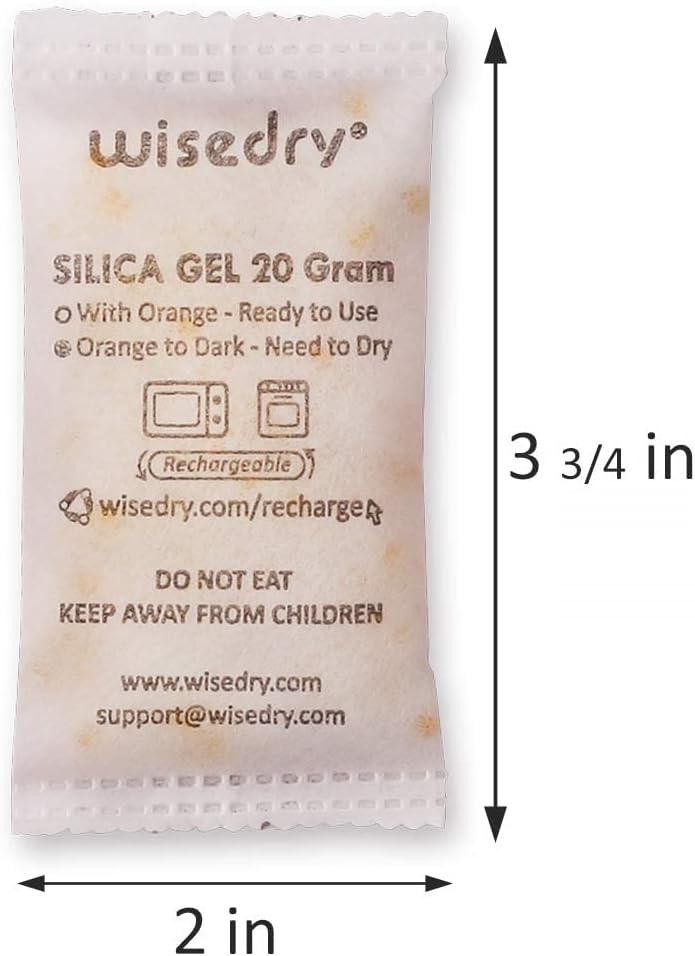
- the packet size and format you are using.
Measure the container and check the Wisedry silica gel Amount Guide for a practical starting range. Treat the result as a starting point and let the indicator and your checkup notes guide adjustments. If a packet reaches its recharge condition unusually fast, inspect the lid and contents before simply adding more packets.
5. Place Packets Where Air Can Reach Them
Good positions inside a craft container:
- a top corner of the box, above the supply line;
- a dedicated compartment in a divided organizer;
- a mesh or ventilated pocket sewn or clipped inside the lid;
- two separated spots in long, shallow bins;
- next to the label card so the packet is easy to find.
Avoid these placement mistakes:
- under a stack of cardstock or inside a rolled yarn bundle;
- touching bare metal scissors, pins, or rotary blades where moisture could condense;
- loose among small beads where fine granules could escape a damaged sachet into your project;
- wedged into the lid hinge or latch path where closing can crush it;
- in a sealed sub-container that is itself inside a much larger box, unless that small box is the space you intend to treat.
If a packet is damaged, stop using it, clean up any spilled granules, and follow the product guidance or contact Wisedry Support before returning a replacement packet to the box.
6. Label The Container
A short label turns storage into a routine. Record:
- container name (for example,
Paper Crafts 1,Yarn Stash 2); - packing date;
- packet size and quantity;
- where the packets sit inside;
- indicator condition at packing;
- next planned check.
For a simple rotation habit across several boxes, the guide to writing a recharge date on a desiccant storage label shows a low-effort way to track dates without guessing.
Keep spare, ready-to-use packets in their own sealed container rather than loose in a drawer. The guide to storing unused silica gel packets between projects explains how to keep ready and spent packets separated.
7. Set A Realistic Checkup Routine
A craft box does not need daily attention. Attach checks to moments that already happen:
- when you finish a project and restock the box;
- when you bring supplies out for a new project;
- after the box has been moved between rooms or floors;
- at the start of a new season, when indoor humidity shifts;
- if the room ever feels damp or you notice condensation on windows nearby.
At each check, spend one minute on:
- Indicator color against the packet’s reference card.
- Lid seal and latch condition.
- Packet position—is it still in open air, not crushed?
- Any supply that looks, feels, or smells different than at packing.
If the indicator shows the packet is spent, swap in a recharged spare or recharge the packet per its instructions and let it cool fully before it goes back. The Wisedry recharge guide hub collects the recharge methods in one place.
8. Common Craft Storage Mistakes
- Packing supplies before they are dry. Freshly washed fabric or recently cured finishes add a moisture load that outpaces a small packet.
- Relying on packets to fix a damp room. Desiccant treats the inside of a closed box, not the humidity of the room itself.
- Burying packets. A packet under compressed paper or inside a yarn bundle sees very little airflow.
- Forgetting the lid check. A warped lid or overstuffed box quietly undoes an otherwise good setup.
- Mixing ready and spent packets. Without separation and labels, it is easy to return a spent packet to service by mistake.
- Ignoring a fast-saturating packet. Rapid saturation is information about the box or the room—investigate instead of just recharging.
For more placement guidance, the overview of where not to place a desiccant pack in a storage box applies directly to craft organizers, and the cabinet setup in keeping silica gel packets organized in a storage cabinet works well for a craft room shelf.
FAQ
How many silica gel packets should I put in a craft box?
Start from the container’s volume and seal quality using the Amount Guide, then adjust with real checks. A small divided organizer typically needs less than a large lidded bin, and a box opened every day needs more attention than one sealed for a season.
Where should silica gel go in a divided craft organizer?
Use one compartment with airflow—ideally near the top or in a corner the supplies do not press against. In long bins, split packets between both ends so airflow is not limited to one zone.
Can silica gel touch yarn, fabric, or paper directly?
Packets are meant to sit in open air near supplies, not pressed inside them. Keeping the packet visible and separate also protects delicate fibers and paper from friction, and it makes the indicator easy to read.
How often should I check silica gel in craft storage?
Tie checks to events you already do: finishing a project, restocking, or a seasonal change. If the room is humid or the box is opened often, shorten the interval and watch the indicator more closely.
Do I need to recharge craft storage packets, and how do I track it?
Reusable packets are recharged when the indicator reaches its recharge condition, following the packet’s instructions and cooling fully before reuse. Write the date on the box label or the packet’s tag so the next check is quick.
What if the packet keeps saturating quickly?
Treat it as a signal, not a chore. Check the lid seal, look for damp contents, and consider whether the storage room itself is humid. A faster-saturating packet usually points to one of those three causes.
Next Steps
A dry, labeled, closed craft box with a visible packet and a one-minute checkup habit protects supplies without extra work. Pick your starting amount with the Wisedry Amount Guide, recharge on schedule using the recharge guide hub, and shop Wisedry reusable silica gel options when you need packets sized for small organizers and divided boxes.
The same compartment logic applies to hobby hardware: see how to use silica gel in a divided parts organizer with one small packet per closed cell.