A storage cabinet can make reusable silica gel packets easier to manage, but only if the packets are sorted clearly. When dry packs, active packs, and packs that need recharge all sit in the same drawer, it is easy to grab the wrong one or forget which container needs attention.
Quick answer: organize silica gel packets in a cabinet with separate zones for ready-to-use packs, packs currently assigned to containers, packs that need recharge, and packs cooling or waiting for review. Add simple labels for location, packet size, last check, and next action.

Why Organization Matters
Silica gel packets are small enough to disappear behind jars, tools, camera accessories, flower drying supplies, seasonal decor, or paperwork. A messy cabinet creates three practical problems:
- Dry packets get mixed with saturated packets.
- Recently recharged packets may go back into a closed container while still warm.
- You forget which packet belongs with a safe, camera bag, document box, storage tote, or flower drying project.
A simple cabinet system helps you treat desiccant packs as reusable maintenance items instead of loose packets scattered around the house.
Start With Four Cabinet Zones
Use a shelf, drawer, bin, tray, or small storage box. The physical setup can be basic; the important part is that every packet has a current status.
1. Ready To Use
This zone is for packets that are dry, cool, labeled, and ready to return to a container. Keep this area easy to reach so you do not pull from the wrong pile when setting up storage.
2. In Use
This zone is not always inside the cabinet. It can be a list, card, or row in your log that shows where packets are currently placed: camera bag, lens case, safe, document box, seasonal bin, storage tote, or flower drying container.
3. Needs Recharge
Use this zone for packets that show signs of saturation, have been exposed to damp air, feel heavier than usual, or came out of a container that was opened often. Do not place these packets back with your ready-to-use supply.
4. Cooling Or Review
After recharge, a packet may need time to return to room temperature before it goes back into closed storage. This zone prevents warm packets from being mistaken for finished ready-to-use packets. For product-specific steps, use the Wisedry recharge hub and the relevant product guide.
What To Label On Each Packet Or Bin
Labels do not need to be complicated. Use only the information that helps prevent mix-ups.
Good label fields include:
- Location: where the packet belongs or where it was last used.
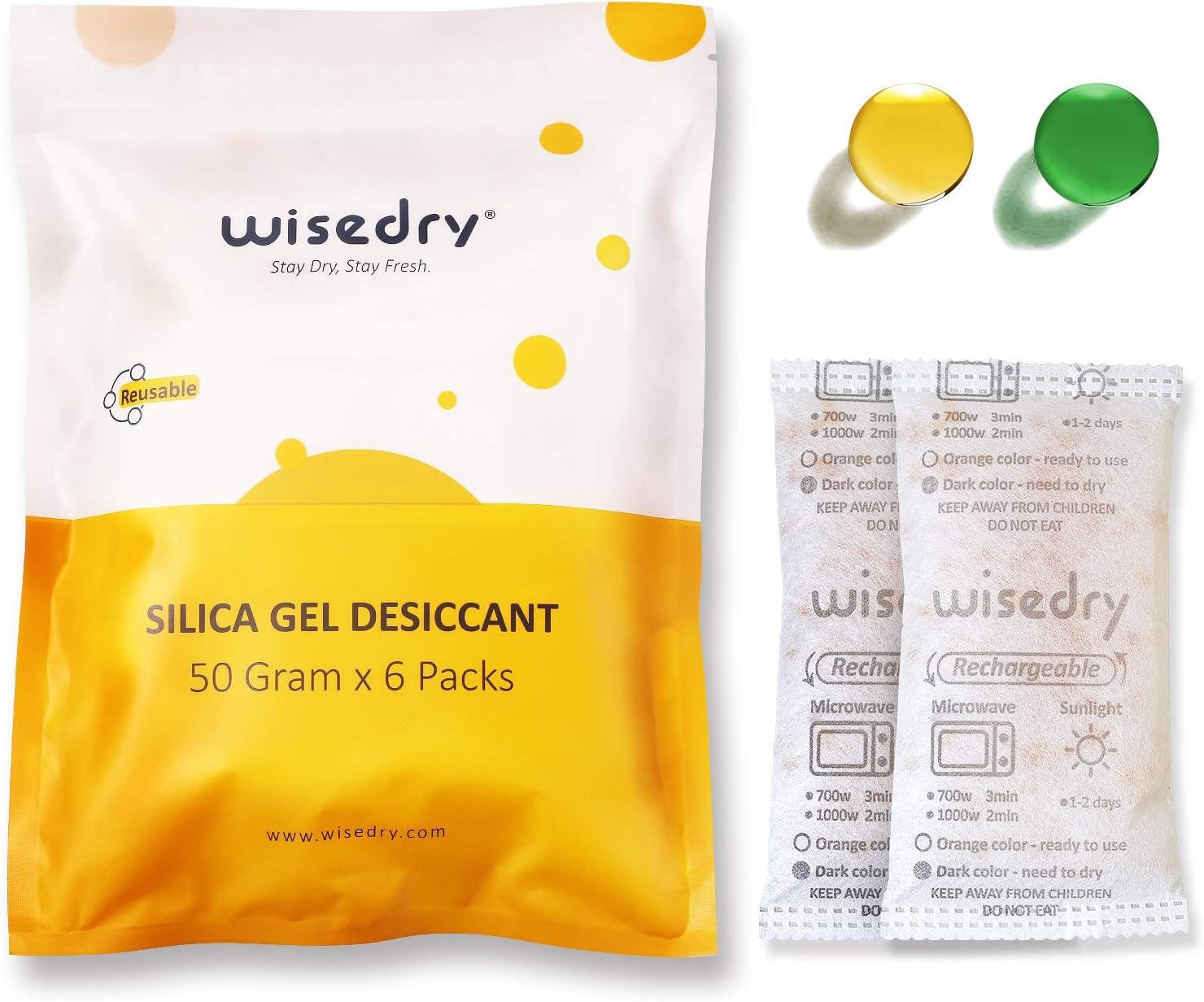
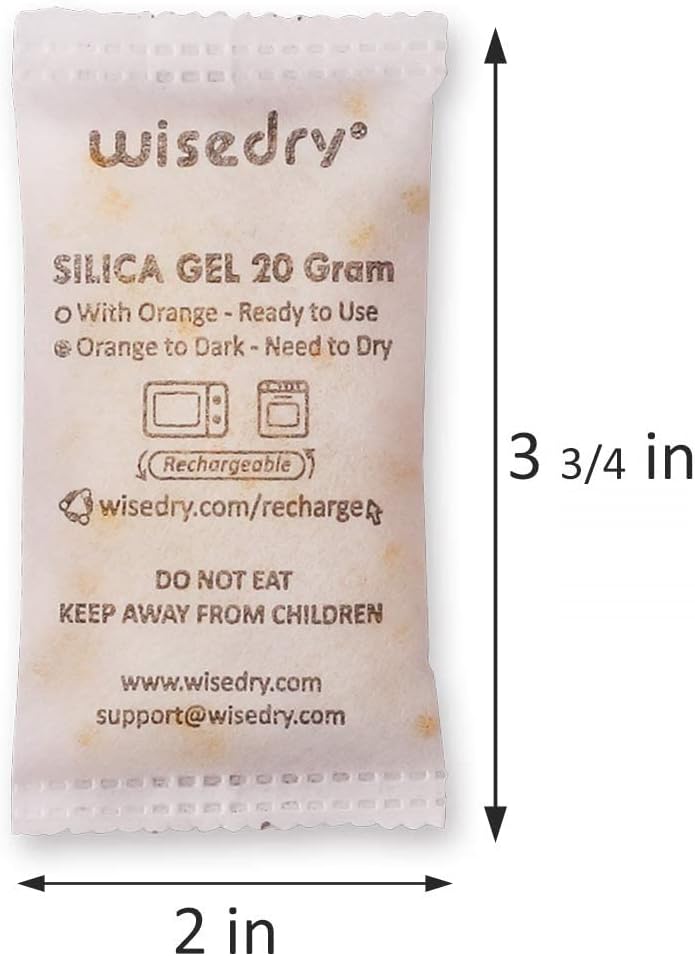
- Packet size: 20g, 50g, 112g, 500g, beads, flower drying crystals, or another clear description.
- Status: ready, in use, needs recharge, cooling, or review.
- Last check: the date you last looked at the packet or container.
- Next action: keep using, recharge, cool, return to container, or check seal.

If you already use a desiccant rotation log, keep the cabinet label short and put the detailed notes in the log.
Keep Ready Packs Protected
Ready-to-use packets should stay in a clean, dry, closed container until you need them. An open tray can work for a short sorting session, but long-term open storage exposes dry packets to room air.
For ready packs:
- Use a lidded bin, jar, pouch, or small box.
- Keep the container closed between uses.
- Store packets away from sinks, laundry areas, bathrooms, damp basements, and sunny windows.
- Do not store ready packets beside damp items waiting to be dried.
- Keep different packet sizes separated if you use them for different containers.
This does not create a guaranteed storage life. It simply reduces avoidable moisture exposure and makes the next packet easier to find.
Separate Packet Sizes By Use Case
Mixing every size in one jar makes setup slower. If you use several Wisedry packet sizes, group them by the container type you normally use.
A simple setup could be:
- Small packets for camera bags, lens cases, and small boxes.
- Medium packets for document boxes, craft storage, and storage totes.
- Larger bags for bigger enclosed spaces where the product instructions fit the use case.
- Flower drying crystals kept with flower drying tools, not mixed with general storage packets.
If a container seems to need recharge very often, check whether the packet size and container seal are part of the issue. The Wisedry silica gel amount guide can help you review the setup without guessing.
How To Handle Packets That Need Recharge
Do not put a questionable packet back into the ready area. Move it to the recharge bin and record why it was moved.
Common reasons include:
- Indicator color changed toward the saturated color.
- The packet feels heavier than expected.
- The container was opened repeatedly.
- The packet sat in open room air.
- A stored item went in damp or recently cleaned.
- The container still shows moisture signs.
For visual checks, read how to tell if a silica gel packet is saturated. Follow the specific Wisedry recharge instructions for your product rather than using a universal time or temperature.
Build A Small Recharge Station
If you recharge packets regularly, keep the supporting items near the cabinet:
- A clearly marked recharge bin.
- A cooling tray or heat-safe resting area when appropriate for the product.
- A pen or label marker.
- Blank labels.
- A small notebook, printed log, or phone note.
- The product-specific recharge guide bookmarked or printed.
For medium Wisedry packets, use the 20g, 50g, and 112g recharge guide. If a packet has just been recharged, let it cool before closing it inside a container; Wisedry’s cooling after recharge guide explains that workflow.
A Simple Cabinet Layout
Use this layout if you want a starting point:
- Top shelf: ready-to-use packets in sealed containers, grouped by size.
- Middle shelf: labels, marker, log, and product instructions.
- Lower shelf: needs-recharge bin and cooling/review tray.
- Side pocket or note card: list of packets currently in use by location.
The layout can be smaller if you only manage a few packets. The key rule is to avoid one mixed pile.
Common Mistakes To Avoid
Mixing Dry And Saturated Packets
This is the main cabinet problem. If you cannot tell whether a packet is ready, place it in the review area instead of the ready area.
Leaving Ready Packets In Open Air
Open-air storage slowly exposes packets to room moisture. Keep ready packets sealed until use.
Using Old Labels Without Updating Them
A packet may move from a safe to a storage tote, or from a camera bag to recharge. Update the label or log when the location changes.
Putting Warm Packets Back Too Soon
Recently recharged packets should not be rushed into a closed container while still warm. Use a cooling/review zone so this step is visible.
Keeping Flower Drying Supplies With General Storage Packets
Flower drying crystals and general packet storage often follow different workflows. Keep them separated and follow the product-specific guide.
Recommended Next Step
Choose one cabinet shelf, drawer, or bin today. Make four sections: ready, in use, needs recharge, and cooling/review. Then label your most important packets by location and size.
Need extra packets for a cleaner rotation setup? Visit the Wisedry shop for reusable silica gel desiccants. If you are unsure which recharge guide applies to a Wisedry product, use the Wisedry support center.
FAQ
Should I Store Silica Gel Packets In A Sealed Container?
Yes, if the packets are ready for later use. A closed container helps reduce unnecessary room-air exposure. Keep questionable packets in a separate review or recharge area.
Can I Keep All Packet Sizes Together?
You can, but separate groups are easier to manage. Grouping by size or use case helps you choose the right packet faster and reduces label mistakes.
How Do I Know Which Packet Needs Recharge?
Use the product’s indicator, weight change, storage conditions, and your last-check notes. Do not rely only on a calendar date.
Where Should I Put Packets That Are Cooling After Recharge?
Use a separate cooling or review tray. Once the packet is back at room temperature and ready for normal handling, update the label or log before moving it to the ready area.
Is This System Only For Wisedry Packets?
No. The same cabinet organization idea can help with many reusable desiccant products. For recharge steps, always follow the instructions for the exact product you are using.
If your cabinet also holds craft supplies in boxes and bins, the setup in silica gel for craft supply storage uses the same zoning and checkup habit.