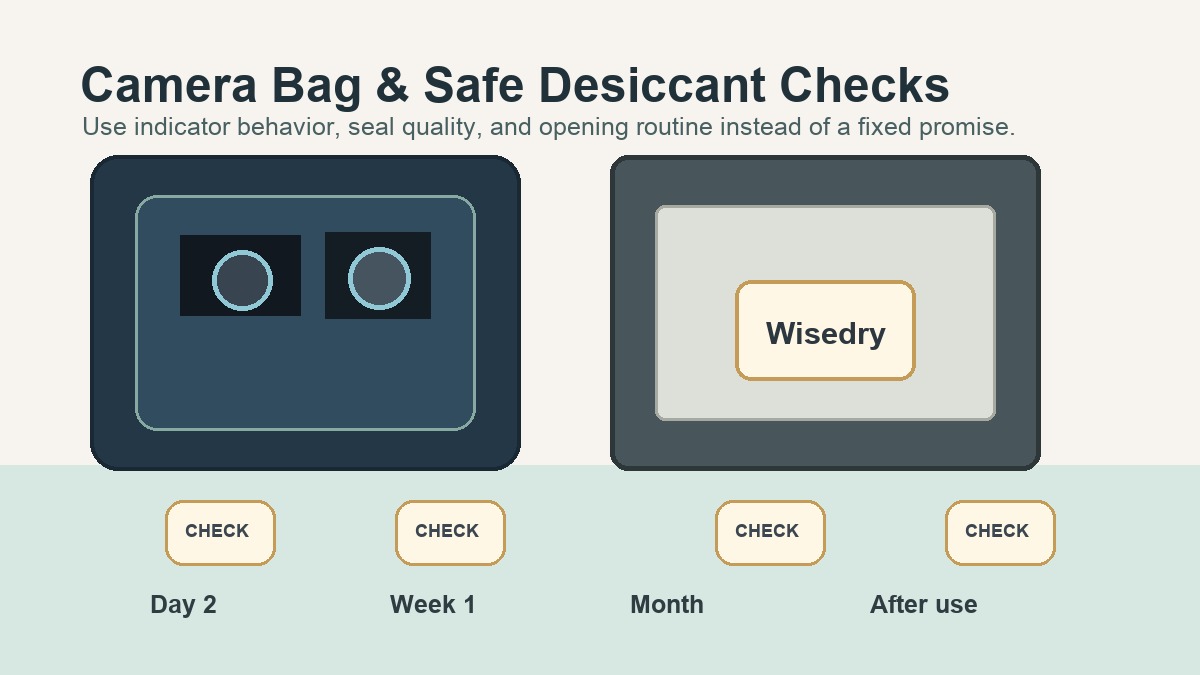
A desiccant packet in a camera bag, lens case, document box, or small safe should be checked by behavior, not by a universal calendar rule. The right interval changes with how often the container opens, how well it seals, whether damp straps or paper enter the space, and how quickly the packet indicator changes.
Use the first few checks to learn your own pattern. Then keep a simple routine so packets are recharged before they sit saturated for long periods.
Quick Answer
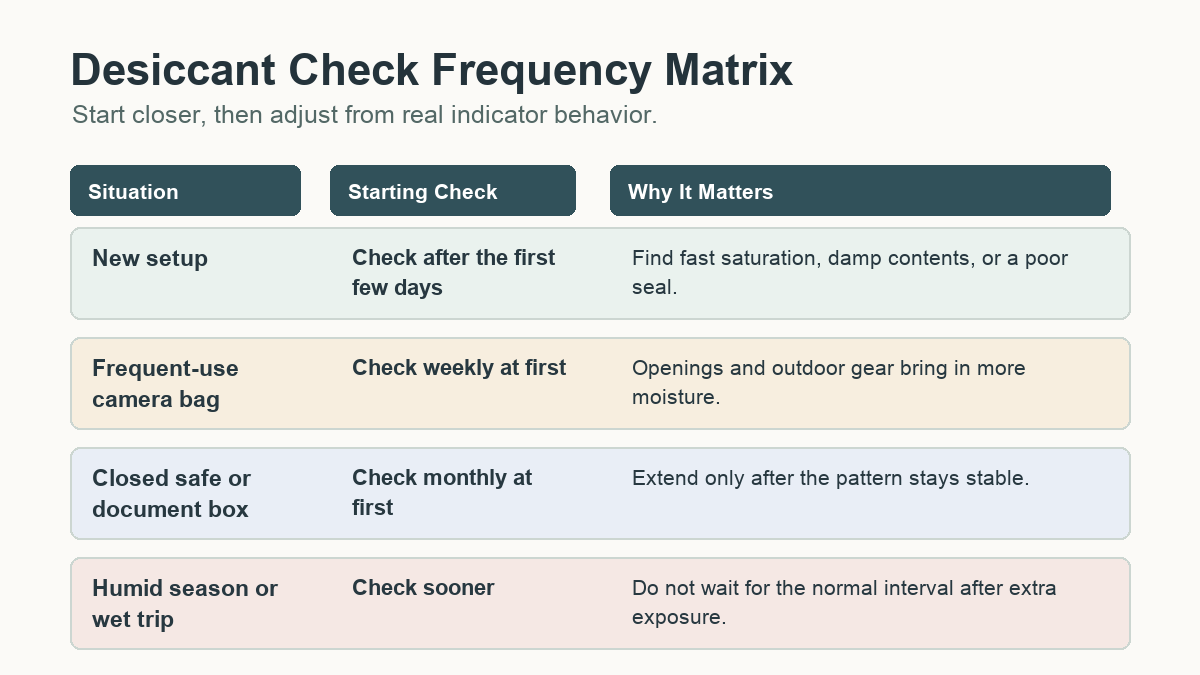
For a new camera bag or safe setup, check the silica gel after the first few days, then again after one to two weeks. If the indicator still changes slowly and the container stays closed most of the time, many users can move to a monthly check. If the bag is opened often, used outdoors, stored in a humid room, or loaded with damp straps or documents, check sooner.
Do not treat any interval as a guarantee. A fast-changing indicator, a loose seal, wet contents, or a packet that looks damaged should override the calendar. If you are still choosing the amount, start with the Wisedry silica gel amount guide or the camera dry box amount guide before adjusting the check routine.
Need reusable packets for a camera or small storage setup? Shop Wisedry rechargeable desiccants.
Start With A Short First Check
The first check is the most useful one because it tells you whether the setup has an obvious problem. Put active silica gel into the bag or safe, note the date, and inspect it after a few days of normal use.
During that first check, look for three things:
- Whether the indicator has already reached its recharge condition.
- Whether the packet is buried, crushed, or blocked from airflow.
- Whether the bag, safe, or box includes damp contents that should not have gone into closed storage.
If everything still looks stable, check again after one or two weeks. That second check shows whether the setup is settling into a normal pattern or whether moisture is entering faster than expected.
A Practical Starting Schedule
Use this as a starting routine, then adjust from real indicator behavior:
Camera bag used weekly
- First check: after a few days.
- Ongoing check if stable: weekly to every two weeks.
- Check sooner when: outdoor trips, rainy weather, damp straps, or frequent lens changes add moisture.
Lens case or compact camera pouch
- First check: after a few days.
- Ongoing check if stable: every two to four weeks.
- Check sooner when: the pouch is soft, unsealed, or stored in a humid room.
Small safe or document box
- First check: after one week.
- Ongoing check if stable: monthly.
- Check sooner when: papers, envelopes, or fabric items were recently added.
Camera dry box
- First check: after a few days.
- Ongoing check if stable: weekly at first, then monthly if the pattern stays stable.
- Check sooner when: the box opens often or the seal is weak.
Reserve packets in a sealed container
- First check: after one month.
- Ongoing check if stable: every one to three months.
- Check sooner when: the container is opened often or the lid seal is questionable.
The goal is not to create a fixed promise. The goal is to find the shortest interval that catches saturation early in your actual storage conditions.
What Makes Desiccant Need Earlier Checks?
Several storage details can shorten the useful time between checks.
Frequent Opening
Every opening lets room air enter. A camera bag that opens during a shoot, commute, or lens change needs closer monitoring than a small safe that stays closed for weeks.
Weak Seals
A loose zipper, worn gasket, warped plastic lid, or cable pass-through can keep feeding humid air into the storage space. If your packet reaches its recharge condition quickly, review why container seal quality changes desiccant amount before simply adding more packets.
Damp Contents
Wet straps, soft cases, lens cloths, paper envelopes, and foam inserts can bring moisture into the storage space. Desiccant is for routine moisture control in enclosed storage. It is not a repair method for wet camera equipment, damaged electronics, mold, corrosion, or important documents that already need specialized care.
Poor Packet Placement
Packets work best when air can reach them. Keep them in the same enclosed space as the items, but do not press them against lens glass, screens, contacts, paper surfaces, or the safe door seal. For placement examples, use the camera bag, lens case, and safe placement guide.
Seasonal Humidity
Summer, rainy periods, basement storage, garage storage, and unconditioned rooms can change the pattern. A monthly routine that works in winter may need a shorter interval during humid weather.
Camera Bag Checks
Camera bags are usually less sealed than hard boxes. Zippers, seams, padded dividers, and frequent openings all make the environment variable.
For a bag used regularly, start with a weekly check. If the packet indicator changes quickly, inspect the bag before adding more desiccant:
- Is the packet trapped under gear or inside a closed pocket?
- Did a damp strap, rain cover, or cloth stay in the bag?
- Is the bag stored in a humid room between uses?
- Are you using enough active silica gel for the bag volume?
- Would several smaller packets distribute better than one hidden packet?
If the bag is only used occasionally and stored indoors, the interval may be longer after you learn the pattern. Keep a shorter check after trips, rain, beach use, or any storage change.
Small Safe And Document Box Checks
A small safe or document box may stay closed longer, but it can also hold paper, envelopes, fabric pouches, and other materials that respond to room moisture. Start with a one-week check after adding active silica gel. If stable, move to a monthly check and record the pattern.
Check sooner when:
- You add a stack of papers, envelopes, cards, or fabric pouches.
- The safe has been open for sorting or cleaning.
- The safe is in a basement, garage, closet, or humid room.
- The door gasket looks dirty, compressed, or misaligned.
- The indicator changes faster than it did in the previous cycle.
For amount questions, the small safe and document box silica gel guide gives a better starting point than guessing by packet count alone.
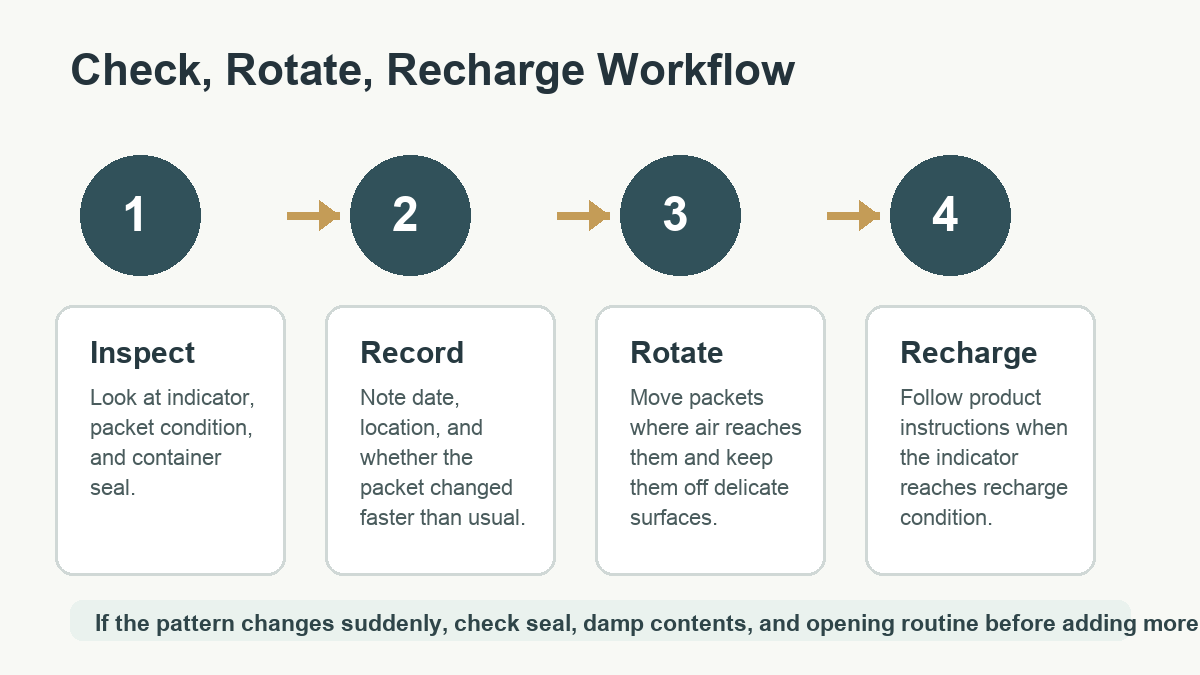
When To Recharge, Rotate, Or Replace A Packet
Recharge when the product indicator or instructions say the packet has reached its recharge condition. For Wisedry products, follow the relevant Wisedry recharge instructions and let packets cool as directed before returning them to storage. For another brand, follow that product label.
Rotate packets when one packet changes faster than another in the same storage space. That can mean one side has more airflow, more incoming moisture, or better exposure. Move packets to accessible positions and check again before assuming the packet failed.
Replace or stop using a packet when the packaging is torn, beads leak, the packet is contaminated, or it no longer behaves normally after proper recharge. Do not put damaged packets against cameras, documents, finishes, or seals.
A Simple Log You Can Keep On A Label
You do not need a spreadsheet for a small setup. A label or card is enough:
- Container: camera bag, lens case, safe, document box, or dry box.
- Packet: size, count, or pack name.
- Start date or recharge date.
- First check result.
- Next planned check date.
- Notes: humid trip, new documents added, seal issue, packet moved, or recharge completed.
This log prevents two common mistakes: forgetting a saturated packet in storage, and recharging too often without understanding whether the container is the real issue.
How To Adjust The Interval
After two or three checks, use the pattern:
- If the indicator changes quickly, check seal, damp contents, placement, and amount before adding more packets.
- If the indicator changes slowly and consistently, extend the interval one step at a time.
- If the pattern suddenly changes, return to a shorter interval and inspect the setup.
- If the container is divided, consider whether one large desiccant pack or several small packs would make checks easier.
- If you use a humidity monitor, treat low-cost readings as trends unless the device has been checked and used according to its instructions.
Change one variable at a time. If you add more packets, move the packet location, and change the check interval all at once, it becomes hard to know what actually helped.
FAQ
Is a monthly check enough for a camera bag?
It may be enough for an occasionally used bag stored indoors, but it is too long for some frequent-use or humid setups. Start with a weekly check, then extend only after the indicator pattern stays stable.
How often should I check silica gel in a safe?
For a small safe or document box, check after the first week, then monthly if the pattern is stable. Check sooner after adding paper, leaving the safe open, moving it to a humid room, or seeing a fast indicator change.
Should I recharge desiccant on a fixed schedule?
Use the indicator and product instructions first. A fixed calendar can miss humid periods or waste effort during stable periods. The schedule should support observation, not replace it.
Can I put silica gel directly on a camera or lens?
No. Direct contact is unnecessary. Keep packets in the same enclosed air space, but away from lens glass, screens, contacts, controls, paper surfaces, and seals.
What if the packet saturates again right after recharging?
Check whether it was fully recharged and cooled according to instructions, then inspect the container seal, damp contents, opening routine, and placement. Fast repeat saturation often points to the setup, not only the packet.
Do I need several packets?
Sometimes. Several smaller packets can be easier to distribute and inspect in divided storage, while one larger pack can be simpler in an open container. Use the total active amount and airflow pattern, not packet count alone.
Final Takeaway
Check desiccant in a camera bag or safe soon after setup, then adjust the interval from indicator behavior. Frequent openings, weak seals, damp contents, humid rooms, and poor placement all justify earlier checks.
For a practical setup, choose the right amount, place packets where air can reach them, label the recharge date, and keep a simple check routine. Start with the Wisedry amount guide, review recharge instructions, shop Wisedry rechargeable desiccants, or contact Wisedry Support for product-specific help.