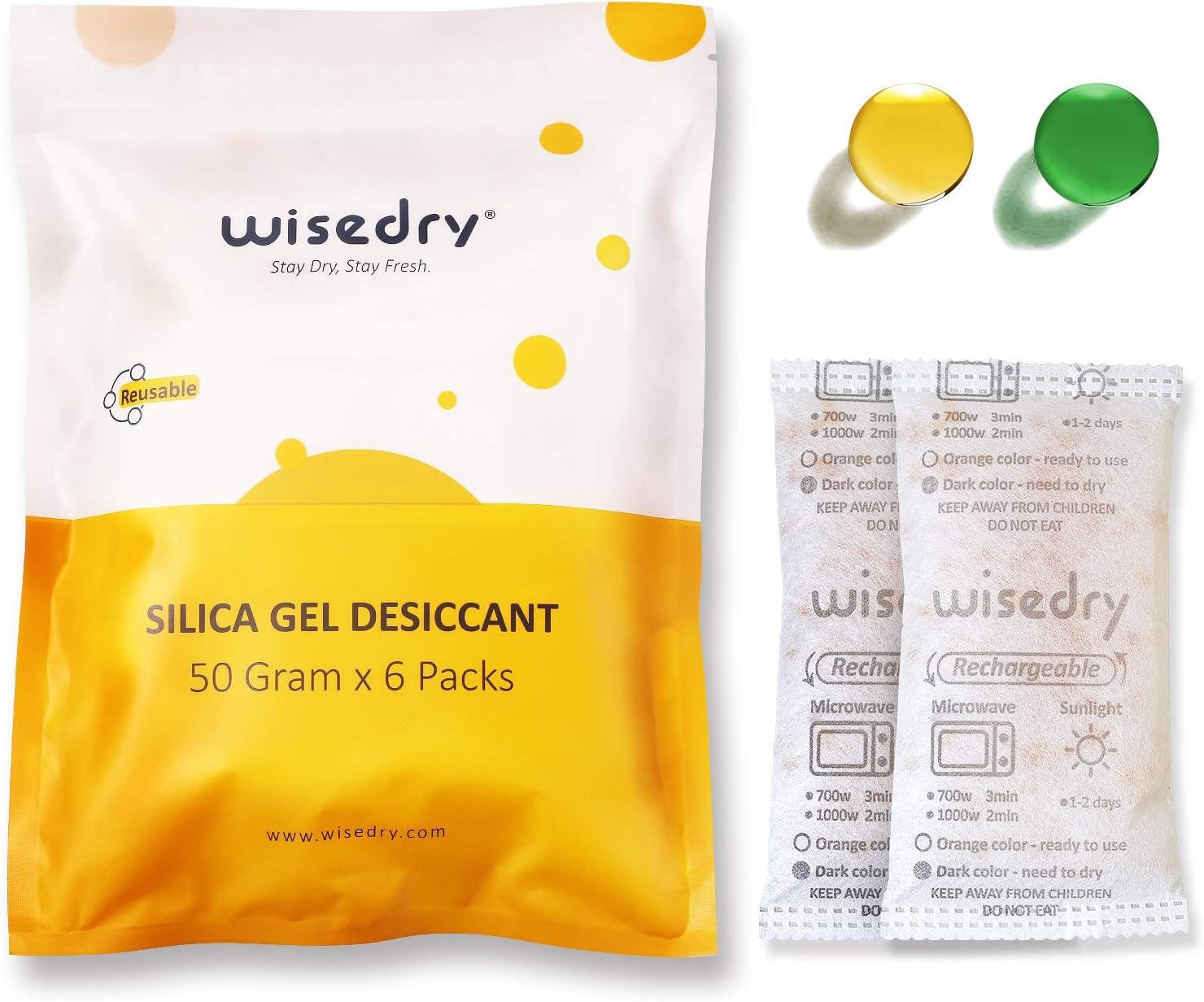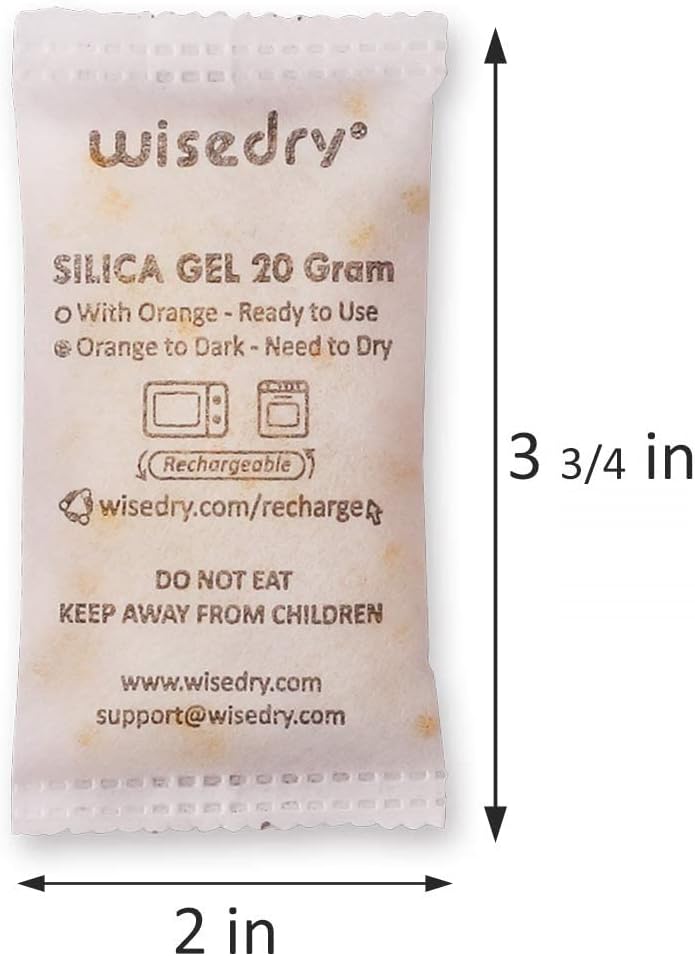
Reusable desiccant packets are easier to manage when you can see their history at a glance. A simple recharge date label helps you remember when a packet was last recharged, where it belongs, and when to check it again.
The label does not prove that a packet is dry forever. It is a maintenance reminder. You still need to check the indicator color, packet condition, container seal, and the instructions for the specific Wisedry product you are using.
Quick Answer
Write the last recharge date, packet size or type, storage location, and next check date on the label. Keep the wording short enough to update after each recharge. For example:
- Recharged: 2026-07-20
- Pack: 50 g silica gel packet
- Location: camera bag
- Next check: 2026-08-20
- Notes: cool before sealing; check indicator color
If you use more than one packet, give each one a simple ID such as A, B, or C. Then keep the same ID on the packet, container, or storage bin so you do not mix freshly recharged packets with saturated ones.
Before labeling, confirm the correct recharge method in the Wisedry recharge hub.
Why A Recharge Date Label Helps
A desiccant packet can move between a camera bag, document box, safe, closet bin, toolbox, filament box, or seasonal storage container. Without a label, it is easy to forget which packet was recharged last week and which one has been sitting in a humid container for months.
A clear label helps you:
- Avoid mixing dry and saturated packets.
- Know which container each packet belongs to.
- Check packets before they are overdue.
- Rotate two or more packets without guessing.
- Notice packets that need replacement instead of another recharge.
- Keep support questions more specific if you need help later.
This is especially useful when several containers use similar-looking packets.
What To Write On The Label
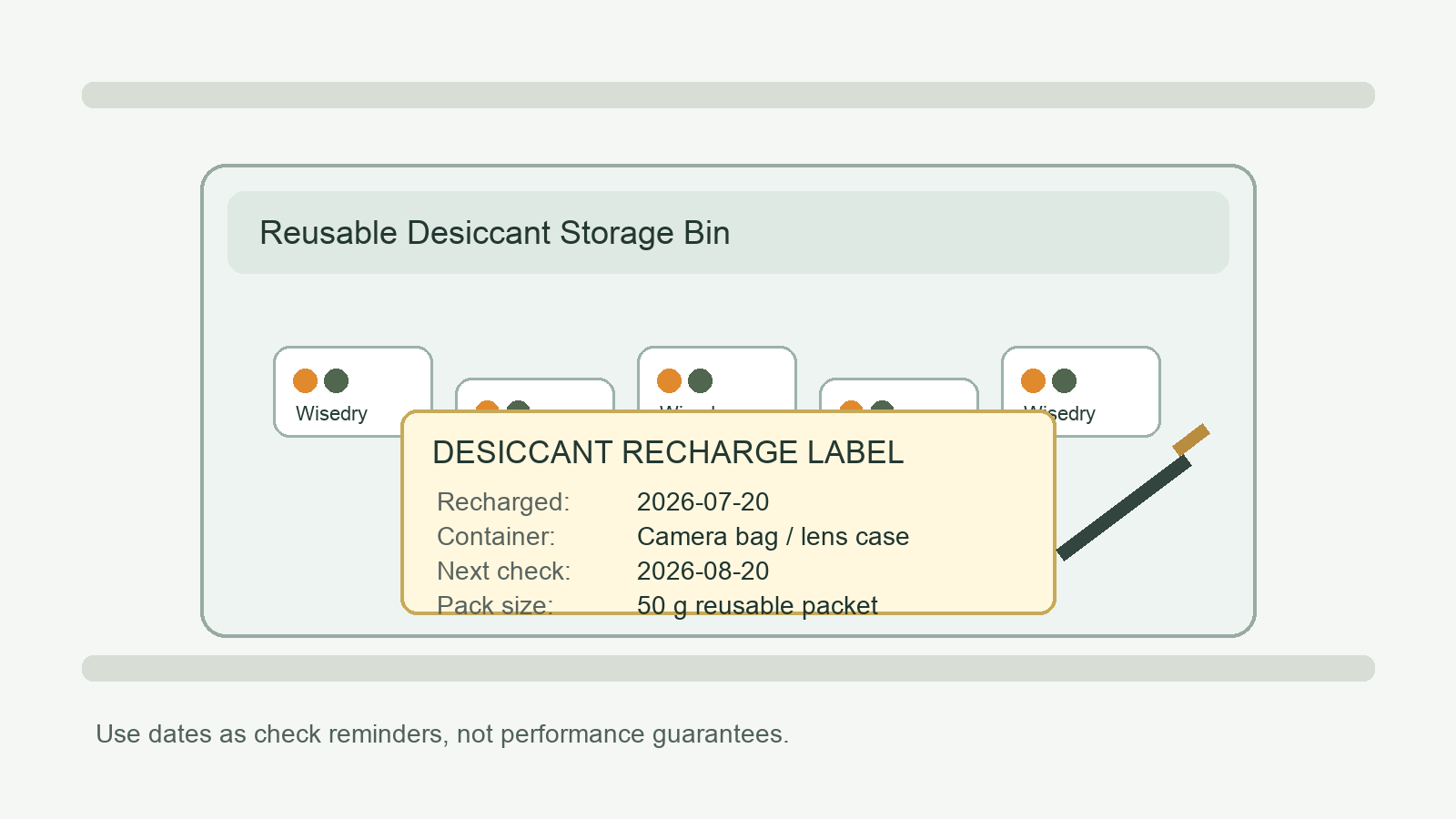
The best label is short, practical, and easy to update. It should not become a long maintenance diary.
Use five fields:
- Last recharged date
Write the calendar date when the packet finished recharging and cooled to room temperature. Use a clear format such as 2026-07-20 or Jul 20, 2026.
- Packet size or type
Write enough detail to avoid confusion: 20 g, 50 g, 112 g, 500 g, ColorDot, see-through packet, or the product name printed on the packaging.
- Storage location
Write the container or use case: camera bag, document box, safe, toolbox, craft bin, filament box, or seasonal decor bin.
- Next check date
Pick a reminder date based on how often the container is opened and how humid the environment is. This is only a check reminder, not a guarantee that the packet will stay active until that date.
- Short note
Add one useful note such as cool before sealing, check color, opened often, humid room, or replace if damaged.
Use The Product Guide Before You Label
Do not write a recharge date until the packet has actually been recharged according to the right guide. Wisedry has different products and formats, so the correct method depends on the item.
If you are using Wisedry 20g, 50g, or 112g silica gel packets, start with the guide to recharge Wisedry 20g, 50g, and 112g silica gel packets. If you are not sure which guide applies, use the Wisedry recharge hub.
After recharging, let the packet cool before returning it to a closed container. The cooling step matters because a warm packet can create handling discomfort or encourage condensation if sealed too quickly. See the guide on how to cool silica gel after recharging before putting it back into storage.
A Simple Label Format That Works
Use a format that is easy to repeat:
Packet A
- Recharged: 2026-07-20
- Size: 50 g
- Location: camera bag
- Next check: 2026-08-20
- Note: check indicator color
Packet B
- Recharged: 2026-07-18
- Size: 112 g
- Location: document box
- Next check: 2026-08-18
- Note: opened weekly
Packet C
- Recharged: 2026-07-12
- Size: 500 g
- Location: storage cabinet
- Next check: 2026-08-12
- Note: inspect packet fabric
This kind of short format works better than writing a paragraph on every label. It is fast to update and easy to read.
Where To Put The Label
Do not write directly on a packet unless the packet material and marker are suitable. Many packets are flexible, textured, or porous, and ink may smear or become hard to read.
Better label locations include:
- The outside of the storage container.
- A removable sticker on a plastic bin.
- A small tag attached near the packet.
- A card inside the container, away from the packet surface.
- A storage log kept with your desiccant supplies.
For small packets, the best solution is often to label the container rather than the packet itself. For larger reusable packets, a nearby tag or bin label may be easier to read and update.
Need more packets for a rotation system? Shop reusable Wisedry desiccant packets.
How To Choose The Next Check Date
The next check date should match the real use case. A date on a label is not a fixed lifespan promise. It simply tells you when to inspect the packet again.
Check sooner when:
- The container is opened every day.
- The room is humid.
- The packet is used in a car, garage, basement, or workshop.
- The container seal is weak.
- The indicator color changes quickly.
- The stored items are sensitive to moisture.
Check less often only when the container stays closed, the seal is good, and the packet indicator remains in the dry range.
If you are not sure whether a packet needs attention, use the guide on how to tell if a silica gel packet is saturated. If you recharged recently and are wondering whether the timing was unnecessary, read Can You Recharge Silica Gel Too Early?.
Keep A Tiny Rotation Log For Multiple Packets
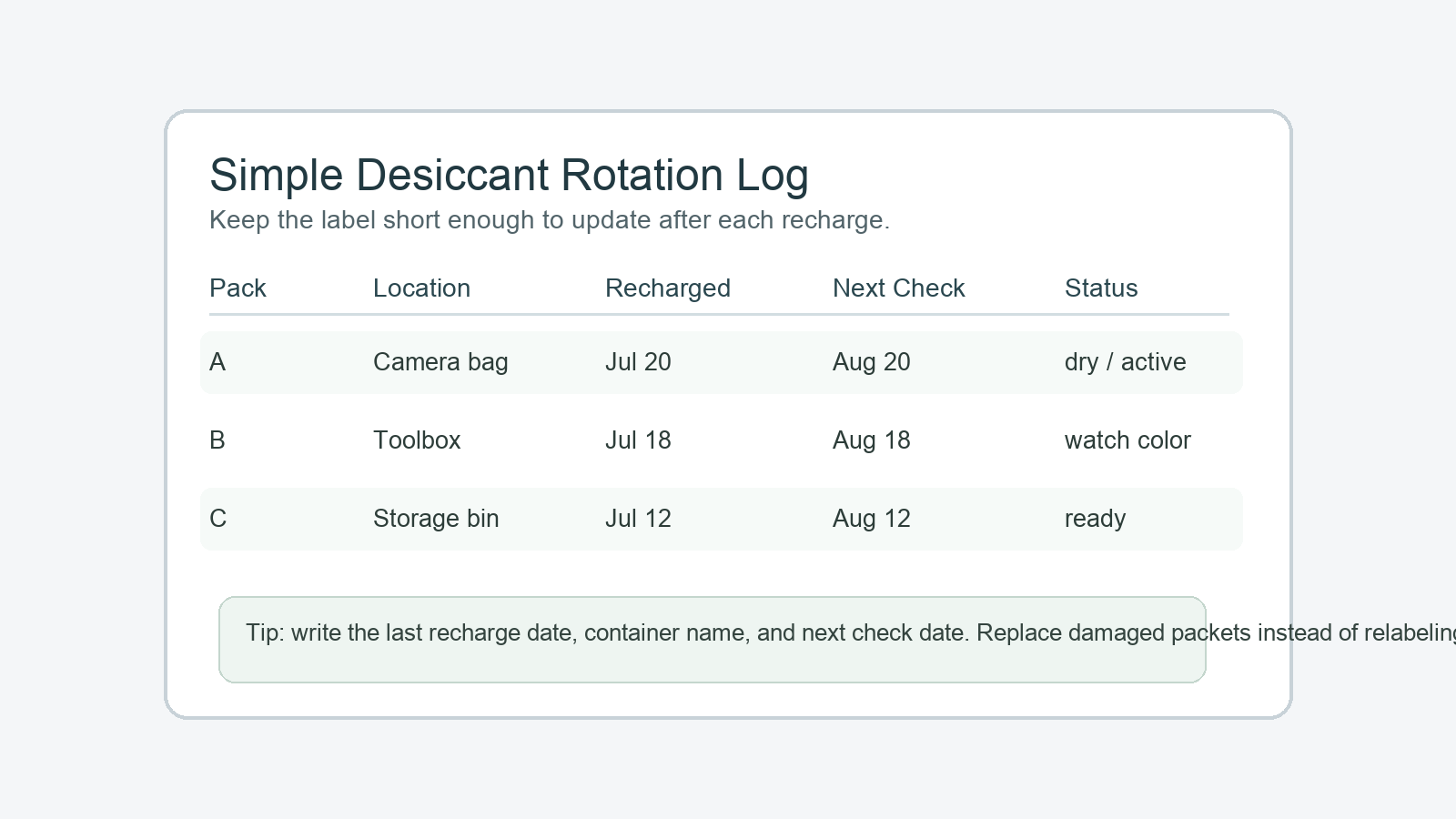
If you use two or more packets in the same area, a small rotation log can prevent confusion. It does not need software or a spreadsheet. A card, notebook page, or printed label sheet is enough.
Track:
- Packet ID: A, B, C, or the product size.
- Location: where the packet is used.
- Last recharge date.
- Next check date.
- Status: active, needs recharge, cooling, spare, or replace.
A rotation log helps when you keep one packet in use and one packet ready after recharge. When Packet A becomes saturated, you can swap in Packet B and recharge Packet A without losing track.
What Not To Put On The Label
Avoid wording that creates false confidence.
Do not write:
Good for 1 yearNever needs checkingProtects camera completelySafe for all storageGuaranteed dryRecharge unlimited timesIgnore color indicator
Those notes are too absolute. Real performance depends on packet size, container volume, seal quality, room humidity, how often the container opens, and the condition of the packet.
Use practical reminders instead:
Check color monthlyInspect after humid weekReplace if tornRecharge per product guideUse amount guide for new container
If you are setting up a new small safe, document box, or storage box, also check how to choose the right amount of silica gel for a small container.
When To Replace Instead Of Relabel
Do not keep relabeling a packet that is no longer in good condition.
Replace or contact support when:
- The packet is torn, punctured, or leaking beads.
- The fabric or paper is scorched, melted, or brittle after heating.
- The packet has a strong odor that does not improve after normal recharge and airing.
- The indicator no longer behaves as expected after proper recharge.
- The packet was exposed to contamination or a use case outside the product instructions.
- You cannot identify the product type or recharge method.
A label should help you manage a usable packet. It should not hide damage or uncertainty.
Best Setup For A Storage Cabinet
If you keep multiple reusable packets in a cabinet, separate them into three groups:
- Ready to use: recharged, cooled, and labeled.
- Needs recharge: saturated or ready for the next recharge cycle.
- Do not use: damaged, unknown, or waiting for support.
Use a small bin, divider, or zip pouch for each group. Label the groups clearly. This prevents a common mistake: grabbing a packet from the wrong pile and placing a saturated packet into a fresh container.
For compact home storage, the goal is not to make the system complicated. The goal is to remove guessing.
FAQ
Is The Recharge Date The Same As An Expiration Date?
No. The recharge date only tells you when the packet was last recharged. It does not guarantee how long the packet will stay active. Humidity, container seal quality, packet size, and opening frequency all matter.
Should I Write On The Desiccant Packet Itself?
Only if the packet material can be marked without damage or smearing. In many cases, it is better to label the container, a tag, or a small card kept with the packet.
How Often Should I Change The Next Check Date?
Update the next check date after each recharge, after major humidity exposure, or when the packet moves to a different container. Use the indicator and product guide before deciding that a packet is still active.
Can I Use The Same Label For Different Packet Sizes?
Use the same format, but write the packet size or product type clearly. A 20 g packet and a 500 g packet may belong in very different containers, so the label should prevent mix-ups.
What If I Forgot The Last Recharge Date?
Do not guess and write a fake date. Check the indicator, inspect the packet, and recharge according to the correct product guide if needed. Then write the new date after the recharge cycle and cooling step are complete.
Final Takeaway
A good desiccant recharge label has four jobs: identify the packet, show the last recharge date, show where it belongs, and remind you when to check it again.
Keep the label short. Follow the correct recharge guide. Let the packet cool before sealing it in a container. Check the indicator and packet condition instead of trusting the date alone.
For product-specific questions, ask Wisedry support.
For packs that will wait months in a seasonal box, pair the date label with the routine in how to keep rechargeable desiccant ready for seasonal storage so every pack enters the off-season dry, cool, and dated.